 Save to Pinterest
 There's something about the smell of cumin hitting hot oil that instantly transports me to a tiny Istanbul café where I watched a cook cradle eggs into bubbling tomato sauce like they were the most precious thing in the world. That moment stuck with me, and now whenever I make shakshuka, I'm chasing that same magic—the way the yolks stay soft and yielding while the whites set just enough to cradle them. It's comfort food that feels slightly fancy, weeknight dinner that tastes like you've been cooking for hours.
I made this for my partner on a rainy Sunday morning when we were both exhausted from moving, and watching them tear into the warm pita, dipping it into that jammy yolk situation, and just close their eyes in that way people do when they taste something that feels like home—that's when I knew this recipe was keeper material. The whole kitchen smelled like paprika and possibility, and for the first time that week, we both felt settled.
Ingredients
- Onion (1 large, finely chopped): This is your base, your flavor foundation—don't skip the caramelizing step, those golden bits are liquid gold.
- Red and yellow bell peppers (1 of each, diced): They sweeten the sauce naturally and add brightness that canned tomatoes alone can't quite manage.
- Garlic (3 cloves, minced): Add this after the peppers soften, or it'll burn and taste bitter—timing matters here.
- Baby spinach (2 cups, optional): Wilts in seconds and adds earthiness without effort, though the dish is beautiful without it too.
- Jalapeño (1, seeded and finely chopped, optional): Heat is optional but adds a subtle brightness that makes people ask what's different about your sauce.
- Olive oil (2 tablespoons): Use something you actually like tasting, not the bargain bottle—it matters here.
- Ground cumin (1 teaspoon): This is the spice that says shakshuka, warm and earthy and slightly mysterious.
- Paprika (1 teaspoon): Sweet paprika, not smoked, unless you want a campfire vibe—both are delicious, just different moods.
- Ground coriander (½ teaspoon): Subtle but essential, adds a gentle citrus note you won't quite identify but will definitely taste.
- Cayenne pepper (¼ teaspoon, optional): A whisper of heat that keeps things interesting without overwhelming.
- Crushed tomatoes (1 28-ounce can): The backbone of everything, choose a brand you trust because this is where the flavor lives.
- Sugar (1 teaspoon): Balances the acidity of the tomatoes—don't skip this, it's not about sweetness, it's about harmony.
- Salt and black pepper: Taste as you go, season generously once and then again at the end when flavors bloom.
- Large eggs (4-6): The star, so use the best ones you can find, and make sure they're fresh enough to hold their shape.
- Fresh cilantro or parsley (¼ cup, chopped): Bright and alive, added at the very end for freshness that cuts through the richness.
- Crumbled feta cheese (½ cup, optional): Creamy, salty, tangy—it's optional but transforms the dish into something more complete.
- Pita bread (4, warmed): Warm them just before serving, preferably in a dry skillet for a second or two so they're soft but still have some dignity.
Tired of Takeout? 🥡
Get 10 meals you can make faster than delivery arrives. Seriously.
One email. No spam. Unsubscribe anytime.
Instructions
- Build your base with heat and patience:
- Pour the olive oil into your largest skillet and set it over medium heat, letting it get hot enough that a piece of onion sizzles immediately when it hits. Add your finely chopped onion and let it cook for a solid 3 minutes, stirring occasionally, until it softens and turns translucent—this is when the magic begins, those first layers of flavor developing.
- Layer in color and texture:
- Add your diced bell peppers and the jalapeño if using, and cook for about 5 minutes, stirring now and then, until they're tender and starting to release their sweetness. You'll notice the kitchen smells different now, more complex and inviting.
- Awaken the spices:
- Stir in your minced garlic, cumin, paprika, coriander, and cayenne, cooking for just about 1 minute until the spices bloom and the whole skillet becomes fragrant—this is the moment the dish transforms from vegetables into something with soul.
- Create your sauce foundation:
- Pour in your crushed tomatoes and add the sugar, salt, and black pepper, then let everything simmer uncovered for 10 to 12 minutes, stirring occasionally. You're looking for the sauce to thicken slightly and the flavors to meld into something deeper and more concentrated than when you started.
- Add greens if you're using them:
- If spinach is calling to you, stir it in now and watch it wilt into silky ribbons within about 2 minutes, becoming part of the sauce rather than something separate.
- Create wells for your eggs:
- Using the back of your spoon, gently push the sauce aside in four to six places, creating small wells where the eggs will nestle—these pockets are their home for the final cooking.
- Nestle in the eggs with care:
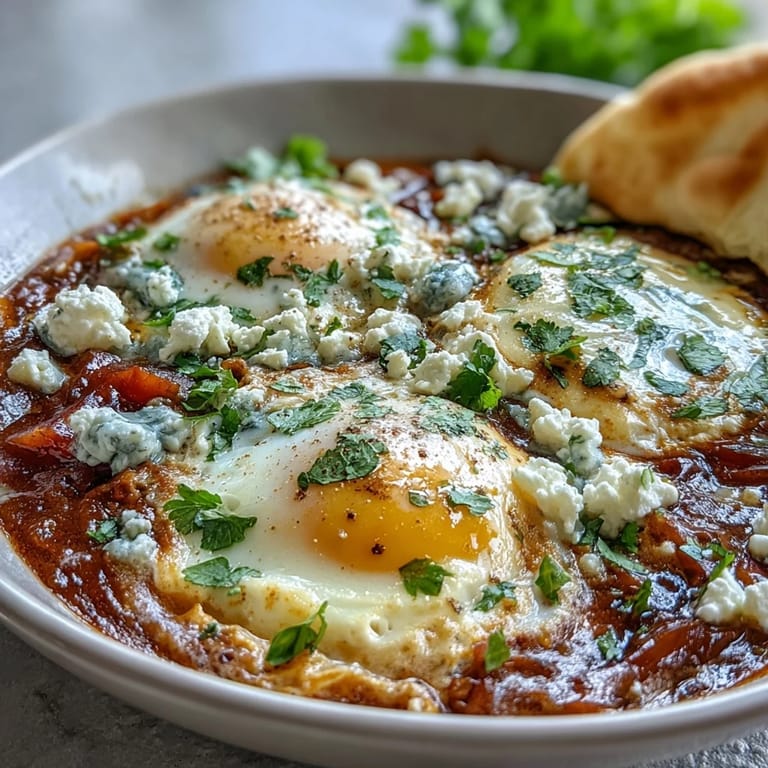
- Crack each egg directly into a well, trying to keep the yolks intact, then cover your skillet and reduce the heat to medium-low. Let them cook undisturbed for 6 to 8 minutes, listening for when the sauce stops actively bubbling and checking occasionally until the whites are set but the yolks still jiggle slightly when you tap the skillet.
- Finish with brightness and richness:
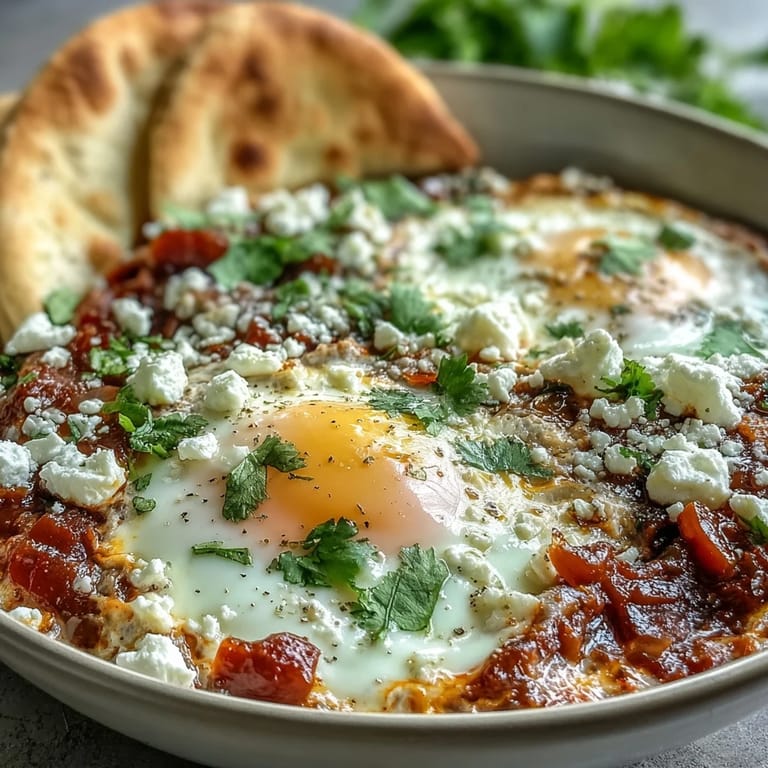
- Remove from heat and scatter your fresh cilantro or parsley over the top, then add crumbled feta if you're using it, letting the heat soften those salty, tangy crumbles.
- Serve immediately with warm bread:
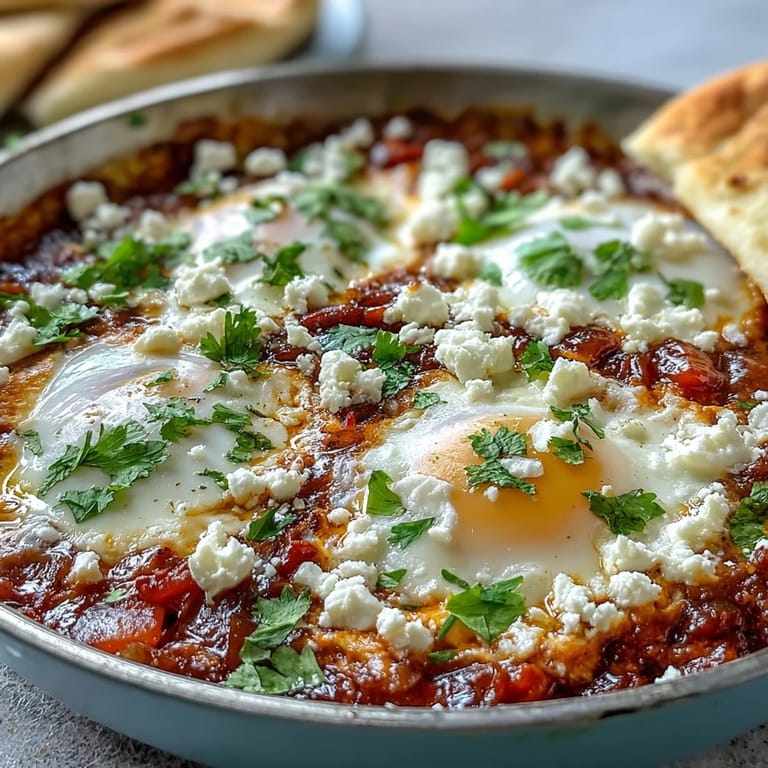
- Transfer the whole skillet to the table if you can, or divide into bowls, serving each portion with warm pita bread standing by for dipping into that golden yolk situation.
 Save to Pinterest
 My neighbor asked for this recipe after I brought her a bowl on a night she'd been dealing with something difficult, and seeing her sit on her porch with that pita in one hand and a spoon in the other, just existing quietly with warm food—that's when I understood that shakshuka is really about creating a moment where someone gets to slow down and be taken care of.
Why This Dish Works for Almost Any Occasion
Shakshuka lives in that beautiful space between breakfast, lunch, and dinner—it doesn't care what time you're eating it, only that you're ready to eat something that feels both nourishing and indulgent. I've made it for solo Sunday mornings when I needed something that felt like an occasion, for last-minute dinners when friends texted that they were on their way, for potlucks where people wanted to experience something different. The adaptability means you can make it once and then a hundred different ways depending on what's in your kitchen and how much heat you want in your life that day.
The Poetry of That First Dip
There's a moment right after you tear off a piece of warm pita and drag it through the broken yolk and sauce that you understand why this dish has endured for centuries—it's pure simplicity elevated into something transcendent. The bread soaks up everything, the egg adds richness, the sauce brings all the spice and acidity, and somehow together they become greater than their parts. Every culture that makes something like this understands that sometimes the best meals are the ones where you use your hands a little and let yourself be wholly present.
Making It Your Own and Troubleshooting the Small Things
The skeleton of this recipe is solid, but the beauty is in how you personalize it—some mornings I add a splash of harissa paste for deeper heat, other times I stir in fresh herbs directly into the sauce so they cook down into something almost jammy. If your sauce breaks and the oil separates, don't panic, just add a splash of water and stir gently and it'll come back together. The eggs are the most forgiving part actually—slightly firm, slightly runny, it all works as long as you remember they keep cooking a little after you pull them off the heat.
- If you're making this vegan, chickpeas or crumbled tofu add protein and substance without trying too hard.
- A dollop of labneh or Greek yogurt on the side adds creaminess and tang that completes the picture.
- Leftover sauce reheats beautifully, though the eggs are best made fresh for that moment of yolk perfection.
 Save to Pinterest
 Every time I make shakshuka, I'm reminded that the best meals don't need to be complicated—they just need to be made with attention and served with warmth. This one's a keeper.
Recipe Q&A
- → What is the traditional way to serve shakshuka?
Shakshuka is traditionally served directly from the skillet, family-style, with warm pita bread or crusty bread for dipping into the sauce and runny yolks. It's meant to be enjoyed immediately while the eggs are perfectly cooked.
- → How do I know when the eggs are done?
The eggs are ready when the whites are fully set and opaque, but the yolks remain slightly jiggly and runny. This typically takes 6-8 minutes covered. For firmer yolks, cook an additional 2-3 minutes.
- → Can I make shakshuka ahead of time?
The tomato sauce base can be prepared up to 2 days ahead and stored in the refrigerator. Reheat gently before adding eggs and finishing. However, it's best to add and cook the eggs just before serving for optimal texture.
- → What can I use instead of pita bread?
Crusty sourdough, baguette slices, naan bread, or even rice work well as accompaniments. For gluten-free options, try gluten-free bread, tortillas, or serve over quinoa and rice.
- → How can I adjust the spice level?
Control the heat by adjusting the amount of jalapeño and cayenne pepper. For a milder version, omit both entirely. To increase spice, add additional jalapeño seeds, extra cayenne, or a pinch of harissa paste to the sauce.
- → Is shakshuka suitable for meal prep?
While best enjoyed fresh, leftover shakshuka can be refrigerated for up to 3 days. Store the sauce and eggs together. Reheat gently in a skillet, though the egg yolks will cook through more upon reheating.