 Save to Pinterest
 There’s something oddly satisfying about the first inhale of steam rising from a pot of simmering broth on a chilly night—I always look forward to making this miso ramen for the warmth that seems to come from both the bowl and the ritual itself. The melodic sizzle of toasted sesame oil and that earthy sweetness of miso mingling with ginger and garlic have become a sort of dinner-time soundtrack in my kitchen. Once, I added a bit too much chili paste by accident and ended up with a broth that both cleared my sinuses and made everyone around the table break into laughter. These little surprises and mistakes are part of what brings this ramen to life in my home. Somehow, no two batches taste exactly the same, but it’s the process that keeps me coming back.
One evening, after a particularly long day, I made this ramen while chatting on the phone with a friend, balancing the phone between my cheek and shoulder as I fumbled with eggs and mushrooms. My kitchen smelled like sesame and soy, and the conversation made the slicing and stirring feel like its own kind of comfort. By the time the eggs were peeled and the broth was ladled over the noodles, there was a feeling of having accomplished something cozy and delicious together, even miles apart.
Ingredients
- Low-sodium vegetable broth: Using this as a base lets the miso and aromatics shine without being overwhelmed by saltiness—if you switch to chicken broth, it leans even heartier.
- White miso paste: This is what gives the broth its silky, umami depth; I gently dissolve it in hot broth before adding, so clumps never sneak into my spoonfuls.
- Soy sauce: Adds salt and a comforting savoriness; anytime I taste and something is missing, a dash more usually fixes things.
- Sesame oil: Just a tablespoon of this brings a toasty aroma that signals something special is cooking.
- Freshly grated ginger: The sharp, almost citrusy zing cuts through the richness—use a microplane for the finest bits.
- Garlic cloves: Mince them to release maximum flavor; I like to smash them first for an extra punch.
- Mirin: Adds a gentle sweetness and roundness, but the ramen is still lovely without if you’re out.
- Chili paste: Completely optional—start small unless you truly crave heat, as a teaspoon can sneak up on you!
- Fresh or dried ramen noodles: Either works, but fresh noodles have an extra springiness I adore; cook them just until barely tender as they continue cooking in the broth.
- Eggs: Soft-boiled to a just-set yolk, which mingles with the broth for a luxurious feel; plunge in cold water right away to stop the cooking.
- Shiitake or cremini mushrooms: Sliced and sautéed, they bring an earthy, meaty note even if you skip animal proteins.
- Baby spinach: Toss in just before serving so it wilts perfectly without getting soggy.
- Corn kernels: I use frozen more often than not—they thaw beautifully in the hot broth and bring a hint of sweetness.
- Green onions: Thinly sliced, they add a fresh bite as a finishing touch.
- Nori: Cut into strips, this sheet of seaweed brings a subtle ocean flavor and looks stunning peeking out of the bowl.
- Toasted sesame seeds: Sprinkle over last for a nutty crunch and a little extra toasty depth.
Tired of Takeout? 🥡
Get 10 meals you can make faster than delivery arrives. Seriously.
One email. No spam. Unsubscribe anytime.
Instructions
- The Perfect Soft-Boiled Egg:
- Gently lower your eggs into simmering water and set a timer for seven minutes: don’t rush this step—a dash of patience delivers a creamy, golden center!
- Fragrant Foundations:
- Sizzle sesame oil in a large pot, then toss in ginger and garlic, stirring until your kitchen is filled with their spicy, sweet aroma.
- Mushroom Magic:
- Add mushrooms and watch them shrink and deepen in color, soaking in the flavorful oil for about three minutes.
- Broth Building:
- Pour in vegetable broth, soy sauce, and mirin, stirring as it comes to a gentle simmer—the surface will shimmer and the smell will tempt you to taste too soon.
- Miso Matters:
- Scoop a ladle of hot broth and whisk it with miso paste in a small bowl until no lumps remain, then stir this creamy blend back into the pot; add chili paste if you like a kick.
- Season to Taste:
- Spoon up a sip and tweak with a splash more soy sauce, a little extra miso, or a pinch of salt—don’t be shy about tasting as you go.
- Noodles on Deck:
- Cook your noodles in a separate pot so they stay bouncy and don’t cloud the broth; drain them just as they turn tender.
- The Art of Assembly:
- Divide noodles among bowls, ladle over steamy miso broth, and breathe in that first rush of savory steam.
- Finishing Touches:
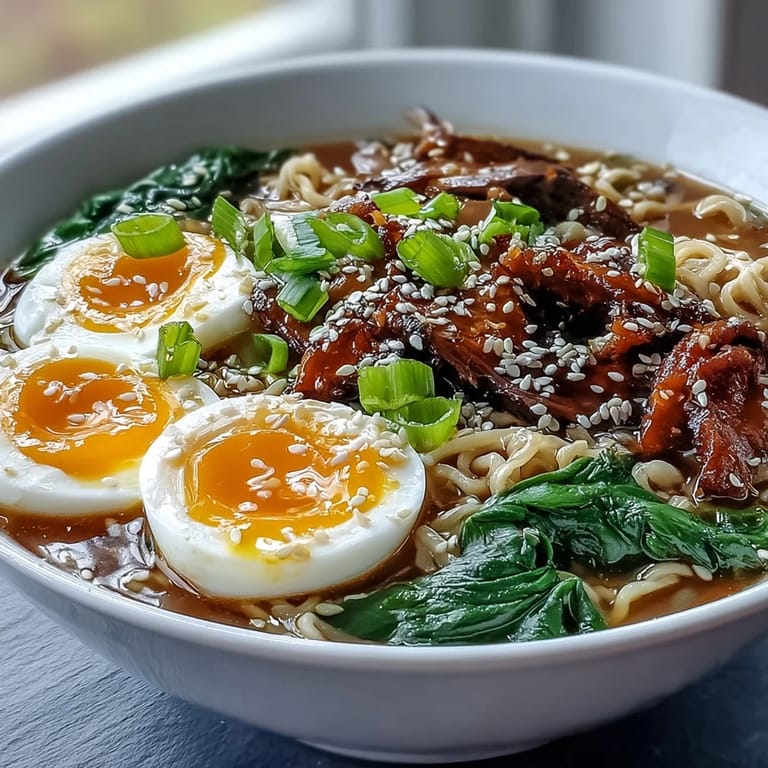
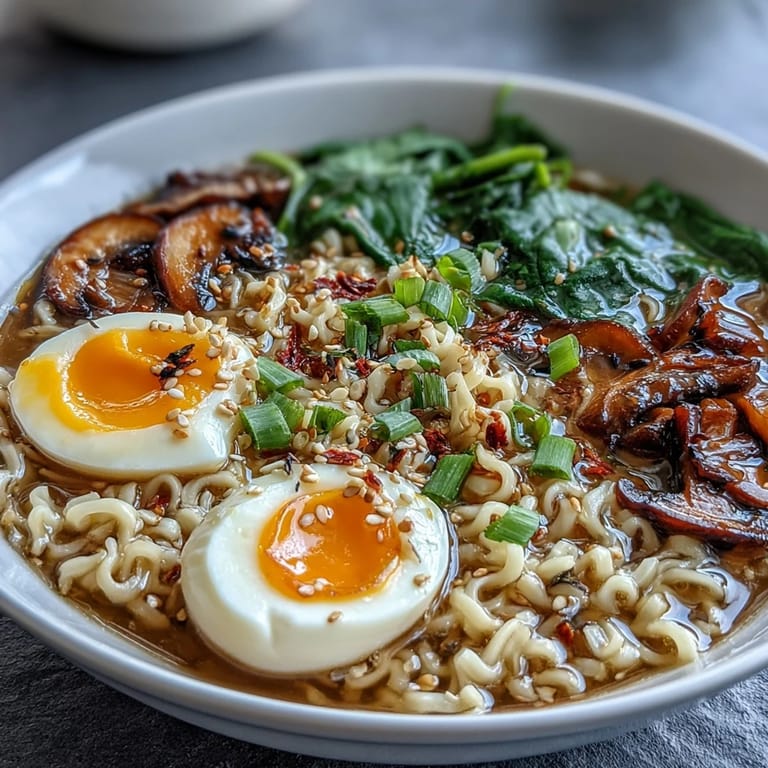
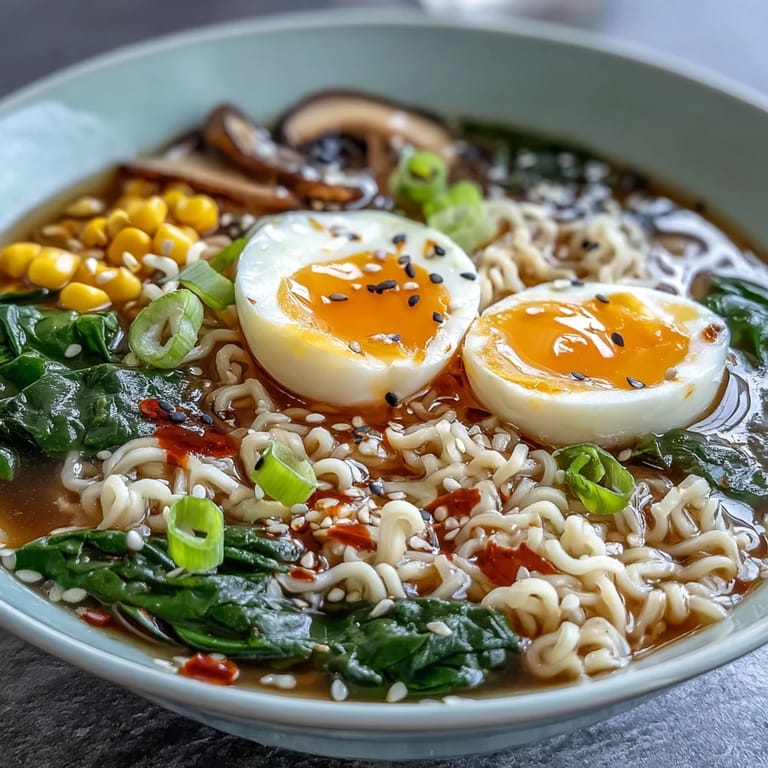
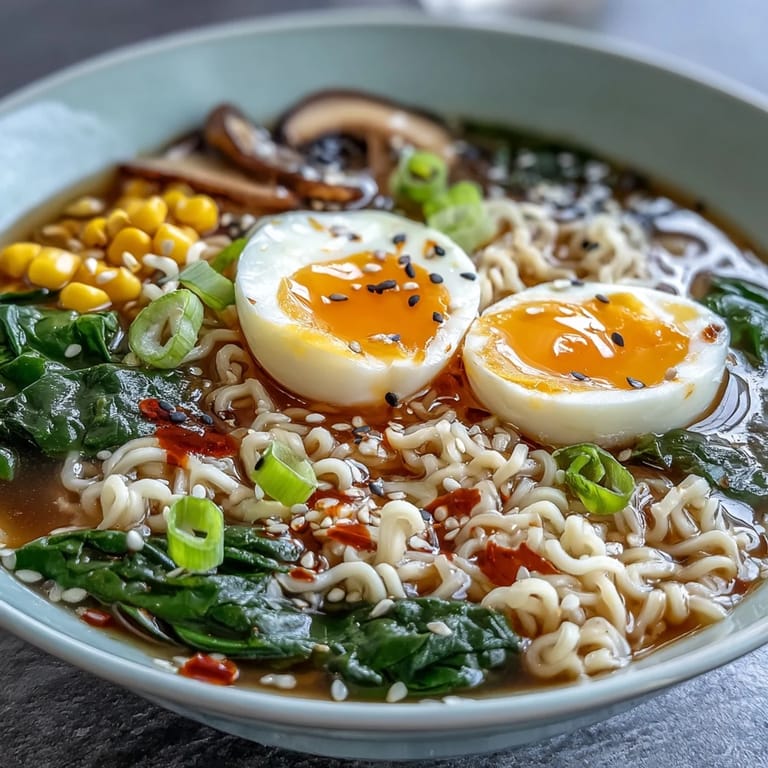
- Crown each bowl with mushrooms, spinach that wilts on contact, sweet corn, egg halves, green onion, nori, and a scattering of sesame seeds—each ingredient has its part to play.
- Serving the Moment:
- Slide the bowls in front of your people and serve immediately before the noodles absorb too much broth and lose their spring.
 Save to Pinterest
  Save to Pinterest
 There was one night when everyone eating at my table fell silent except for the sound of slurping and the satisfying clink of chopsticks against the bowl—and I realized that, in its own small way, this ramen had become a centerpiece for comfort and togetherness. Sometimes, sharing a meal like this speaks louder than words.
Bringing the Broth to Life
I used to think a good ramen broth was out of reach at home, but that was before I started layering flavors patiently—the ginger and garlic need to bloom in the hot oil, and everything else falls into place after that. The miso doesn’t just color the broth, it smooths the edges and gives every spoonful a depth you can’t quite define but crave again and again. Don’t shy away from adjusting salt or miso until it tastes right for you; the best bowl is the one that suits your taste buds in the moment.
Topping Choices That Make It Yours
I love setting out toppings in little bowls so everyone can build their ramen just the way they like: extra corn for someone with a sweet tooth, more nori for the friend who loves the sea, or even a pile of spinach for those craving greens. Letting people choose what goes on top makes this meal not just food, but a conversation and an experience. Sometimes, a new topping ends up sticking around for every pot thereafter.
Avoiding Common Ramen Mistakes
There have been days where I thought saving a step by cooking noodles in the broth was wise, only to end up with cloudy soup and gummy noodles. Rushing the egg peeling resulted in torn whites and a few grumbles, but cooling them thoroughly changed everything. Even when things don’t go as planned, ramen tends to forgive—and often tastes the best on those slightly chaotic nights.
- Let your broth cool a bit before adding miso or it loses some flavor punch.
- Have all your toppings prepped before you start boiling noodles.
- Never underestimate the joy of a perfectly jammy egg on top.
 Save to Pinterest
  Save to Pinterest
 Whether it’s a weeknight dinner or a way to show a friend you care, a bowl of this homemade miso ramen has a way of turning any meal into something memorable. I hope your kitchen is filled with as much warmth and laughter as mine has been with the help of this recipe.
Recipe Q&A
- → How do I dissolve miso without clumps?
Whisk the miso with a ladleful of hot broth until smooth before stirring it into the pot. Avoid boiling vigorously after adding miso to preserve its delicate flavor and texture.
- → What's the best way to get a soft-boiled yolk?
Gently simmer eggs for about 7 minutes, then plunge into ice water to stop cooking. Peel carefully; timing can vary slightly with egg size and altitude.
- → Which noodles work best?
Fresh ramen noodles deliver the springiest texture. Dried ramen or other wheat noodles work if cooked separately and added just before serving to prevent sogginess.
- → How can I make this fully vegan?
Use a robust vegetable broth, omit eggs, add firm tofu or tempeh, and choose plant-based noodles. Check that miso and mirin are vegan-labeled.
- → How do I deepen the broth flavor?
Sauté or roast mushrooms until caramelized, add a splash of sesame oil or a spoonful of tahini for richness, and finish with soy or extra miso to taste. A touch of mirin brightens the broth.
- → Can I store leftovers and how?
Store broth separately from noodles and toppings in airtight containers for up to 3 days. Reheat the broth gently, then assemble bowls to maintain noodle texture and topping freshness.