 Save to Pinterest
 Last summer, my neighbor dropped off a bag of red peppers from her garden, and I had no idea what to do with eight of them until I remembered my grandmother's trick: roast them until the skin blackens, then slip it off like magic. That afternoon, the kitchen filled with this sweet, smoky aroma that made everything feel intentional, and I realized I was making something that didn't need to be complicated to be memorable. This soup came together almost by accident, but it's become the dish I reach for whenever I want to feel like I'm cooking something both elegant and genuinely comforting.
I made this for a dinner party on a rainy November evening, nervous about whether the flavors would land, and one guest went completely quiet after their first spoonful. Not the reaction I expected, but then they looked up and said it tasted like comfort that also surprised them, which somehow felt like the best compliment possible. That's when I knew this recipe had something special worth protecting and sharing.
Ingredients
- Red bell peppers: Four large ones are your foundation; they should feel heavy and firm at the market, and roasting brings out a sweetness that somehow tastes deeper than raw.
- Yellow onion: One medium one, chopped small, builds the savory backbone everyone tastes but nobody can quite name.
- Garlic: Just two cloves minced fine because roasted peppers and garlic have this natural partnership that needs respect, not overwhelming.
- Carrot: A medium one adds subtle body and a hint of natural sweetness that balances the harissa's warmth.
- Olive oil: Three tablespoons total, split between roasting peppers and building your aromatics; good oil makes a real difference here.
- Harissa paste: One tablespoon is enough to whisper heat and complexity without shouting; start here and taste as you go if you're new to it.
- Smoked paprika: This transforms the whole flavor profile into something that feels almost like you cooked over fire when you didn't.
- Ground cumin: One teaspoon ties everything together with an earthiness that rounds out the heat.
- Vegetable broth: Three cups gives you enough liquid to create that velvety texture without diluting the pepper flavor.
- Canned diced tomatoes: The acidity cuts through the richness and keeps the soup bright instead of heavy.
- Salt and pepper: Season to your taste at the end; everyone's palate is different, and tasting as you go is never wrong.
- Sugar: Optional, but one teaspoon can save a batch if your tomatoes were particularly acidic or your peppers less sweet than expected.
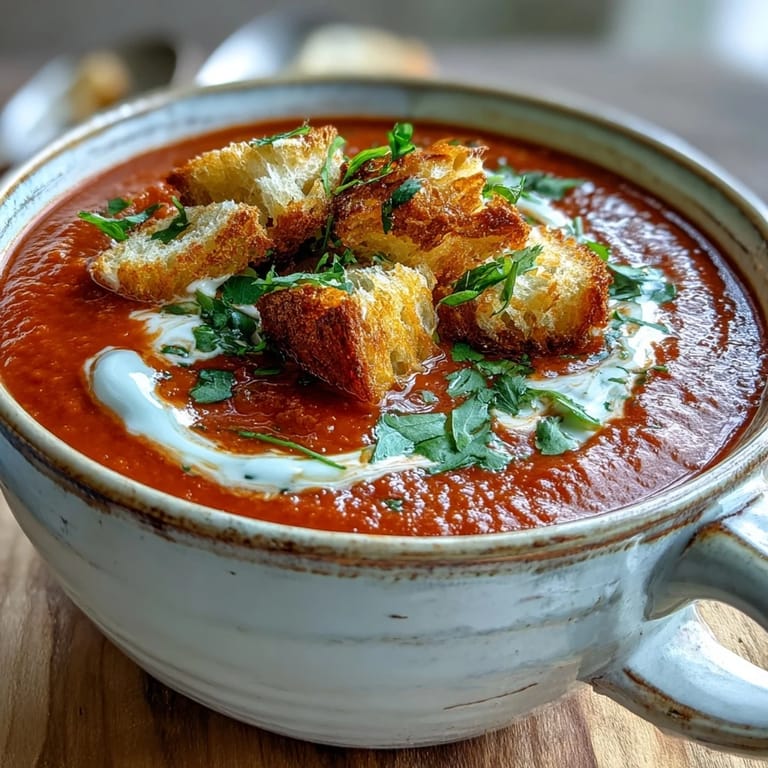
- Heavy cream or coconut cream: A quarter cup swirled in at the end is pure luxury, but this soup stands on its own without it.
- Day-old bread: Two cups cut into small cubes is crucial; fresh bread gets soggy instead of crispy, so stale bread is actually your friend here.
- For croutons, garlic powder and dried oregano: These humble seasonings transform plain bread into something people will steal from their bowls.
- Fresh parsley or cilantro: Chopped green herbs at the end feel like you spent more time than you actually did.
Tired of Takeout? 🥡
Get 10 meals you can make faster than delivery arrives. Seriously.
One email. No spam. Unsubscribe anytime.
Instructions
- Prepare your oven and peppers:
- Heat your oven to 425°F and arrange four red pepper halves skin side up on a baking sheet. Drizzle with a tablespoon of olive oil and slide them in for 25 to 30 minutes until the skins are charred dark and papery, which is exactly what you want. You'll know they're ready when the flesh inside feels soft and yielding when you press gently.
- Make crispy croutons while peppers roast:
- Toss your bread cubes with olive oil, garlic powder, oregano, and a pinch of salt, then spread them on another baking tray. Bake for 10 to 12 minutes, stirring once halfway through, until they're golden all over and make a satisfying crunch when you bite one. These come out around the same time as your peppers, which is convenient timing.
- Cool and peel the peppers:
- Let the roasted peppers cool until you can handle them without burning your fingers, then slip off the blackened skins under cool running water or just peel them dry over a bowl. The skin should come away easily now, and you'll be left with silky pepper flesh that's soft enough to break apart with your fingers.
- Build your flavor base:
- In a large pot over medium heat, warm the remaining tablespoon of olive oil and sauté your chopped onion, minced garlic, and diced carrot for 5 to 7 minutes until everything softens and starts to smell incredible. You'll know you're there when the onion turns translucent and the carrot pieces just begin to yield when you push them with a spoon.
- Wake up the spices:
- Stir in your harissa paste, smoked paprika, and cumin, cooking everything together for just one minute until the kitchen fills with a warm, complex aroma. This quick bloom develops the spices and lets them lose any raw taste they might have.
- Combine everything and simmer:
- Add your roasted peppers, the canned tomatoes with all their juice, three cups of vegetable broth, salt, pepper, and sugar if you're using it. Bring it to a boil, then lower the heat and let it simmer quietly for 15 minutes while the flavors get to know each other.
- Blend until silky:
- Once it's cooled slightly, use an immersion blender to purée everything until it's completely smooth and velvety, or transfer it carefully to a blender in batches if that's what you have. The soup should flow like silk and have no visible chunks or texture.
- Finish with cream and taste:
- Stir in cream or coconut cream if you want that extra richness, then taste and adjust your seasoning with more salt, pepper, or even a touch more harissa if it needs it. What tastes right to you is what matters here.
- Serve and celebrate:
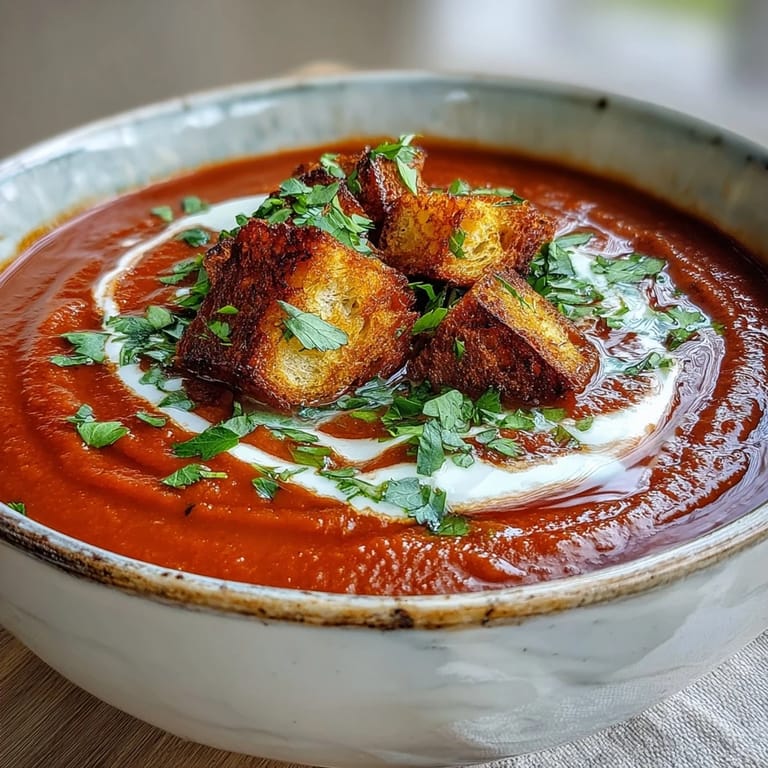
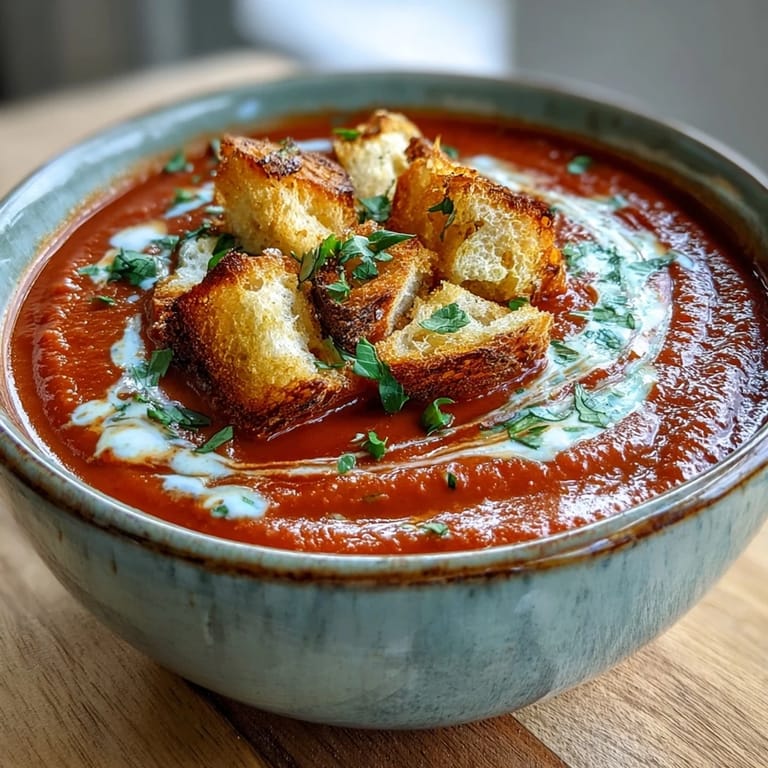
- Ladle the hot soup into bowls and top each one with a generous handful of crispy croutons and fresh herbs, then add a swirl of extra harissa or cream if you're feeling fancy. This is the moment where all that work becomes something worth tasting.
 Save to Pinterest
 My partner once told me this soup tastes like it took hours, but he watched me make it in less than an hour, and I realized that's when cooking stops feeling like a chore and starts feeling like a small magic trick you can pull off on any weeknight. That's what I love about this one.
The Roasting Game Changes Everything
The difference between raw peppers and roasted peppers is honestly the difference between a salad ingredient and the star of the show. Roasting concentrates their natural sugars and adds this subtle smokiness that you can't replicate any other way, which is why that 30-minute investment in the oven is worth every minute. I used to make pepper soup with raw peppers once and wondered why it tasted flat and one-dimensional; now I won't do it any other way.
Croutons Are the Reason People Ask for Seconds
A good soup can stand alone, but croutons transform it into something people remember and crave. These are intentionally seasoned with garlic and oregano so they taste like they belong in the bowl instead of feeling like an afterthought, and the contrast between their crunch and the soup's silky texture is honestly most of the pleasure. I've had people ask if they could just eat a bowl of croutons and call it dinner, which tells you something about how much these matter.
Harissa: A Gateway to Confident Cooking
Harissa used to intimidate me because it sounds exotic and feels fancy, but it's really just a way to add warmth and depth without making something spicy in the traditional sense. One tablespoon wakes up the entire soup and makes you taste things you didn't know were there, like how a single note of music can change the mood of a whole room. Start with this amount and taste as you go; you can always add more, but you can't take it back.
- If harissa is new to you, look for a North African brand that feels more paste than powder, since those blend more smoothly into the soup.
- Taste a tiny pinch on your finger first if heat makes you nervous, so you know what you're working with before it goes into the pot.
- A swirl of cream or an extra dollop of crème fraîche on top can cool down the heat if you find you've added too much.
 Save to Pinterest
 This soup has become my answer to almost every question about what to cook, whether it's for a casual lunch or when I want to impress someone without trying too hard. It's the kind of dish that teaches you something new every time you make it.
Recipe Q&A
- → Can I make this soup ahead of time?
Absolutely. The soup base actually improves after resting overnight in the refrigerator, allowing flavors to meld and deepen. Store separately from croutons to maintain their crunch, and add fresh garnishes just before serving.
- → What can I use instead of harissa?
Harissa brings a unique North African heat, but you can substitute with a blend of tomato paste, smoked paprika, cayenne, and a touch of cumin. Sriracha works in a pinch, though it lacks harissa's complex spice profile.
- → How do I achieve the smoothest texture?
Blending hot soup in batches in a traditional blender typically yields the silkiest results. For immersion blenders, blend longer than you think necessary—aim for at least 2-3 minutes of continuous blending to break down any remaining fibers.
- → Can I roast peppers differently?
Roasting directly over a gas flame creates the deepest charred flavor—simply hold peppers with tongs, turning until blackened on all sides. Alternatively, grill them on high heat for that authentic smoky dimension.
- → What bread works best for croutons?
Slightly stale, rustic bread like sourdough, ciabatta, or a hearty country loaf creates the crispiest croutons with excellent structural integrity. Fresh bread becomes mushy, so let cubes dry overnight for optimal crunch.
- → Is this suitable for freezing?
The soup portion freezes beautifully for up to three months. Cool completely before transferring to freezer-safe containers, leaving space for expansion. Thaw overnight in the refrigerator and reheat gently, adding a splash of broth if needed.