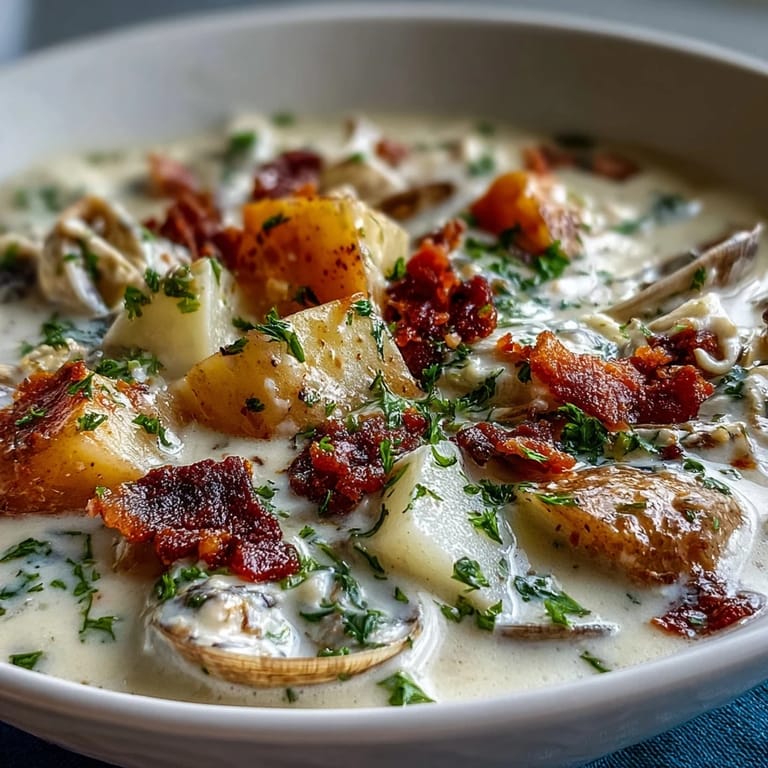
 Save to Pinterest
 My uncle's kitchen in Boston always smelled like the ocean, even on landlocked winter mornings. He'd pull out this enormous pot on Sunday afternoons and fill it with clams he'd bought fresh from the harbor, their shells still dripping with seawater. The first time I watched him make chowder, I was transfixed by how something so briny and intimidating transformed into creamy comfort in just under an hour. Now whenever I make it, I'm transported back to that steamy kitchen, the sound of shells clicking open, his hands moving with the ease of someone who'd made this a hundred times before.
I made this for my partner on a snowy evening when neither of us wanted to go out, and something shifted that night. The soup simmered away while we sat by the window watching the flakes accumulate, and when we finally ate it, still warm from the pot, it felt like we'd traveled somewhere together without ever leaving home. That bowl became the moment I realized cooking for someone isn't about showing off, it's about saying you matter enough for me to spend time on this.
Ingredients
- Fresh clams (littlenecks) or canned chopped clams with juice, 2 pounds or 2 cups: Fresh clams give you that pure briny liquor that becomes liquid gold in the pot, but canned clams work beautifully too if that's what you have, and honestly, no one will know the difference once everything's combined.
- Medium onion, finely diced, 1: This is your aromatic foundation, the one that disappears into the background but makes everything taste more like itself.
- Celery stalks, diced, 2: Celery adds a subtle earthiness that balances all that ocean brininess without ever announcing itself.
- Yukon Gold or russet potatoes, peeled and diced, 2 medium: Yukon Golds hold their shape better and have a buttery quality, but russets work if that's what's in your pantry and honestly contribute a pleasant starchiness that thickens the soup naturally.
- Garlic clove, minced, 1: Just enough to whisper in the background, adding complexity without overpowering.
- Fresh parsley, chopped, 2 tablespoons: This goes in at the very end as a bright, herbaceous finish that wakes everything up.
- Unsalted butter, 4 tablespoons: Butter is your vehicle for developing flavor, especially when you're building that roux.
- Heavy cream, 1 cup: This is what makes it a proper chowder, rich and luxurious and absolutely essential.
- Whole milk, 1 cup: The milk balances the cream, keeping it from being too heavy while maintaining that silky texture.
- Bottled clam juice or reserved juice from fresh clams, 2 cups: This is the soul of the soup, the reason it tastes like the ocean in the best possible way.
- Water, 1 cup: For steaming fresh clams or extending your liquid if needed.
- Salt pork or thick-cut bacon, diced, 4 ounces: Salt pork gives you that authentic New England flavor with a subtle salinity, but bacon works too if that's easier to find.
- Bay leaf, 1: Bay leaves add a subtle depth that's almost impossible to describe but immediately obvious when it's missing.
- Dried thyme, 1/2 teaspoon: Thyme ties everything together with a gentle herbal note that feels very New England.
- Salt and freshly ground black pepper, to taste: Taste as you go because the clam juice and salt pork already bring their own salinity to the table.
- All-purpose flour, 2 tablespoons: This creates your roux, which thickens the soup and gives it body without being heavy.
Tired of Takeout? 🥡
Get 10 meals you can make faster than delivery arrives. Seriously.
One email. No spam. Unsubscribe anytime.
Instructions
- Prepare your clams if using fresh:
- Scrub those clams under cold water with a stiff brush because sand loves to hide in shells, and nothing kills a good chowder faster than a grain between your teeth. Combine them with a cup of water in a large pot, cover it, and let them steam over medium heat until they open like little gifts, which takes about 6 to 8 minutes.
- Strain and set aside:
- Pour everything through a fine mesh strainer, reserving that liquid like it's gold because it absolutely is. Remove the clam meat from the shells once they've cooled enough to handle, chop it into bite-sized pieces, and set it aside on a plate.
- Render your pork fat:
- In your large Dutch oven or soup pot, cook the diced salt pork or bacon over medium heat, listening for it to get crispy and golden as the fat renders out into the bottom of the pot. This is your flavor foundation, so don't rush it and don't let it burn.
- Remove the meat and keep the fat:
- Use a slotted spoon to fish out the cooked meat and set it on a paper towel to stay crispy. Leave all that rendered fat right there in the bottom of the pot.
- Build your aromatics:
- Melt butter into that pork fat, then add your diced onion and celery, stirring occasionally until everything softens and turns translucent, about 5 minutes. You're looking for soft and sweet, not browned.
- Add the garlic:
- Once the onion and celery are where you want them, stir in your minced garlic and cook for just 1 more minute until it becomes fragrant. This short window keeps it from turning bitter.
- Make your roux:
- Sprinkle flour over the vegetables, stirring constantly for about 2 minutes to cook out the raw flour taste and create a paste-like base. You'll feel it shift under your spoon.
- Whisk in your liquids:
- Slowly pour in your clam juice, reserved clam cooking liquid, milk, and cream while whisking constantly to avoid any lumps forming. This is the moment where patience pays off, so go slow and keep stirring.
- Add potatoes and aromatics:
- Stir in your diced potatoes, bay leaf, and thyme, then let everything simmer uncovered until the potatoes are completely tender, which takes about 12 to 15 minutes. Stir occasionally so nothing sticks to the bottom.
- Add the clams back in:
- Once the potatoes are done, gently fold in your chopped clams along with that crispy salt pork or bacon. Simmer for just 3 to 5 minutes more, being careful not to boil because boiling will make the clams tough.
- Finish and season:
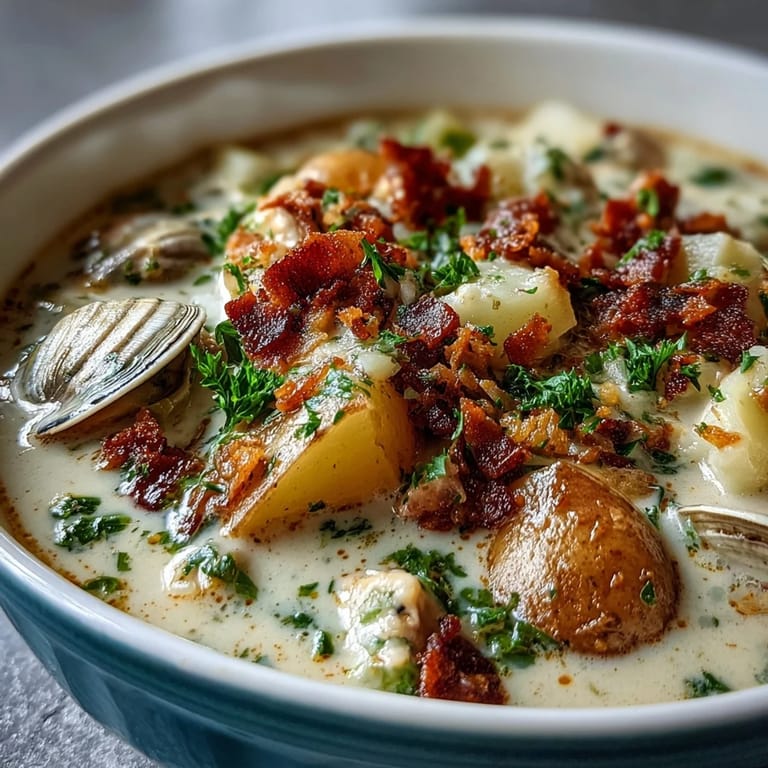
- Remove the bay leaf, stir in your fresh parsley, then taste carefully before seasoning with salt and pepper. Remember that the clam juice and salt pork already bring their own salinity to the party.
 Save to Pinterest
 Years ago I made this for my grandmother who'd grown up eating it every other Sunday, and watching her face when she took that first spoonful told me everything I needed to know. She closed her eyes like she was tasting memory itself, and suddenly this recipe became more than soup, it became a conversation across generations about love and home.
The Magic of Salt Pork
Salt pork is such an underrated ingredient, and it's the secret that makes this chowder taste authentically New England. Unlike bacon, which brings smokiness, salt pork adds a subtle briny quality that feels like it belongs with clams. If you absolutely cannot find it, bacon works, but try to find salt pork at least once because it's genuinely worth the small effort of seeking it out.
Fresh Versus Canned
There's something wonderful about buying fresh clams at the fishmonger and steaming them yourself, listening to them snap open, knowing exactly where your dinner came from. But canned clams work beautifully too, and sometimes practicality wins, and that's perfectly fine. The soup will be delicious either way, and what matters more is that you're making it at all.
The Finishing Touches
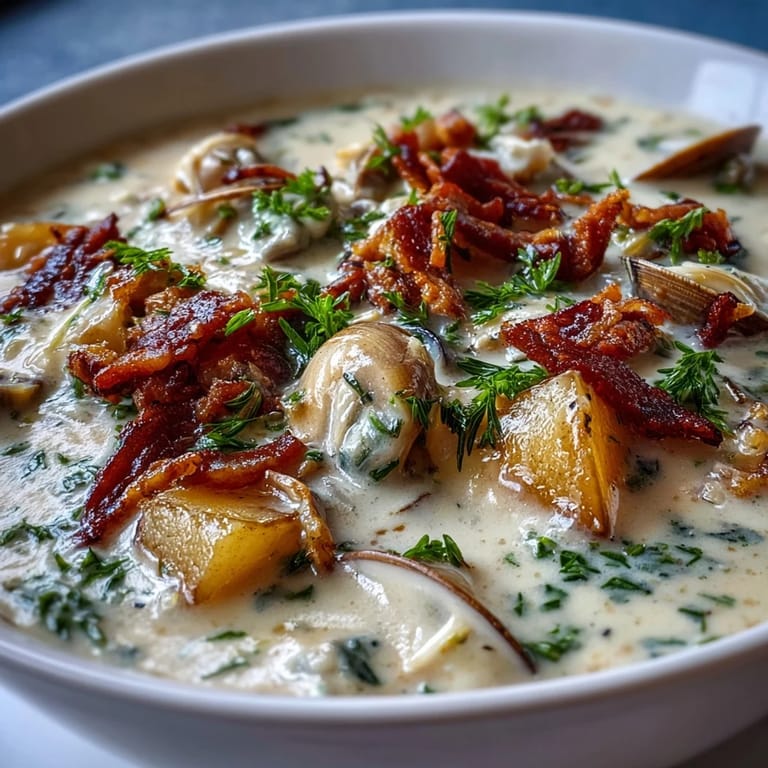
The parsley at the end isn't just garnish, it's a brightness that cuts through all that richness and makes you want another spoonful. Serve this in deep bowls while it's still steaming, ideally with oyster crackers on the side for texture, and maybe a slice of crusty bread for soaking up every last drop.
- Fresh parsley makes a real difference, so skip the dried stuff if you can manage it.
- Oyster crackers are traditional, but honestly, any crispy bread works beautifully.
- This keeps for three days refrigerated and tastes even better the next day as flavors deepen and marry together.
 Save to Pinterest
 This chowder is one of those rare dishes that's simultaneously humble and elegant, the kind of food that makes people feel cared for without you having to fuss unnecessarily. Make it on a cold night, share it with someone who matters, and let it do what good food does best.
Recipe Q&A
- → What's the difference between New England and Manhattan clam chowder?
New England clam chowder is creamy and white, made with a milk or cream base, while Manhattan clam chowder is tomato-based and red. The New England version also typically includes potatoes and relies on salt pork or bacon for flavor depth.
- → Can I use canned clams instead of fresh?
Yes, canned chopped clams work well in this chowder. Use 2 cups of canned clams with their juice. The juice adds valuable clam flavor to the broth. Just be sure to check labels for quality and avoid those with excessive additives.
- → How do I prevent the dairy from curdling?
Add the cream and milk after the roux is fully incorporated and whisked with clam juice. Avoid boiling the chowder once dairy is added—keep it at a gentle simmer. This maintains the smooth, creamy texture without separation.
- → Can I make this chowder ahead of time?
The chowder reheats beautifully, though the potatoes may absorb more liquid overnight. If making ahead, cook everything except the final dairy addition. Reheat gently, then stir in the cream and milk just before serving.
- → What's the best way to thicken clam chowder?
The traditional method uses a roux made from butter and flour. For a gluten-free option, mash some of the cooked potatoes against the side of the pot, or use cornstarch slurry. The natural starch from potatoes also helps thicken the broth as it cooks.
- → What should I serve with clam chowder?
Oyster crackers are the classic accompaniment, providing a salty crunch. Crusty bread, warm biscuits, or soda bread also work well. For a complete meal, serve with a simple green salad dressed with vinaigrette.