 Save to Pinterest
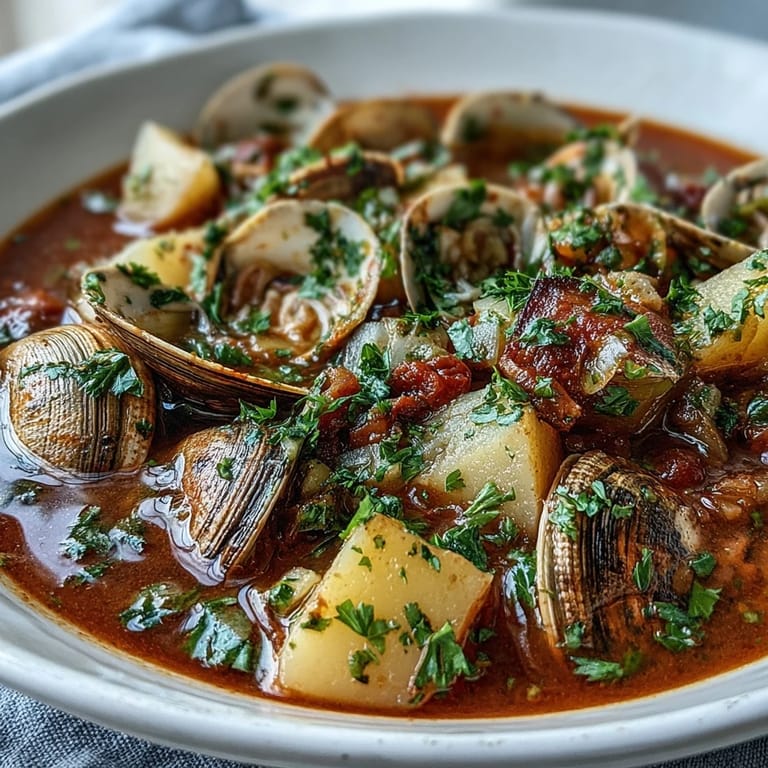
 There's something about the briny smell of clam juice hitting hot oil that instantly transports me to a crowded fish market on the Boston waterfront, where my uncle would pick through mountains of littlenecks with the confidence of someone who'd done it a thousand times. He taught me that Manhattan clam chowder wasn't pretentious or complicated—it was honest, vibrant, and meant to celebrate what the ocean actually tasted like rather than hide it under cream. Years later, I realized he was right; this tomato-based version strips away the fussiness and lets tender clams, sweet vegetables, and that deep red broth do all the talking.
I made this for my roommate once on a random Tuesday after she'd had a rough day at work, and I watched her face soften with that first spoonful—the kind of moment where food becomes a quiet conversation. She went back for seconds without saying much, just pushing her spoon through the broth with the kind of focus people usually reserve for their phones. That's when I knew this recipe had staying power.
Ingredients
- Fresh clams (littlenecks) or canned chopped clams: Fresh clams bring theater to the kitchen with their sudden pop and release of briny liquid, but canned clams are equally valid and save you from the minor panic of wondering if they'll actually open.
- Clam juice: This is your foundation—taste it first because some bottled versions are saltier than others, which changes how much salt you'll need later.
- Diced tomatoes with juice: The acidity balances the brininess of the clams and adds color that makes people want to eat this soup immediately.
- Olive oil: Use a decent quality here since it coats the vegetables at the start and carries flavor throughout.
- Onion, celery, carrots, and bell pepper: These form the aromatic base—don't skip any of them or you'll lose the depth that makes people ask for the recipe.
- Yukon gold potatoes: They hold their shape better than russets and add a subtle butteriness that feels natural in this broth.
- Garlic, thyme, oregano, and bay leaves: These dried herbs won't impress anyone on their own, but together they create a savory backbone that makes the clams taste more like themselves.
- Red pepper flakes and black pepper: Optional heat and finishing pepper—add the flakes if you want a gentle warmth that builds quietly.
- Fresh parsley: This is your final flourish, adding brightness and a reminder that this soup celebrates what's fresh and alive.
Tired of Takeout? 🥡
Get 10 meals you can make faster than delivery arrives. Seriously.
One email. No spam. Unsubscribe anytime.
Instructions
- Prep your clams if using fresh:
- Scrub them under cold running water to remove any grit, then steam them in water until they open—you'll hear them pop and smell the ocean pouring out. Shuck them, chop them roughly, and strain their liquid carefully through a fine strainer so no sand makes it into your pot.
- Build your flavor base:
- Heat olive oil in a large heavy pot over medium heat and add your chopped onion, celery, carrots, and bell pepper, letting them soften slowly together until the kitchen smells sweet and savory. This usually takes about 6 to 8 minutes—you're not rushing, just coaxing out their natural sugars.
- Wake up the garlic:
- Once the vegetables are soft, stir in minced garlic and let it sizzle for just a minute until fragrant—any longer and it turns bitter and nobody wants that.
- Build the broth:
- Add your diced potatoes, canned tomatoes with their juice, clam juice, the reserved clam cooking liquid if you used fresh clams, and all your dried herbs and seasonings. Stir everything together so nothing sticks to the bottom, then bring it to a boil.
- Simmer until potatoes are tender:
- Reduce heat to a gentle simmer and let it cook uncovered for 20 to 25 minutes—you're looking for potatoes that break easily with a wooden spoon but haven't turned to mush. The longer it simmers, the more the flavors marry together and the better it tastes.
- Finish with your clams:
- If you used canned clams or if you steamed fresh ones earlier, stir them in gently now and let everything heat through for another 3 to 5 minutes—clams toughen if you cook them too long, so this is just about warming them back up.
- Taste and adjust:
- Remove the bay leaves and taste the broth—you might need more salt or a pinch more pepper depending on your clam juice brand. Trust your palate here; this soup should taste like the sea but not overpower.
- Serve with intention:
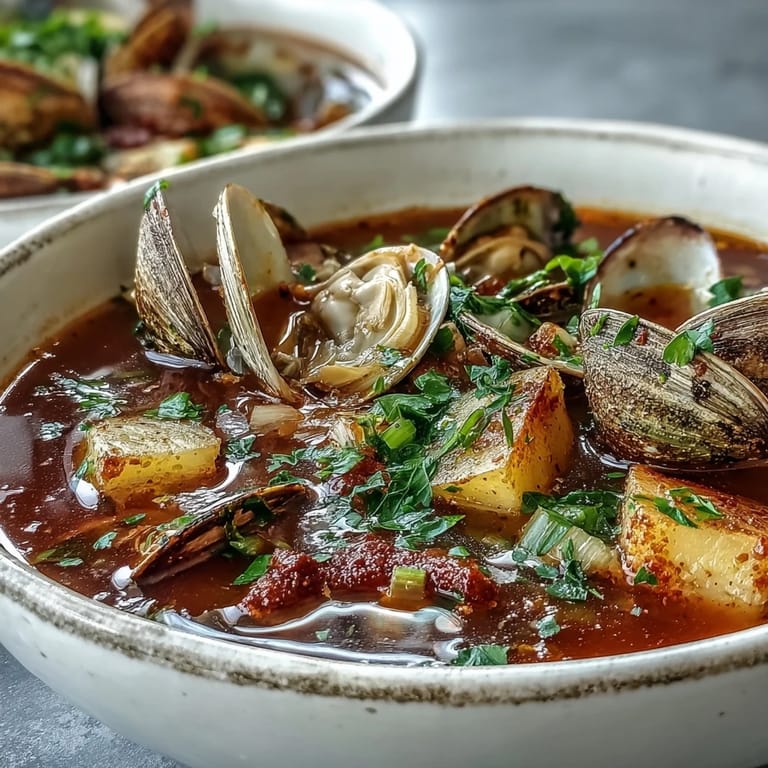
- Ladle into bowls and scatter fresh parsley over the top, then serve immediately while the heat is still rising and carrying all that briny aroma toward anyone who's about to eat it.
 Save to Pinterest
 The best version of this soup I ever made was on a snowy afternoon when I had time to let it simmer longer than the recipe called for, and by hour two the whole apartment smelled like a New England diner in the best way possible. My neighbor knocked on the door just to ask what was cooking, and we ended up sharing bowls at my kitchen counter while the snow fell outside, talking about nothing in particular except how good the soup was.
Fresh Clams vs. Canned: Which Should You Choose
Fresh clams feel special and create a theatrical moment when they open—the sound, the smell, the sudden release of briny liquid—but canned clams are honestly just as delicious and eliminate the anxiety about whether they'll cooperate. I use fresh clams when I have time to enjoy the process and when someone's coming over for dinner; I use canned on regular Tuesdays when I just want the flavor without the performance. Either way, you're getting tender, briny clams swimming in tomato broth, which is the whole point.
Making This Soup Ahead and Reheating
This chowder actually improves if you make it a day ahead, because all the flavors settle into the broth overnight and taste more cohesive when you reheat it. Store it in an airtight container in the fridge for up to three days, then reheat gently over medium-low heat, stirring occasionally and resisting the urge to boil it hard—aggressive heat will make the clams tough.
Variations and Additions Worth Trying
This recipe is flexible enough to absorb your preferences without losing its identity; I've added everything from crispy bacon to corn kernels to a splash of white wine, and it's never failed me. The base of clams, tomatoes, and aromatic vegetables is strong enough that it can support improvisation without demanding it. Keep these quick ideas in your back pocket when you need to adjust or personalize the soup for whoever's eating it.
- Stir in diced cooked bacon with the vegetables for a smokier flavor, or try 2 ounces if you want it subtle.
- Add a handful of corn kernels during the last 5 minutes of simmering if you want sweetness and texture, or increase potato quantity if you prefer a heartier chowder.
- Use red bell pepper instead of green for a naturally sweeter flavor, or keep both for complexity.
 Save to Pinterest
 This soup tastes like home even if you've never been to the Northeast, and it's the kind of recipe that reminds you why we cook for people in the first place. Make it, feed someone, and watch their face when that first spoonful hits.
Recipe Q&A
- → What makes Manhattan clam chowder different from New England clam chowder?
Manhattan clam chowder uses a tomato-based broth instead of the creamy milk base found in New England-style versions. This gives it a lighter texture and a vibrant red color. The tomato base also adds natural sweetness and acidity that complements the briny clams, creating a more zesty and refreshing soup while still being hearty and satisfying.
- → Can I use canned clams instead of fresh?
Absolutely. Canned chopped clams work well in this chowder and make preparation much quicker. Use about 3 cups of canned clams, drained, and reserve the juice to add to the broth. This actually helps build flavor since you're incorporating both the clam meat and their natural juices. Just be sure to adjust the salt accordingly since canned clams can be sodium-rich.
- → How long does this chowder keep in the refrigerator?
This Manhattan clam chowder stores beautifully for 3-4 days in an airtight container in the refrigerator. The flavors often develop and meld together even better after a day or two. Reheat gently over medium-low heat, stirring occasionally to prevent sticking. Avoid boiling when reheating as this can make the clams tough.
- → Can I freeze Manhattan clam chowder?
Yes, this chowder freezes well for up to 3 months. Let it cool completely before transferring to freezer-safe containers, leaving some room for expansion. Thaw overnight in the refrigerator before reheating. Note that the potatoes may become slightly softer after freezing and thawing, but the overall flavor and texture remain enjoyable.
- → What's the best way to serve this chowder?
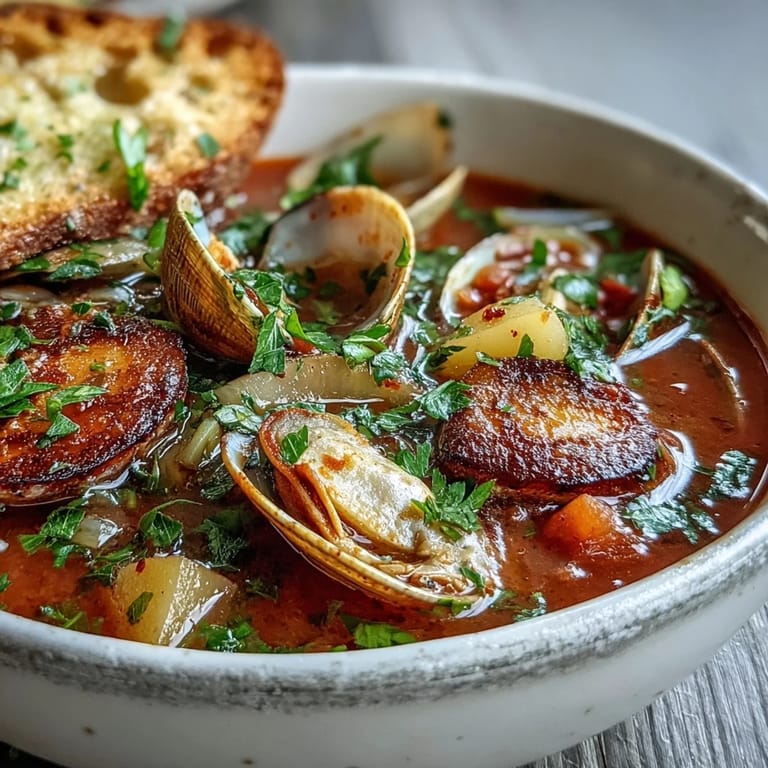
Serve piping hot in deep bowls, garnished with fresh chopped parsley for a pop of color and freshness. Traditional accompaniments include oyster crackers, crusty sourdough bread, or warm dinner rolls for soaking up the flavorful broth. A simple green salad with vinaigrette makes a nice light side to balance the hearty chowder.
- → How can I add more depth of flavor?
For a smoky dimension, try adding 2 ounces of diced cooked bacon when sautéing the vegetables. You could also substitute smoked paprika for some of the regular seasonings, or add a splash of white wine when deglazing the pot. Some cooks like to include a strip of kombu (dried kelp) while simmering for extra umami depth—just remove it before serving.