 Save to Pinterest
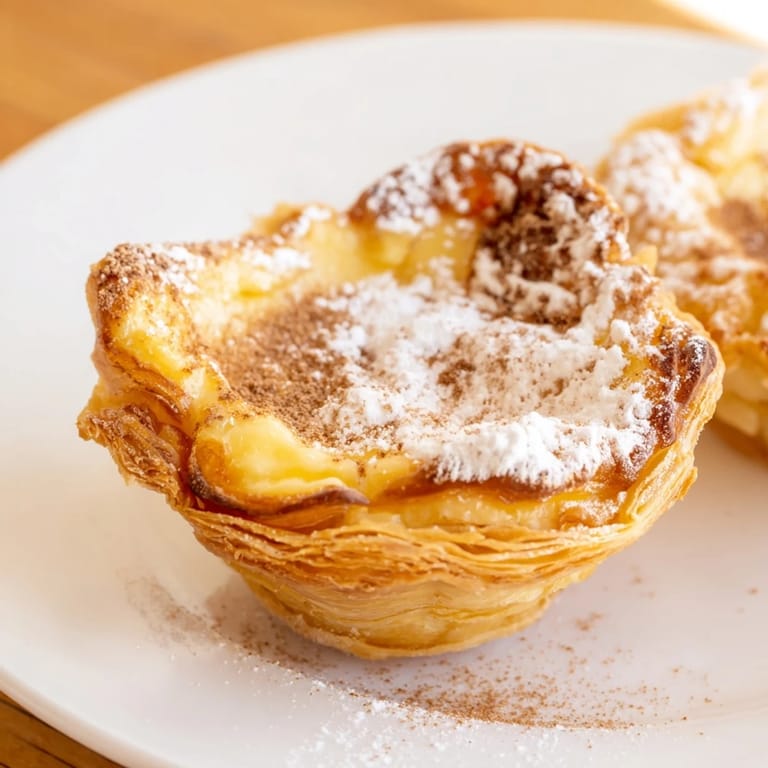
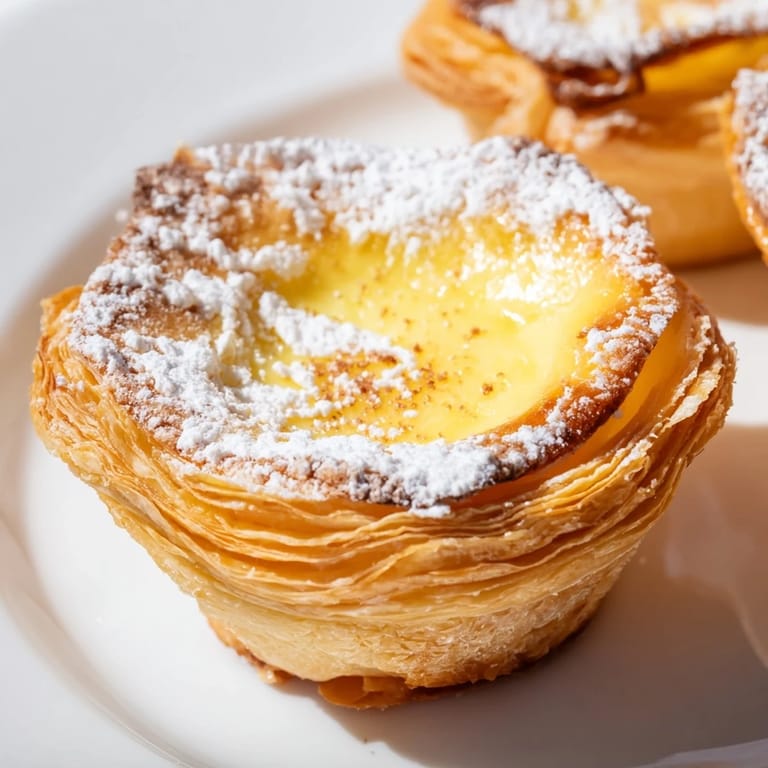
 My first Portuguese egg tart appeared on a small ceramic plate at a tiny pastry shop in Lisbon, arriving with a wisp of steam still rising from its golden phyllo cup. I bit through the crispy, butter-kissed layers and found myself in that strange moment where texture and flavor align so perfectly that you forget to chew for a second. The custard was warm, silky, with just a hint of cinnamon that felt like a secret whispered by someone who'd been making these for decades. I spent the rest of that afternoon trying to recreate the experience in my own kitchen, and these tarts became my answer to that memory.
I made these for my neighbor Elena on a quiet Sunday morning, watching her face light up when she bit into one still warm from the oven. She closed her eyes and said nothing for what felt like a long time, then asked for the recipe before she'd even finished chewing. We ended up sharing a pot of coffee on my kitchen counter while I talked her through the steps, and she left with three wrapped in foil, humming something I couldn't quite place.
Ingredients
- Phyllo pastry sheets: These paper-thin layers are the foundation of the crisp exterior, and brushing each one individually with melted butter is what transforms them into something golden and shatteringly delicate.
- Unsalted butter: Melted and brushed generously, it's what gives the phyllo its deep color and that irresistible flaky texture.
- Whole milk: This is the base that carries the cinnamon flavor throughout the custard, creating that silky mouthfeel.
- Cornstarch: Just enough to thicken the custard without making it starchy or heavy, keeping it creamy instead of gelatinous.
- Heavy cream: This luxury ingredient is what makes the custard feel luxurious, adding richness that powdered sugar alone could never achieve.
- Granulated sugar: Not too much, because the goal is custard, not sweetened eggs, though some prefer adding an extra tablespoon if they like things on the sweeter side.
- Egg yolks: The star of the custard, these create that distinctive Portuguese tart flavor and silky consistency that you simply cannot fake.
- Pure vanilla extract: A modest amount that rounds out the flavors without announcing itself.
- Ground cinnamon: Added to the custard itself, this warm spice became the signature note I kept chasing after my first Lisbon tart.
- Salt: A pinch that balances everything and makes the other flavors sing brighter.
- Powdered sugar and extra cinnamon for topping: These finish the tarts with a visual flourish and an extra whisper of spice.
Tired of Takeout? 🥡
Get 10 meals you can make faster than delivery arrives. Seriously.
One email. No spam. Unsubscribe anytime.
Instructions
- Heat your oven and prep:
- Set it to 200°C (400°F) so it's ready when you are. This temperature is the sweet spot that colors the phyllo without burning it.
- Butter and stack the phyllo:
- Phyllo dries out faster than you'd think, so work quickly and keep the stack you're not using covered with a damp towel. Brush each sheet lightly with melted butter, then stack three sheets together and cut them into squares large enough to line your muffin cups with a little overhang.
- Shape the phyllo cups:
- Press each buttered stack gently into the muffin tin, letting it settle naturally into the cup shape. The edges will have peaks and valleys, which is exactly what you want.
- Pre-bake the shells:
- Bake for 8 to 10 minutes until they turn a light golden color and feel dry to the touch. This ensures they stay crisp when you fill them.
- Make the custard base:
- In a medium saucepan, whisk the milk and cornstarch together first to prevent lumps, then add the cream, sugar, egg yolks, vanilla, cinnamon, and salt. The key is whisking smoothly so the eggs incorporate evenly without scrambling.
- Cook the custard slowly:
- Over medium heat, stir constantly with a whisk, watching as the mixture gradually thickens. This takes about 5 to 7 minutes, and you'll know it's ready when it coats the back of a spoon and doesn't immediately run off.
- Fill the waiting cups:
- Pour the warm custard into each phyllo cup, dividing it evenly so they all look like twins. The custard should come almost to the rim but not spill over.
- Bake until set:
- Return them to the oven for 8 to 10 minutes, until the tops are light golden and the centers feel just barely firm to a gentle touch. A tiny jiggle in the very center is fine.
- The finishing flourish:
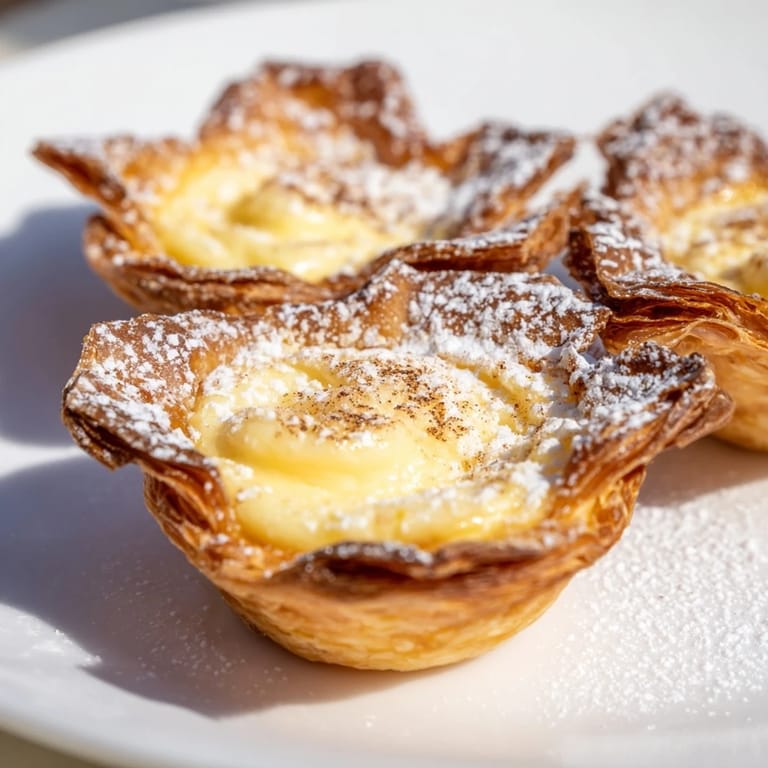
- After they've cooled for a few minutes, dust each tart with a pinch of cinnamon and a light shower of powdered sugar. This is where they transform from homemade into something that looks like it came from a pastry case.
 Save to Pinterest
 There's a moment when you pull these tarts from the oven and the smell of cinnamon and buttered phyllo fills your kitchen that feels like the tarts have already become more than just dessert. They become the reason someone stops by, the thing that stays in memory longer than the meal itself, the small luxury that transforms an ordinary afternoon into something worth remembering.
Timing and Temperature Wisdom
I learned the hard way that 200°C is not a suggestion but a commitment. Too low and your phyllo never crisps, staying soft and greasy instead of shattering. Too high and the custard tops brown before the insides set, leaving you with an overcooked shell and a runny center. The oven temperature matters as much as the technique does, and trusting it is half the battle. Serving them slightly warm, right around body temperature, unlocks their best texture, when the phyllo is still crisp and the custard is silky without being piping hot.
The Portuguese Touch
A pastry chef in Porto once told me that traditional Portuguese egg tarts often hide a whisper of lemon zest in the custard, a secret so subtle that most people can't name what they're tasting but notice when it's missing. I've experimented with both versions, and the lemon version feels slightly brighter, more alive, while the cinnamon-only version tastes warmer and more familiar. Neither is more authentic than the other; both are correct, depending on which Portuguese grandmother you ask. The beauty of making these at home is that you get to choose which version feels right to you.
Storage and Second Life
These tarts live best in the refrigerator, where they keep for three or four days, though I've never had leftovers last that long. When you're ready to eat one, a quick 5-minute spell in a 180°C oven brings back the crispness of the phyllo without drying out the custard inside. Some people are tempted to eat them cold straight from the fridge, and while that's not wrong, you're missing the full experience. Serve alongside espresso for a European afternoon, or pair with chilled white port if you want to feel transported back to that little pastry shop in Lisbon.
- Keep them in an airtight container to prevent the phyllo from absorbing moisture from the fridge.
- Reheat gently and briefly, checking at 3 minutes so you don't overdo it.
- These do not freeze well, as the phyllo texture never quite recovers, so eat them fresh or within a few days.
 Save to Pinterest
 These Portuguese egg tarts are the kind of recipe that connects you to a place and a moment every time you make them. They've earned their place on my dessert table and, I suspect, will soon earn theirs on yours.
Recipe Q&A
- → What type of pastry is used for the cups?
Phyllo pastry sheets are brushed with melted butter, stacked, and baked to create crisp, flaky cups for holding the custard.
- → How is the custard thickened without lumps?
Milk and cornstarch are whisked together until smooth before adding other ingredients, then cooked over medium heat while stirring constantly to ensure a creamy texture.
- → Can the custard be flavored differently?
Yes, adding a pinch of lemon zest to the custard can enhance its flavor while maintaining the traditional profile.
- → What is the best way to store leftovers?
Keep leftovers refrigerated and reheat briefly in the oven to restore crispness to the pastry cups.
- → Are these suitable for vegetarians?
Yes, the tart includes eggs and dairy but contains no meat products, making it suitable for a vegetarian diet.