 Save to Pinterest
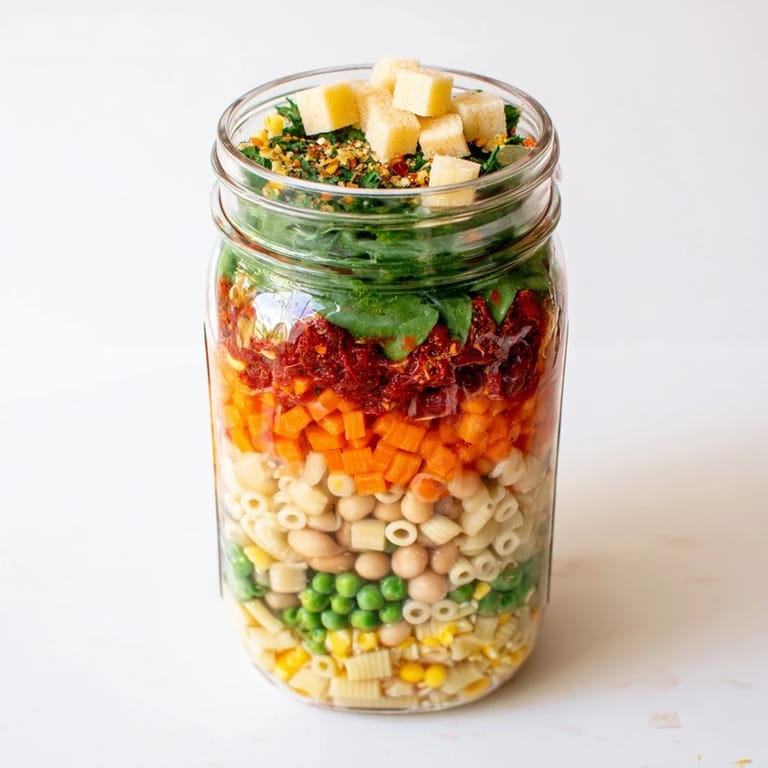
 The idea for these Minestrone Soup jars struck me one particularly chaotic Tuesday when my meal prep plans had completely unraveled. Standing in front of my refrigerator full of produce threatening to spoil, I remembered how my Italian neighbor used to layer ingredients in jars for quick cooking. Something clicked as I gathered vegetables, pasta, and beans from my pantry. That evening, I assembled four perfect little soup ecosystems, each waiting to bloom into a hearty meal with just hot water.
Last winter during a particularly nasty cold snap, my friend Sophia came over looking absolutely depleted after her night shift. I remembered the minestrone jar tucked in my fridge and within minutes, we were cradling steaming mugs of soup. The way her face relaxed with that first spoonful made me realize how something so simple could be exactly what someone needed. We sat by the window watching snow fall, talking until our mugs were empty.
Ingredients
- Small pasta: The foundation of our soup jar provides the perfect carb base, but choose shapes that cook quickly and wont expand too much, like ditalini or mini shells.
- Dried red lentils: These little protein powerhouses cook quickly without pre-soaking, dissolving slightly to give the broth body and a subtle earthy sweetness.
- Sun-dried tomatoes: The secret flavor bomb that infuses everything with an intense umami richness, far more concentrated than regular tomatoes could ever provide.
- Vegetable bouillon cube: Tuck this at the very top of your jar where it can dissolve first and season everything as the water filters down through the layers.
- Diced vegetables: Cut these uniformly small, about corn kernel size, so they cook through evenly in the short steep time.
Tired of Takeout? 🥡
Get 10 meals you can make faster than delivery arrives. Seriously.
One email. No spam. Unsubscribe anytime.
Instructions
- Create your foundation:
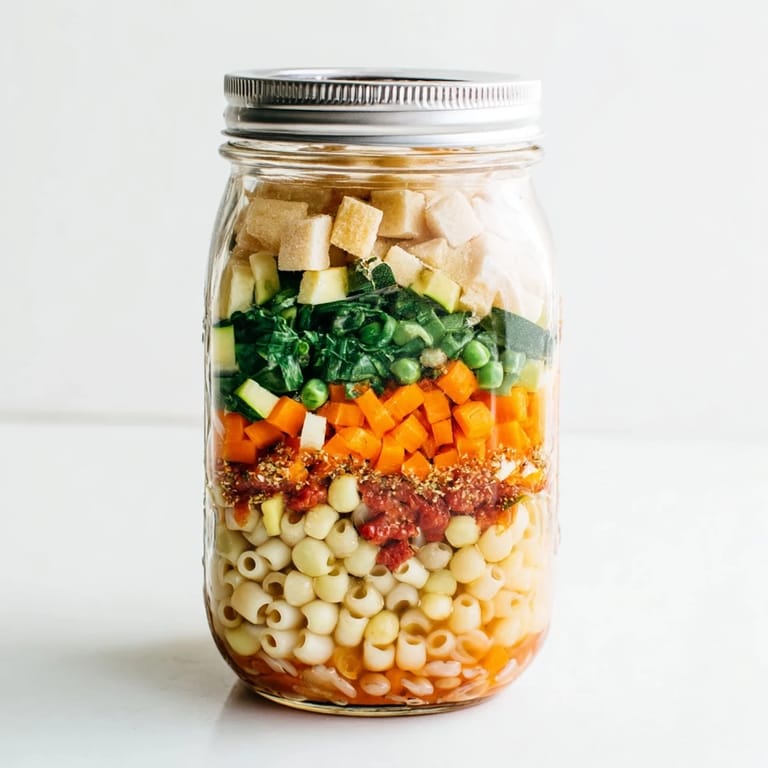
- Layer pasta at the very bottom of each jar, creating a solid base that will absorb liquid from above. This strategic placement prevents the pasta from floating and cooking unevenly.
- Build your protein layer:
- Add the lentils and cannellini beans next, creating a protein-rich middle section. Press down gently to eliminate air pockets that might prevent even cooking.
- Construct the veggie rainbow:
- Layer each vegetable in order of cooking time, with harder vegetables like carrots first and more delicate ones like spinach toward the top. The visual effect is beautiful, but its also practical for proper cooking.
- Flavor from the top down:
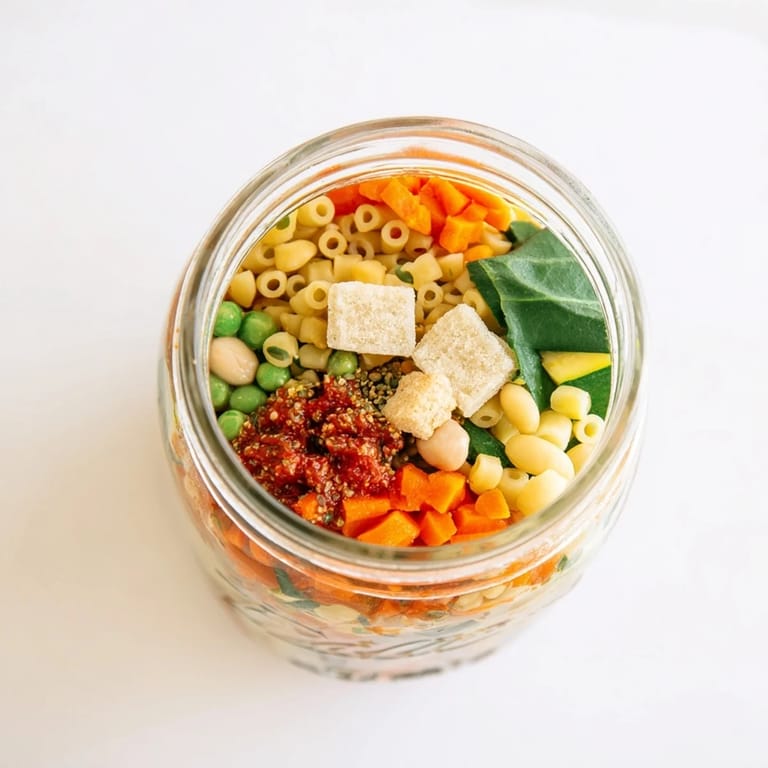
- Finish with sun-dried tomatoes, tomato paste, and all seasonings at the very top of the jar. When hot water hits these ingredients first, the flavors will cascade downward through all layers.
- Activate your soup:
- When hunger strikes, just add two cups of boiling water and watch the magic happen as colors swirl and aromas bloom. Let it steep like tea for 10-15 minutes, checking the pasta for doneness.
 Save to Pinterest
 During a particularly grueling work week last month, I found my last minestrone jar waiting in the fridge on Friday afternoon. Exhausted and ready to order takeout, I decided to give myself just five minutes to make something real. As the steam rose from the jar and familiar aromas filled my kitchen, I felt my shoulders drop for the first time all week. Sometimes self-care comes in the most practical forms, like a jar of soup you prepared for your future tired self.
Make It Your Own
After making these jars dozens of times, Ive found endless ways to customize them based on whats in my fridge. Swap out zucchini for bell peppers, try chickpeas instead of cannellini beans, or add a pinch of smoked paprika for depth. The ratios stay roughly the same, but the flavors can travel from Mediterranean to Mexican with just a few ingredient swaps. My colleagues now regularly text me photos of their own creative variations, each one more colorful than the last.
Storage and Shelf Life
Through trial and error, Ive discovered these jars keep beautifully in the refrigerator for up to four days, with the ingredients remaining distinct and fresh. The key is proper layering with denser, less moisture-sensitive ingredients at the bottom. Freezing the assembled dry jars isnt recommended as the vegetables release too much moisture upon thawing, but you can freeze prepared soup after cooking if needed. Just leave about an inch of headspace in the jar to allow for expansion.
Serving Suggestions
While these soups are complete meals on their own, Ive found a few finishing touches that elevate them from convenient to crave-worthy. A drizzle of good olive oil adds richness, a squeeze of lemon brightens everything, and torn fresh herbs make it feel restaurant-worthy even at your desk. What began as convenience food has become something I genuinely look forward to eating.
- Pack a small container of freshly grated Parmesan to sprinkle on top just before eating for maximum flavor impact.
- A few drops of chili oil or hot sauce added after cooking creates a warming sensation perfect for cold days.
- Keep a small jar of toasted seeds or croutons at your desk to add textural contrast to the soup.
 Save to Pinterest
 These minestrone jars have become my personal rebellion against sad desk lunches and expensive takeout. Every time I pull one from my fridge, Im reminded that a few minutes of thoughtful preparation can transform an ordinary lunch break into a moment of genuine nourishment.
Recipe Q&A
- → How long can I store the layered jars?
Store sealed jars in the refrigerator for up to 4 days. The dry ingredients and low moisture keep the soup fresh without the water added.
- → Can I use fresh vegetables instead of dried?
Yes, you can substitute fresh vegetables, but use slightly less volume since fresh vegetables release more moisture. Adjust water quantity accordingly when serving.
- → What pasta works best for this preparation?
Small pasta shapes like ditalini, elbow macaroni, or mini shells work best. They cook quickly and distribute evenly throughout the layered soup.
- → How do I make this vegan?
Simply omit the Parmesan cheese garnish. All other ingredients—pasta, vegetables, lentils, beans, and seasonings—are plant-based by default.
- → Can I heat this on the stovetop instead of microwaving?
Yes, pour the jar contents into a pot, bring to a simmer, and cook until the pasta and vegetables are tender, about 10-15 minutes. This method is gentler on the jars.
- → What vegetables can I swap in the layers?
Try diced bell peppers, green beans, corn, mushrooms, or kale. Maintain similar vegetable sizes for even cooking. Adjust seasonings to complement your chosen vegetables.