 Save to Pinterest
 There's something almost meditative about watching tomatoes transform in a hot oven—the way their edges blacken and wrinkle, how the kitchen fills with this concentrated, almost caramelized sweetness that bears little resemblance to a raw tomato. I discovered this soup on a gray afternoon when I had too many tomatoes and too little patience for anything complicated, and what emerged was so velvety and alive that I've been making it ever since. The cream swirl and crispy croutons arrived purely by accident, but they turned out to be exactly what it needed.
I once made this for my sister during her first apartment move, served in mismatched bowls because she hadn't unpacked yet. She sat on her kitchen floor with a steaming bowl, and I watched her shoulders relax for the first time in days—that's when I realized soup has a kind of magic that's hard to explain but impossible to forget.
Ingredients
- Ripe tomatoes, 1.5 lbs halved: The entire soup depends on these, so don't skimp on quality—look for tomatoes that smell fragrant and yield slightly to pressure, even if they're not perfectly red.
- Large onion, quartered: Roasting softens the sharp bite and brings out natural sweetness that balances the tomatoes beautifully.
- Garlic cloves, 4 peeled: These mellow considerably in the oven, becoming almost buttery instead of harsh or biting.
- Olive oil, 2 tbsp for the soup: Use a quality oil you'd actually taste—it shows through in the final dish.
- Salt and freshly ground black pepper: Freshly ground pepper makes a tangible difference in the final taste, so don't reach for the pre-ground container.
- Smoked paprika, ½ tsp optional: This adds a subtle depth that whispers rather than shouts, perfect if you want an understated complexity.
- Vegetable broth, 2 cups: Keep it unsalted so you can control the seasoning yourself—store-bought broth can be aggressively salty.
- Tomato paste, 1 tbsp: This concentrates flavor further and gives the soup a richer, more rounded taste.
- Sugar, 1 tsp optional: Sometimes tomatoes are acidic and need just a whisper of sweetness to taste balanced and harmonious.
- Heavy cream, ½ cup plus more for garnish: Cold cream swirled into a hot soup creates those beautiful marble patterns and adds richness without weighing the dish down.
- Fresh basil leaves, 2 tbsp plus more for garnish: Add the basil at the very end right before blending to preserve its bright, peppery flavor.
- Day-old bread, 2 cups cubed for croutons: Slightly stale bread absorbs the oil better and crisps up more evenly than fresh bread.
- Olive oil, 2 tbsp for croutons: Separate from the soup oil—this is for coating and crisping.
- Garlic powder, ½ tsp: Ground garlic won't burn the way fresh garlic might in the oven, keeping the croutons golden rather than bitter.
- Dried oregano, ¼ tsp: It blooms with heat and adds an herbaceous note that complements both the tomato and the toasted bread.
Tired of Takeout? 🥡
Get 10 meals you can make faster than delivery arrives. Seriously.
One email. No spam. Unsubscribe anytime.
Instructions
- Heat your oven and prepare the vegetables:
- Set the temperature to 425°F and arrange your tomato halves cut-side up on a baking sheet along with the quartered onion and peeled garlic cloves. The cut side of the tomatoes needs to face up so they can caramelize directly against the heat.
- Season generously and roast:
- Drizzle everything with 2 tablespoons of olive oil, then sprinkle with salt, pepper, and smoked paprika if you're using it. Roast for 25 to 30 minutes, watching as the tomato edges blacken and the flesh collapses—this is where all the magic happens.
- Make the croutons while vegetables roast:
- Toss your bread cubes with 2 tablespoons olive oil, garlic powder, salt, and oregano, then spread on a separate baking sheet. Bake for 8 to 10 minutes until golden and crispy, stirring halfway through so they color evenly.
- Build the soup base:
- Transfer your roasted vegetables to a large pot and add the vegetable broth and tomato paste, stirring gently to combine. Simmer for about 5 minutes to let the flavors meld, then toss in your fresh basil.
- Blend until velvety:
- Using an immersion blender, blend the soup right in the pot until it reaches that silky consistency—or if you prefer, carefully transfer it in batches to a countertop blender and blend, then return it to the pot. Work in batches if needed, holding the blender steady and listening for the sound to change as the soup becomes smooth.
- Finish and adjust:
- Stir in your heavy cream and taste carefully—if the soup tastes too acidic, add that optional teaspoon of sugar and stir well. Heat gently without letting it boil, as boiling can cause the cream to separate slightly.
- Serve with all the trimmings:
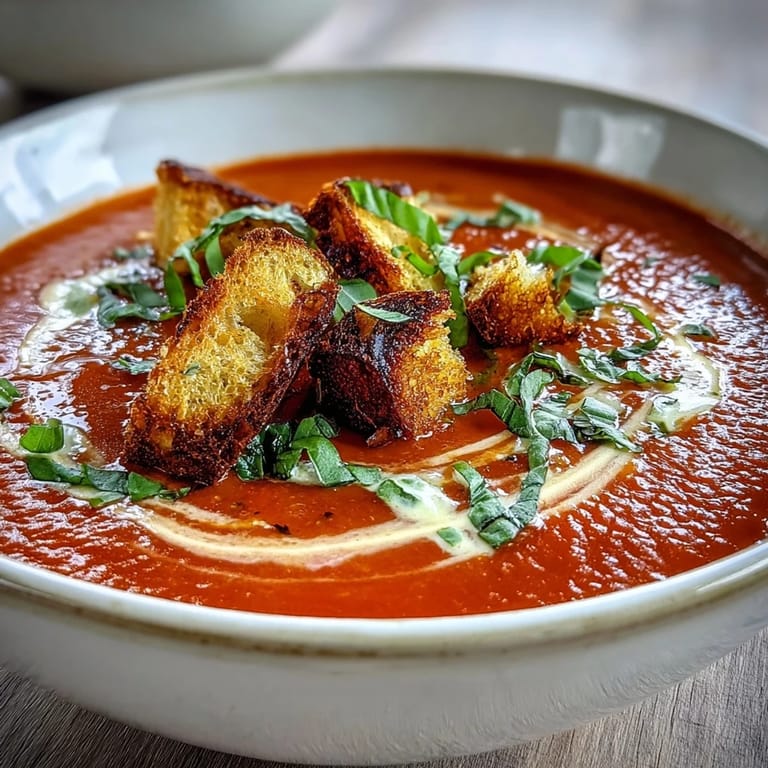
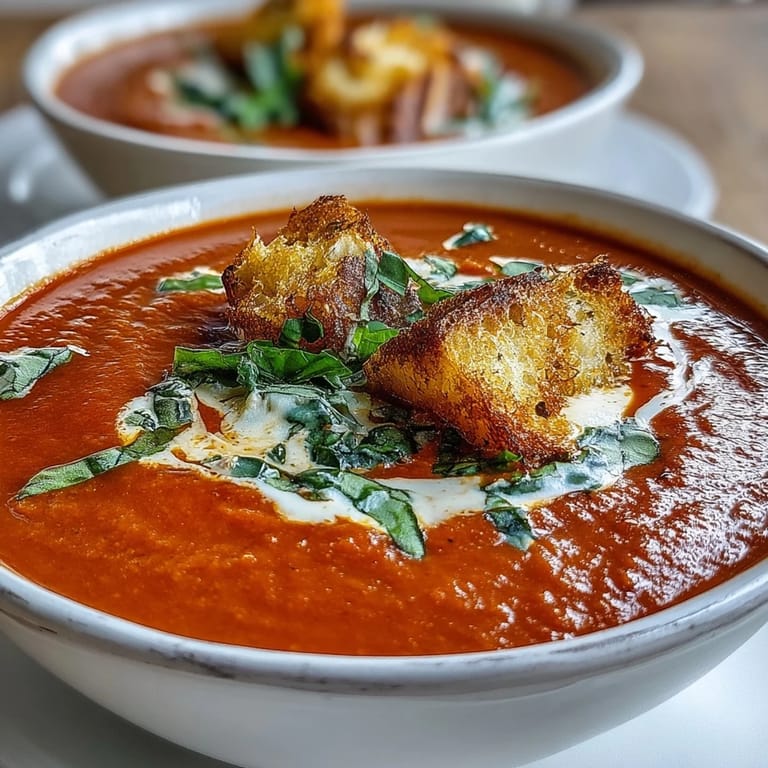
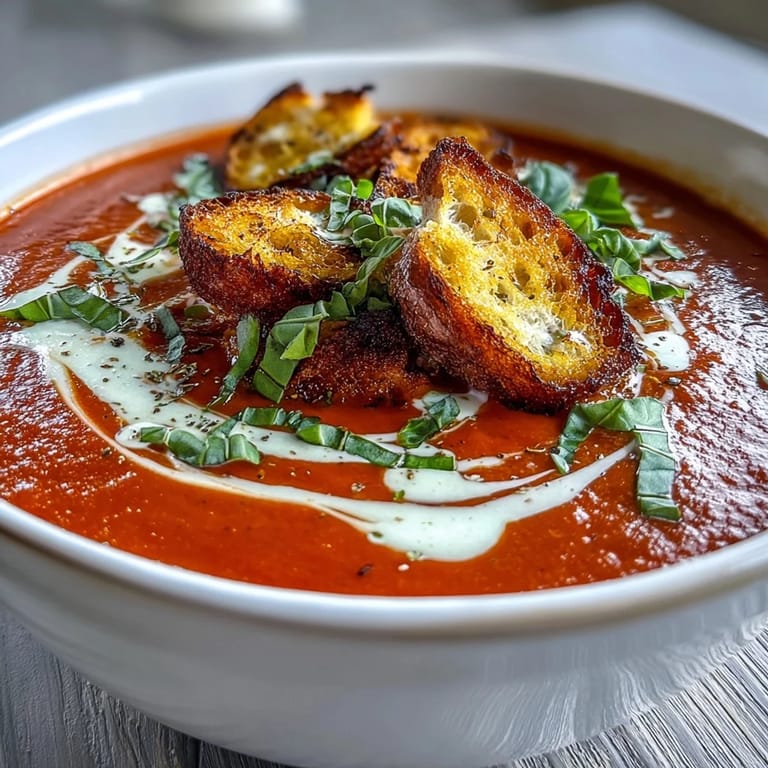
- Ladle the soup into bowls and swirl a little extra cream across the top in whatever pattern appeals to you, then shower with croutons and a small handful of fresh basil leaves.
 Save to Pinterest
 My neighbor stopped by one evening while this was simmering, and the smell pulled her inside the door before I could even offer an invitation. We ended up making a whole dinner out of it, and she's been asking for the recipe ever since—but the real gift was how one simple pot of soup turned into an evening of easy conversation.
Roasting: The Secret to Depth
Roasting transforms ingredients in ways that stovetop cooking simply can't match. The dry, concentrated heat caramelizes the natural sugars in tomatoes and onions, creating layers of flavor that taste almost umami-forward rather than bright and acidic. I once tried to shortcut this by just simmering raw tomatoes, and the difference was striking—the soup tasted thin and one-dimensional in comparison. That roasting step isn't optional or fancy, it's the entire foundation of what makes this soup special.
Cream and Texture: Finding Your Balance
The half cup of cream here is carefully measured, not thrown in randomly—it should soften the soup's edges without making it feel heavy or oversaturated. Some people prefer their tomato soup almost dairy-free, just a small swirl for visual drama, while others want it richer and more luxurious. You can adjust this to your preference, and I've found that coconut cream works beautifully for a vegan version, adding a subtle sweetness instead of pure richness. The immersion blender is key to getting that velvety texture that makes each spoonful feel almost silky on your tongue.
Variations and Pairings to Consider
This soup is endlessly flexible, which is partly why I keep coming back to it. I've made it with canned tomatoes in winter when fresh ones aren't at their best, with a mix of roasted red peppers for a slightly sweeter version, and even added a splash of balsamic vinegar for depth when I was feeling adventurous. It pairs perfectly with a grilled cheese sandwich (a classic for a reason), but it's also beautiful alongside a crisp salad or crusty bread for soaking up every last spoonful.
- For a vegan version, swap the heavy cream with full-fat coconut cream or a cashew cream you've blended yourself.
- If tomatoes aren't in season, use quality canned tomatoes—they're often picked and canned at peak ripeness and deliver consistent flavor.
- Fresh basil makes a difference, but dried basil works fine if fresh isn't available, just use about a third of the amount.
 Save to Pinterest
 This soup has become my answer to almost any question about what to make when someone needs comforting or feeding. It's simple enough not to stress you out, but thoughtful enough to feel genuinely special.
Recipe Q&A
- → Can I make this soup ahead of time?
Absolutely. This soup tastes even better the next day as flavors have time to develop. Store in an airtight container in the refrigerator for up to 4 days. Add the cream when reheating and keep croutons separate to maintain their crunch.
- → What's the best way to achieve the smoothest texture?
Roasting the tomatoes first breaks down their fibers naturally. For the silkiest results, blend thoroughly with an immersion blender or work in batches using a countertop blender. For extra refinement, pass the blended soup through a fine-mesh sieve.
- → Can I freeze this soup?
Yes, freeze without the cream added. Cool completely, transfer to freezer-safe containers, and freeze for up to 3 months. Thaw overnight in the refrigerator, reheat gently, and stir in the cream just before serving.
- → What tomatoes work best for roasting?
Roma or plum tomatoes are ideal due to their lower water content and fleshier texture. Vine-ripened beefsteak tomatoes also offer excellent flavor. Avoid watery slicing tomatoes as they can make the soup thinner.
- → How can I add more protein?
Stir in rinsed white beans like cannellini during the simmering stage for extra creaminess and protein. Serve alongside protein-rich options or top with toasted pumpkin seeds for added nutrition.
- → What can I serve with this soup?
Grilled cheese sandwiches are a timeless pairing. Crusty baguette slices, garlic bread, or a simple green salad with vinaigrette also complement beautifully. For a lighter option, serve with roasted vegetable sticks.