 Save to Pinterest
 Last Tuesday, I stood in my kitchen surrounded by half-prepped vegetables and realized I'd spent the entire week eating whatever I could grab, which meant a lot of sad desk lunches. That's when I decided to actually sit down on Sunday and build these power bowls—five identical, beautiful containers lined up like tiny edible promises to myself. The first bite felt like I'd finally gotten my act together, and honestly, that feeling of having a real meal waiting for me changed everything about how I approached the next five days.
My roommate walked in while I was assembling the fifth bowl and asked if I was opening a restaurant. When she tasted one the next day, she quietly asked if I could make her some too—that's when I knew this wasn't just convenient, it had actually become something people genuinely wanted to eat.
Ingredients
- Quinoa (2 1/2 cups cooked, about 1 cup dry): This grain holds up beautifully throughout the week and doesn't turn mushy like rice sometimes does, plus it's packed with all nine amino acids so your body actually gets what it needs.
- Sweet potato (2 cups diced): Roasting brings out a natural sweetness that makes the whole bowl feel satisfying without needing anything heavy, and they stay tender even after a few days in the fridge.
- Broccoli florets (2 cups): The florets get crispy edges when roasted, which is where the magic happens—they're nothing like steamed broccoli from your childhood.
- Red bell pepper (1, chopped): The slight sweetness cuts through the earthiness of everything else and adds a pop of color that makes you actually excited to open your lunch container.
- Olive oil (2 tbsp for roasting): Use a good quality oil here because it's responsible for that slight caramelization that transforms ordinary vegetables into something special.
- Sea salt and black pepper (1/2 tsp and 1/4 tsp): Don't skip seasoning the vegetables before they go in the oven—this is when they actually absorb the flavors.
- Cherry tomatoes (1 cup halved): Keep these fresh and separate from the roasted vegetables until serving so they don't get soggy, and they'll taste like summer even in January.
- Cucumber (1 cup diced): The crunch is essential for keeping your bowl interesting, so dice these right before you assemble or pack them in a separate container.
- Baby spinach or kale (1 cup chopped): Raw greens underneath everything else create a cool base that keeps the whole bowl from feeling heavy, and they soften slightly with the warm quinoa.
- Red onion (1/4 cup thinly sliced): This adds a sharp bite that wakes up your taste buds, and the thin slices mean you get that onion flavor in every forkful instead of just the occasional strong bite.
- Black beans (1 1/2 cups cooked or canned): Canned is completely acceptable here—just rinse them well to get rid of the excess sodium and any metallic taste.
- Chickpeas (1 1/2 cups cooked or canned): The combination of two different beans gives you variety in texture and ensures you're getting different nutrients than just one legume would provide.
- Roasted almonds (1/4 cup chopped): The crunch is crucial and these also add enough healthy fat to make the bowl actually satisfying so you're not hungry two hours later.
- Pumpkin seeds and sunflower seeds (2 tbsp each): These stay crunchy all week and give you a nutty flavor that feels luxurious without being heavy.
- Tahini (1/4 cup): This is your secret weapon—it's creamy, nutty, and ties all the flavors together like everything was meant to be friends.
- Lemon juice (2 tbsp): Fresh lemon is non-negotiable here because it's what keeps the dressing tasting bright instead of becoming flat and dull by Wednesday.
- Water (2 tbsp): This adjusts the consistency, but you might need more depending on how thick your tahini started, so taste as you go.
- Maple syrup or honey (1 tbsp): Just enough sweetness to balance the tahini's earthiness and the lemon's brightness without making this into dessert.
- Garlic (1 clove minced): One small clove is plenty—you want it to whisper its presence, not shout, so the dressing stays balanced.
- Cumin (1/4 tsp): This warm spice is what makes the dressing feel intentional and interesting instead of just being plain tahini sauce.
Tired of Takeout? 🥡
Get 10 meals you can make faster than delivery arrives. Seriously.
One email. No spam. Unsubscribe anytime.
Instructions
- Get your oven ready and organized:
- Set the oven to 425°F and line your baking sheet with parchment paper so cleanup is literally just throwing away the paper afterward.
- Build your roasted vegetable base:
- Toss your diced sweet potato, broccoli florets, and chopped bell pepper with olive oil, salt, and pepper in a bowl, making sure each piece gets coated. Spread everything in a single layer on the baking sheet so the vegetables have actual room to breathe and get those golden, caramelized edges.
- Get those vegetables golden:
- Roast for 25 to 30 minutes, stirring about halfway through so everything cooks evenly and nothing sticks to the pan. You'll know you're done when the broccoli's tips are crispy and the sweet potato is fork-tender with some color on the edges.
- Cook your quinoa if needed:
- While the vegetables are roasting, get your quinoa going according to package instructions if you haven't already cooked it, then spread it on a plate to cool so it doesn't stay hot and steam itself into mush.
- Whisk together your dressing:
- In a small bowl, combine tahini, lemon juice, water, maple syrup, minced garlic, and cumin, whisking until it's smooth and creamy. If it's too thick, add water a teaspoon at a time until it's pourable but still rich, then taste and adjust the salt and pepper.
- Layer your power bowls:
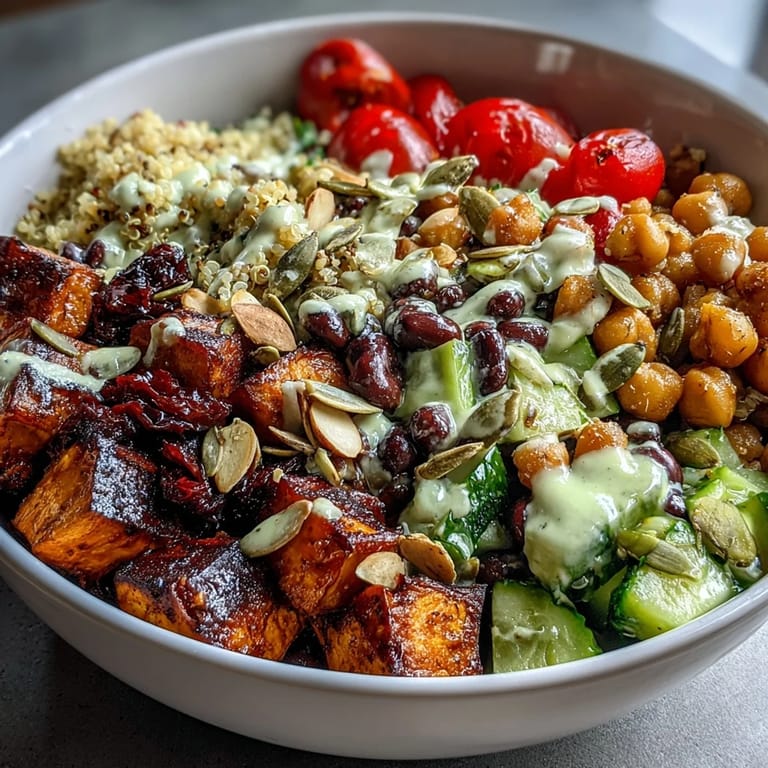
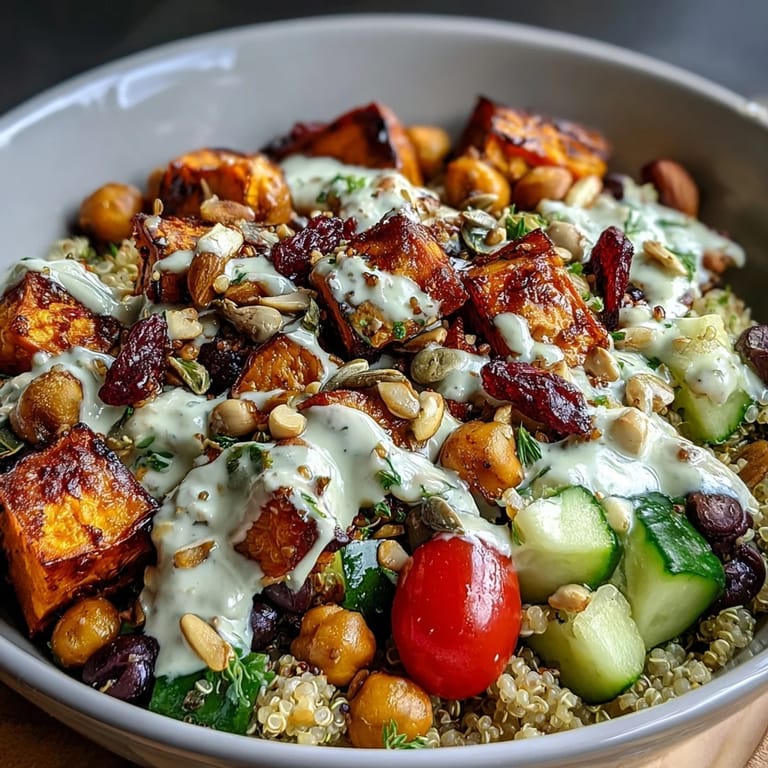
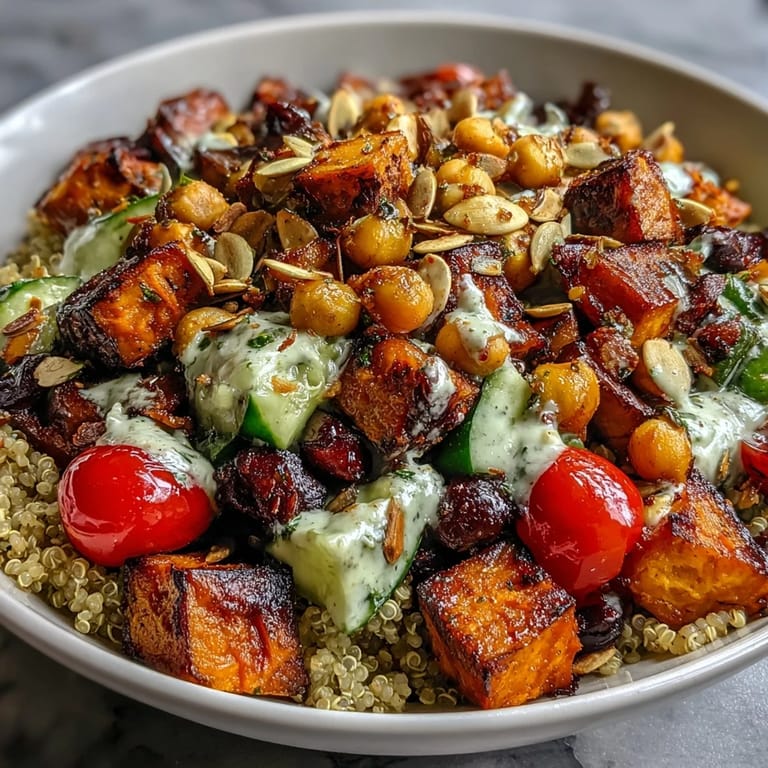
- Start with about 1/2 cup quinoa in each container as your base, then add your cooled roasted vegetables on top. Follow with a handful of fresh greens, some fresh tomatoes and cucumber, red onion slices, then divide your beans and chickpeas equally among the five bowls and top with chopped almonds, pumpkin seeds, and sunflower seeds.
- Dress and store:
- If you're eating one right now, drizzle the tahini dressing over top and toss it together, but if you're storing these for the week, keep the dressing in a separate container so everything stays fresh and nothing gets soggy.
 Save to Pinterest
 My colleague brought her homemade power bowl to a team lunch and suddenly we were all comparing notes on what we packed, trading seed recommendations, and making plans to meal prep together next Sunday. These bowls became more than just lunch—they became permission to actually take care of ourselves during the busy parts of the week.
Why This Works as Meal Prep
The beauty of this bowl is that it respects the reality of your week—the roasted vegetables actually hold up better after a few days than fresh ones would, the beans and grains get slightly softer but in a good way, and the raw elements stay interesting if you keep them separate. You're not eating the same temperature food the whole week because you've got warm elements, cool elements, and textures that all play different roles. By the time Friday rolls around, this bowl still tastes intentional instead of like something you grabbed out of desperation.
The Science Behind the Combinations
I paired beans with quinoa because together they create a complete protein that actually sustains you through the afternoon instead of leaving you searching for snacks at 3 PM. The roasted vegetables add natural sweetness that balances the earthiness of the greens and beans, while the tahini dressing brings everything together with healthy fats that help your body absorb the fat-soluble vitamins from all those colorful vegetables. The raw elements aren't just there for texture—they add enzymes and fresh flavor that make the whole bowl feel alive instead of like meal prep food.
Making This Work for Your Life
These bowls are flexible enough to bend with whatever's in your kitchen or your mood that week, so you're not locked into the exact recipe if you're missing something or have other vegetables calling your name. The framework is what matters—a grain, some roasted vegetables, fresh additions, beans or legumes, something crunchy, and a dressing that ties it all together. You could easily swap the broccoli for cauliflower, use brown rice instead of quinoa, or trade the sweet potato for carrots, and you'd still have something delicious and nourishing waiting for you.
- Keep your dressing in a clearly labeled container so you don't accidentally grab it as salad dressing for something else and wonder why your side salad tastes slightly off.
- Pack your nuts and seeds in a small separate container if you're making these more than two days in advance, so they stay crunchy instead of absorbing moisture from the other ingredients.
- The moment you open Wednesday's bowl and see it still looks appetizing and hasn't turned into a sad pile is the moment you realize meal prepping actually works.
 Save to Pinterest
 This bowl became the thing I actually looked forward to eating, which says something about how real food impacts not just your body but your whole week. When you start your day knowing lunch is going to be delicious and nourishing and already waiting for you, everything else feels more manageable.
Recipe Q&A
- → How long do these power bowls keep in the refrigerator?
These bowls stay fresh for up to 5 days when stored properly in airtight containers. For the best texture, keep the tahini dressing separate and drizzle it over just before eating. The roasted vegetables and quinoa maintain their quality throughout the week without becoming soggy.
- → Can I freeze these meal prep bowls?
Freezing isn't recommended as the fresh vegetables (tomatoes, cucumber, greens) will become mushy when thawed. However, you can freeze just the quinoa, roasted vegetables, and cooked beans in portioned containers. Thaw overnight in the refrigerator and add fresh vegetables and dressing before serving.
- → What other grains work well in this bowl?
Brown rice, farro, wheat berries, or barley make excellent substitutes for quinoa. Adjust cooking times accordingly—brown rice takes about 45 minutes, while farro needs approximately 25-30 minutes to become tender. Each grain brings its own nutty flavor and chewy texture to the bowl.
- → How can I add more protein to these bowls?
Consider adding grilled chicken, baked tofu, or hard-boiled eggs for extra protein. You could also increase the bean portions, add hemp seeds to the nut mixture, or incorporate crumbled feta cheese (if not vegan). Each serving already provides 16 grams of plant-based protein from the quinoa, beans, and tahini.
- → What vegetables can I substitute based on season?
In summer, try zucchini, corn, or bell peppers. Fall works well with butternut squash, Brussels sprouts, or carrots. Winter options include cauliflower, parsnips, or kale. Spring brings asparagus, peas, and radishes. The roasting method works for nearly any vegetable—just adjust cooking times so everything finishes tender and slightly caramelized.
- → Can I make the tahini dressing ahead of time?
Absolutely—the dressing actually benefits from sitting for a few hours or overnight as the flavors meld together. Store it in a sealed jar in the refrigerator for up to one week. The dressing may thicken when cold; simply whisk in a teaspoon of water at room temperature to reach the desired consistency again.