 Save to Pinterest
 My neighbor handed me a plate of charred vegetables one summer evening, and I was immediately transported—not by nostalgia, but by the sheer brightness of what was on that plate. The smell of grilled peppers mixed with something herbaceous and garlicky made me ask for the recipe on the spot. Turns out it was a simple grilled veggie skewer situation, but the sauce, that green herbaceous sauce, was doing all the heavy lifting. Since then, I've grilled these countless times, each season bringing whatever vegetables looked good at the market that week.
Last Fourth of July, I made these for a potluck and watched people come back for thirds, not because they were desperate but because the combination of char, freshness, and that punch of garlic-parsley sauce was genuinely hard to stop eating. A friend who never ate vegetables came back and asked what magic I'd performed on that zucchini. It wasn't magic—just heat, timing, and a sauce that tastes like summer in a bowl.
Ingredients
- Red bell pepper: Choose one that feels dense and glossy; the red ones are sweeter when grilled, and that sweetness plays beautifully against the sharp chimichurri.
- Yellow bell pepper: Adds a milder, almost floral sweetness that balances the red pepper's boldness.
- Zucchini: Slice it thick enough (about half an inch) so it doesn't fall apart on the grill, and it'll develop those gorgeous caramelized edges.
- Red onion: Cut into wedges to keep the pieces from slipping through the grates, and the grill will turn the raw sharpness into something jammy and sweet.
- Button mushrooms: These are forgiving on the grill and soak up whatever they touch, so they'll taste like whatever sauce you dip them in.
- Eggplant: This one needs an extra moment on the grill—it's done when it's soft enough to fork through and has picked up some serious char.
- Cherry tomatoes: Add these toward the end so they blister without turning to soup; their little bursts of heat-concentrated sweetness are essential.
- Olive oil: Use something you wouldn't cry about heating; save your good stuff for the sauce.
- Kosher salt: A light hand here goes a long way; the chimichurri will add more salt later.
- Fresh parsley: The main flavor here, so don't use the pale stuff from the back of your fridge—get the vibrant green bunches.
- Fresh cilantro: If cilantro tastes like soap to you, cut this in half and use more parsley instead; no judgment.
- Garlic: Mince it fine so it distributes evenly, and this raw garlic bite is what makes people ask for your recipe.
- Red wine vinegar: This is the sharp counterpoint; it keeps the sauce from feeling heavy or one-note.
- Extra-virgin olive oil: Now is when you use the good stuff—this is the face of the sauce, and people will taste the difference.
- Dried oregano: A teaspoon might seem modest, but it adds an earthy background note that ties everything together.
- Red pepper flakes: Optional, but they add a gentle heat that sneaks up on you rather than overpowering the dish.
Tired of Takeout? 🥡
Get 10 meals you can make faster than delivery arrives. Seriously.
One email. No spam. Unsubscribe anytime.
Instructions
- Soak your skewers:
- If you're using wooden ones, submerge them in water for at least thirty minutes so they don't catch fire on the grill and become charcoal handles. I learned this the hard way one afternoon when my neighbor laughed as I fished blackened sticks from the flames.
- Heat your grill properly:
- Get it to medium-high heat (around 400°F) before you touch those vegetables—a grill that's not hot enough will steam them instead of char them, and you'll miss that whole textural point. You should hear that satisfying sizzle when vegetables hit the grates.
- Season and coat your vegetables:
- Toss everything in olive oil, salt, and pepper in a big bowl until every piece glistens slightly. This step is where you're building flavor, not drowning things, so use a light touch.
- Thread them thoughtfully:
- Alternate colors and shapes as you skewer—it looks beautiful on the plate, but more importantly, different vegetables have slightly different cooking times, so mixing them helps everything finish together. Skip the cherry tomatoes for now; you'll add them during the last few minutes.
- Grill with attention:
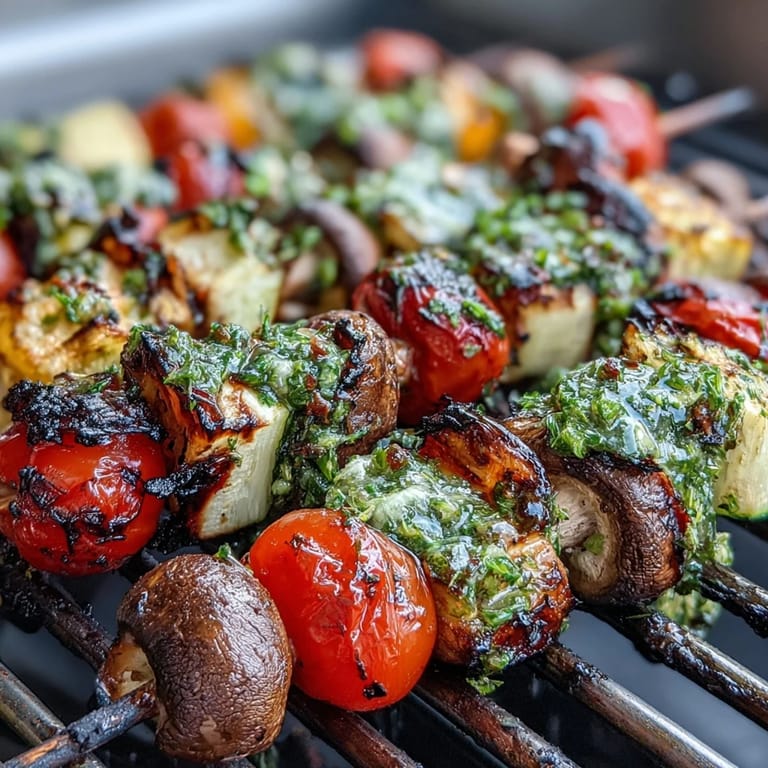
- Place skewers on hot grates and turn them every three to four minutes so each side picks up color without burning. The vegetables should be tender enough to pierce easily and charred in places—that char is flavor, not a mistake.
- Make the chimichurri while they cook:
- Combine parsley, cilantro, minced garlic, red wine vinegar, oregano, red pepper flakes (if using), salt, and black pepper in a bowl. Whisk in the extra-virgin olive oil until it's a loose, vivid green sauce that still has some texture.
- Finish strong:
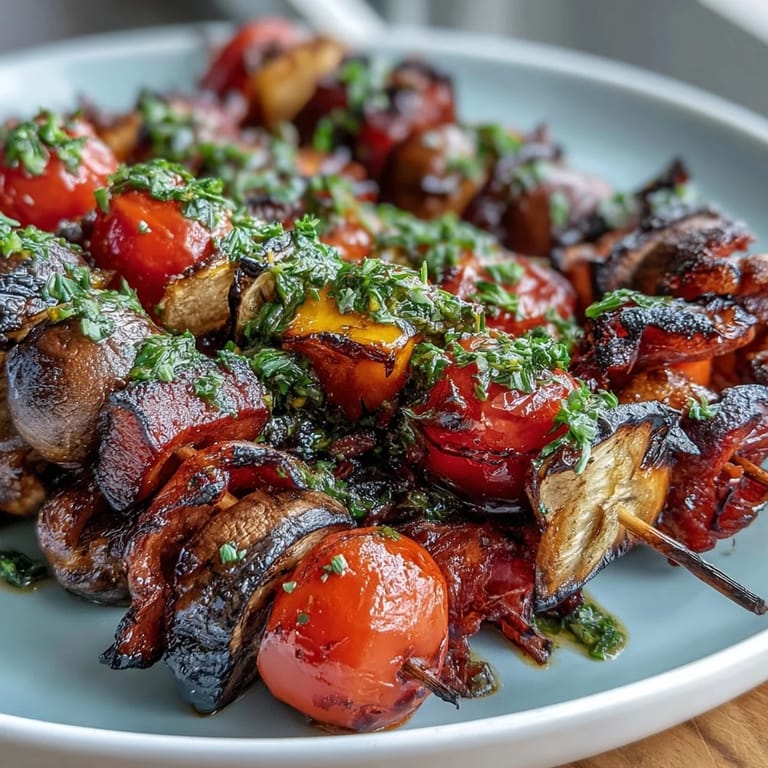
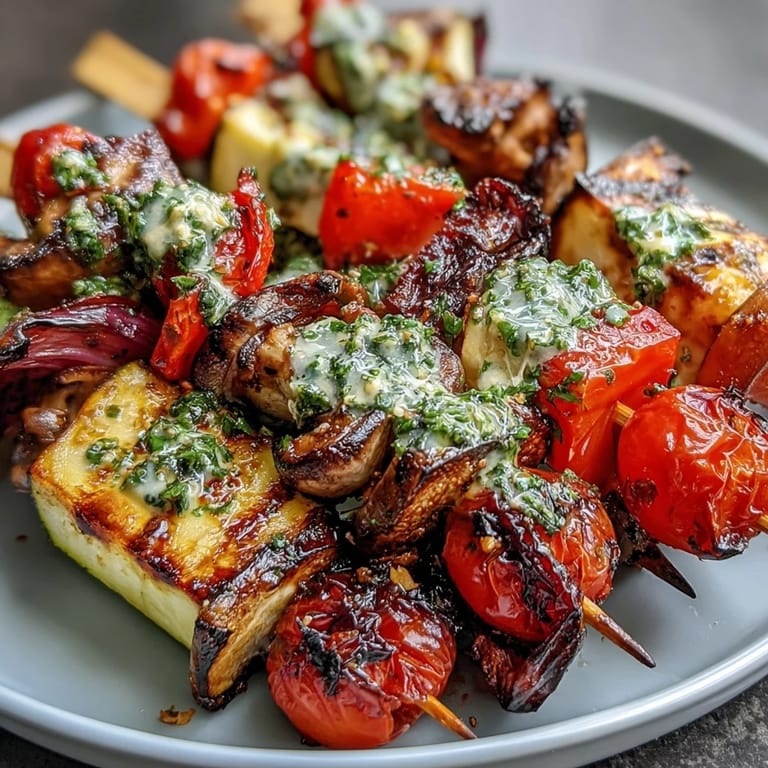
- Pull the skewers off the grill, arrange them on a platter, and drizzle generously with chimichurri—don't be shy. The heat of the vegetables will slightly warm the sauce and make the flavors bloom together.
 Save to Pinterest
 These skewers became my answer to 'what can I bring' for years because they travel well, taste good at any temperature, and somehow make people feel like you went to more effort than you actually did. There's something satisfying about handing someone a plate of vegetables they're actually excited to eat.
Vegetables That Grill Best
Not all vegetables behave the same way on a grill, and learning which ones cooperate has saved me countless charred disasters. Peppers and zucchini are forgiving and almost always turn out golden and tender; they're your reliable friends. Eggplant takes longer and needs a little coaxing, but once it's soft inside with a blistered exterior, it's worth the extra attention. Mushrooms are like sponges and will pick up whatever flavor they touch, making them essential for soaking up that chimichurri. Cherry tomatoes can't be put on the skewer too early—add them in the last few minutes or they'll burst into a watery mess.
Building Flavor Without Fussing
The magic of this dish is that grilling does half the work for you—heat and time create caramelization and char that adds depth without any complicated technique. The vegetables themselves don't need much seasoning because the grill concentrates their natural sugars and brings out flavors that were always there, just waiting. The chimichurri then arrives like a bright friend at a party, cutting through the richness with vinegar and fresh herbs and making everything feel alive. This is why the sauce matters so much—it's not covering up blandness, it's completing a conversation that the grill started.
Variations and Flexibility
One of my favorite things about this recipe is that it moves with the seasons and what's actually available. In early summer when the market is overflowing with delicate asparagus and spring onions, I use those instead; they'll cook faster, so I adjust the grill time down to ten minutes or so. Later in the season, thick summer squash and halved romesco peppers show up, each taking a slightly different amount of time but all following the same principle—heat, color, char, then sauce. I've even grilled thick slices of halloumi cheese alongside the vegetables for nights when I wanted more protein, and it became a completely different meal.
- Add firm tofu cubes marinated in soy sauce and ginger for a plant-based protein boost.
- Toss grilled vegetables with the chimichurri, cool them completely, and serve as a grain bowl topping or sandwich filling the next day.
- Make extra chimichurri and save it in the refrigerator—it keeps for about a week and is wonderful on eggs, soup, or bread.
 Save to Pinterest
 This is the kind of recipe that gets easier and more intuitive every time you make it, because grilling vegetables is more forgiving than people think. Bring these to your next gathering and watch people light up at the colors, the smell, and that moment when they taste what's actually possible when you respect simple ingredients and let heat do the work.
Recipe Q&A
- → What vegetables work best for grilling in this dish?
Bell peppers, zucchini, red onion, mushrooms, eggplant, and cherry tomatoes provide a colorful and textural variety when grilled.
- → How do you prevent wooden skewers from burning on the grill?
Soak wooden skewers in water for at least 30 minutes before grilling to avoid burning.
- → What can be used to add protein to these skewers?
Cubes of halloumi cheese or marinated tofu can be added to increase protein content and complement the veggies.
- → How long should the vegetables be grilled?
Grill the skewers for 12 to 15 minutes, turning every few minutes until the vegetables are tender and lightly charred.
- → What ingredients are in the chimichurri sauce?
Fresh parsley, cilantro, garlic, red wine vinegar, dried oregano, olive oil, salt, pepper, and optional crushed red pepper flakes combine for a fresh, herbaceous sauce.