 Save to Pinterest
 One Tuesday afternoon, I stood in my kitchen staring at a half-empty fridge and wondering why I felt so depleted despite eating regularly. A friend stopped by with a mason jar of quinoa salad she'd made that morning, and something clicked—this wasn't just food, it was a moment of taking care of myself. That bowl became my reset button, and now whenever I need to feel grounded and energized, this is what I reach for.
I made this for my sister during her third week of a new job, when she was too tired to think about dinner. Watching her take that first bite and visibly relax told me everything—this bowl isn't just nutritious, it's comforting in a way that feels intentional and kind.
Ingredients
- Quinoa: Rinse it first, even though it seems fussy—this removes the bitter coating and makes every grain fluffy and separate instead of mushy.
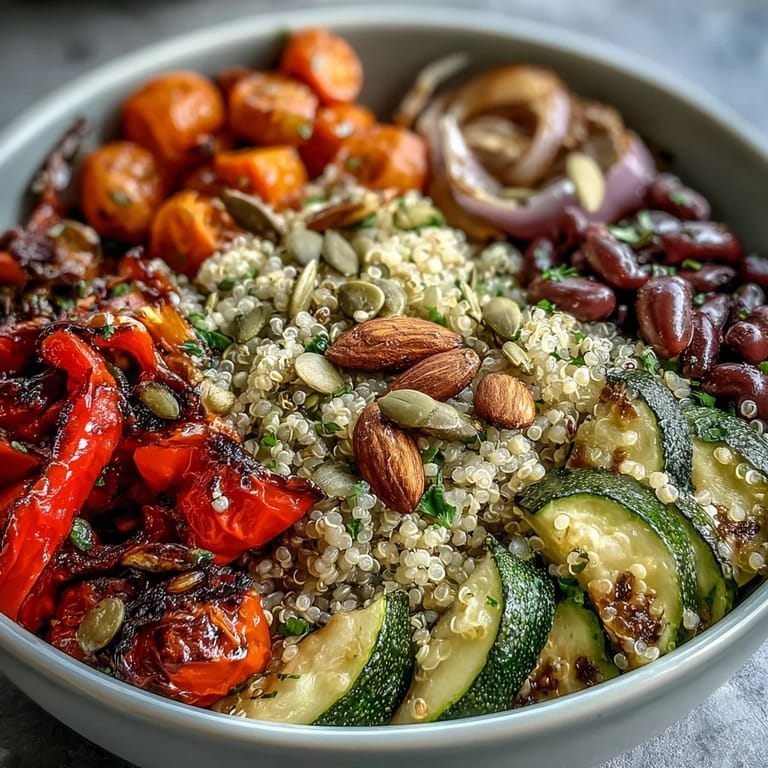
- Red bell pepper, zucchini, carrot, red onion, and cherry tomatoes: The color variety matters here both visually and nutritionally; together they create a spectrum of antioxidants, so don't swap them all for one vegetable.
- Olive oil for roasting: Use regular olive oil here, not extra virgin, since heat breaks down its delicate qualities.
- Dried oregano: This herb bridges all the roasted vegetables with a Mediterranean warmth that ties the whole bowl together.
- Black beans or chickpeas: Either works beautifully; I lean toward chickpeas when I want a nuttier flavor and black beans when I crave something earthier.
- Roasted almonds or walnuts: Chop them roughly so you get texture variation in every spoonful without them disappearing into the bowl.
- Pumpkin seeds: These add a subtle sweetness and an almost toasted quality that makes the bowl feel more intentional than it actually is.
- Extra virgin olive oil for the vinaigrette: This is where you splurge; quality matters because it's not being heated, so its flavor stays bright and fruity.
- Fresh lemon juice: Bottled works if you must, but fresh juice gives the dressing a living quality that tastes like afternoon sunlight.
- Dijon mustard: This tiny amount is a flavor multiplier, bringing all the elements into conversation with each other.
- Maple syrup or honey: The sweetness isn't about making it dessert—it's about balancing the acidity and bringing roundness to the vinaigrette.
Tired of Takeout? 🥡
Get 10 meals you can make faster than delivery arrives. Seriously.
One email. No spam. Unsubscribe anytime.
Instructions
- Heat your oven and prep the vegetables:
- Set the oven to 425°F and while it's warming, cut your vegetables into pieces that are roughly the same size so they'll cook evenly. This matters more than perfect uniformity.
- Roast with intention:
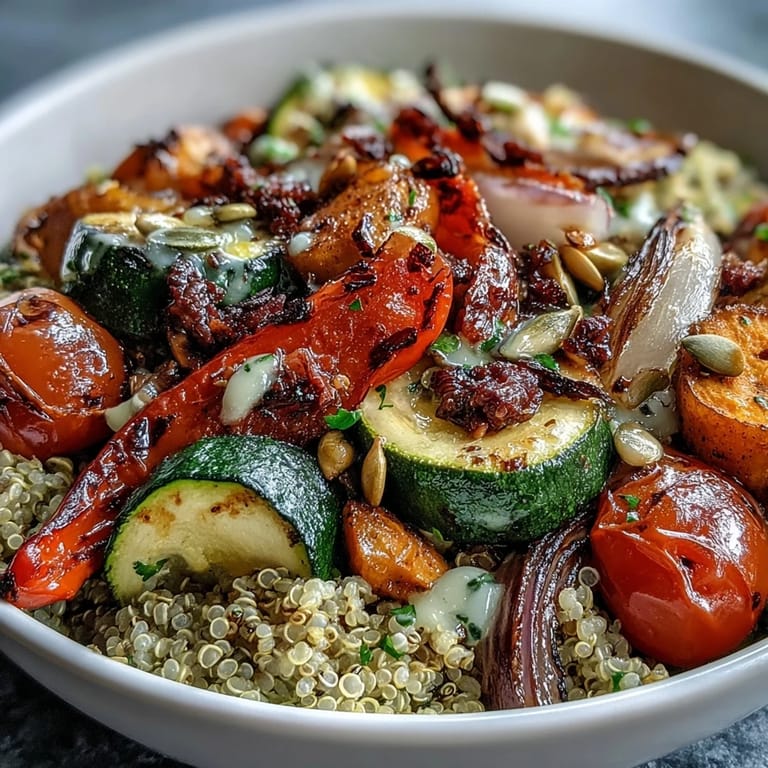
- Toss everything with olive oil, oregano, salt, and pepper on a baking sheet, then roast for 20 to 25 minutes, stirring halfway through. You're looking for edges that are starting to caramelize—that's when the vegetables become sweet and concentrated.
- Cook the quinoa while vegetables roast:
- Rinse your quinoa, then combine it with water or broth in a saucepan and bring to a boil. Lower the heat, cover it, and let it simmer for 15 minutes until the liquid disappears, then let it sit covered for another 5 minutes before fluffing with a fork.
- Build your vinaigrette:
- In a small bowl, whisk together the extra virgin olive oil, lemon juice, Dijon mustard, maple syrup or honey, and minced garlic until it emulsifies slightly and becomes glossy. Taste it and adjust the seasoning—it should taste bright enough that you want to pour it over everything.
- Assemble your bowls:
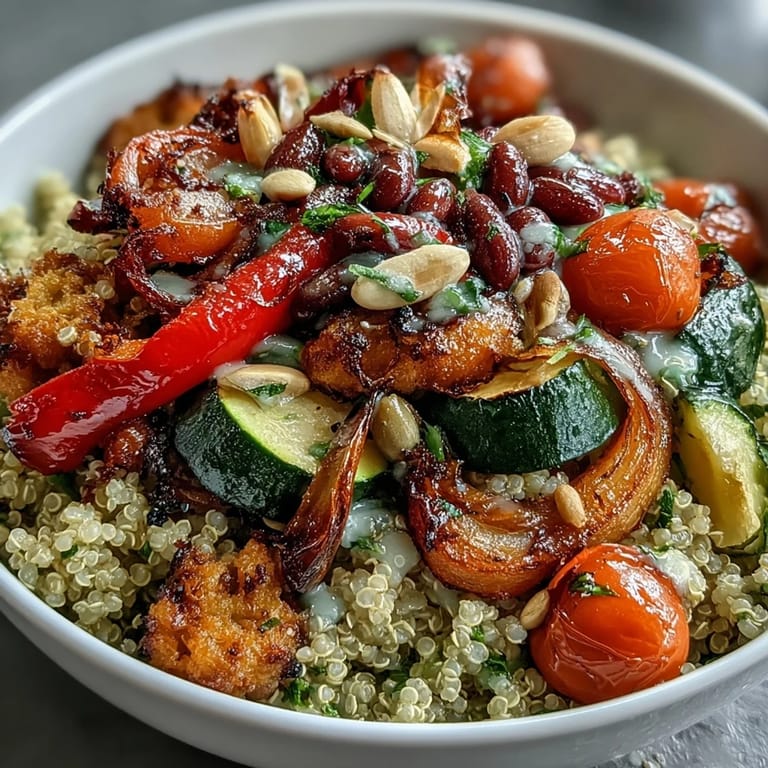
- Divide the fluffy quinoa among four bowls, then arrange the roasted vegetables on top, scatter the beans around, and finish with the almonds and pumpkin seeds. Drizzle the vinaigrette over everything right before eating.
- Serve warm or chill for later:
- This bowl is wonderful hot from the oven, but it's equally refreshing cold, making it perfect for meal prep or tomorrow's lunch.
 Save to Pinterest
 My neighbor came over last spring when her garden was exploding with zucchini and tomatoes, and we turned her harvest into three of these bowls while sitting on the back porch. Something about transforming vegetables she'd grown herself into something so vibrant and nourishing shifted how she thought about cooking altogether.
The Secret of Roasting Vegetables
Roasting isn't just a cooking method; it's a transformation. When you expose vegetables to dry heat in a hot oven, their sugars concentrate and caramelize, creating depth that raw or steamed vegetables can't touch. The red onion becomes almost jammy, the zucchini develops crispy edges, and the bell pepper turns jammy and sweet. It's the difference between eating vegetables because you should and eating them because they're genuinely delicious.
Why Quinoa Over Rice or Pasta
Quinoa holds onto dressing and toppings differently than grains like rice because of its texture and slight nuttiness. It doesn't get soggy even when you make the bowl ahead of time, and it provides complete protein on its own, meaning this bowl doesn't need animal products to be truly nourishing. I've watched people who said they'd never tried quinoa taste this bowl and become converts—it's not about being trendy, it's about how well it actually works.
Flexibility and Personalization
This bowl thrives on adaptation. I've made it with roasted sweet potato and broccoli in winter when cherry tomatoes disappeared from the market, and it was equally satisfying because the structure remains sound. The beauty is that you're building layers of texture and nutrition, not following a rigid formula—swap vegetables based on what's seasonal, what's in your fridge, or what sounds good today.
- Add grilled tofu or a poached egg if you want more protein without changing the whole flavor profile.
- Crumbled feta cheese works beautifully if you're not keeping it vegan, adding a salty, tangy note.
- For nut allergies, double the seeds and you won't miss the crunch or nutrition that nuts provided.
 Save to Pinterest
 This bowl taught me that eating well doesn't require complicated techniques or exotic ingredients—just intention and good ingredients that you actually like. Make one of these and you'll understand why it became my answer to almost everything.
Recipe Q&A
- → Can I use different vegetables?
Absolutely. Swap in any seasonal vegetables you enjoy such as sweet potato, broccoli, cauliflower, or Brussels sprouts. The roasting method works beautifully with most vegetables.
- → How long does this keep in the refrigerator?
The assembled bowl stays fresh for 3-4 days when stored in an airtight container. Keep the vinaigrette separate and add just before serving to maintain the best texture.
- → Can I make this vegan?
Yes, simply use maple syrup instead of honey in the vinaigrette. The rest of the ingredients are naturally plant-based and suitable for a vegan diet.
- → What can I substitute for the nuts?
For nut allergies, omit the almonds or walnuts and increase the pumpkin seeds, or add sunflower seeds for extra crunch. Toasted coconut flakes also work well.
- → Can I add more protein?
Certainly. Grilled tofu, a poached egg, or shredded chicken would be excellent additions. Feta cheese also adds protein and a tangy flavor element.
- → Is quinoa gluten-free?
Yes, quinoa is naturally gluten-free. Just ensure your vegetable broth and other pantry ingredients are certified gluten-free if you have celiac disease or gluten sensitivity.