 Save to Pinterest
 There's something magical about assembling a bowl that feels like you're building something entirely your own. I discovered this three-bean power bowl on a Tuesday afternoon when my fridge was bursting with vegetables I'd bought with the best intentions, and I needed to use them before they wilted. The result was so vibrant and satisfying that I've been making versions of it ever since, tweaking the vegetables with whatever looks good at the market.
I remember bringing this bowl to a potluck and watching people who claimed they only ate meat go back for seconds. My friend Sarah, who's always rushing between meetings, asked if it would keep well in containers, and now she meal-preps them every Sunday. It became one of those dishes that quietly proves how satisfying plant-based eating can be, without any preaching required.
Ingredients
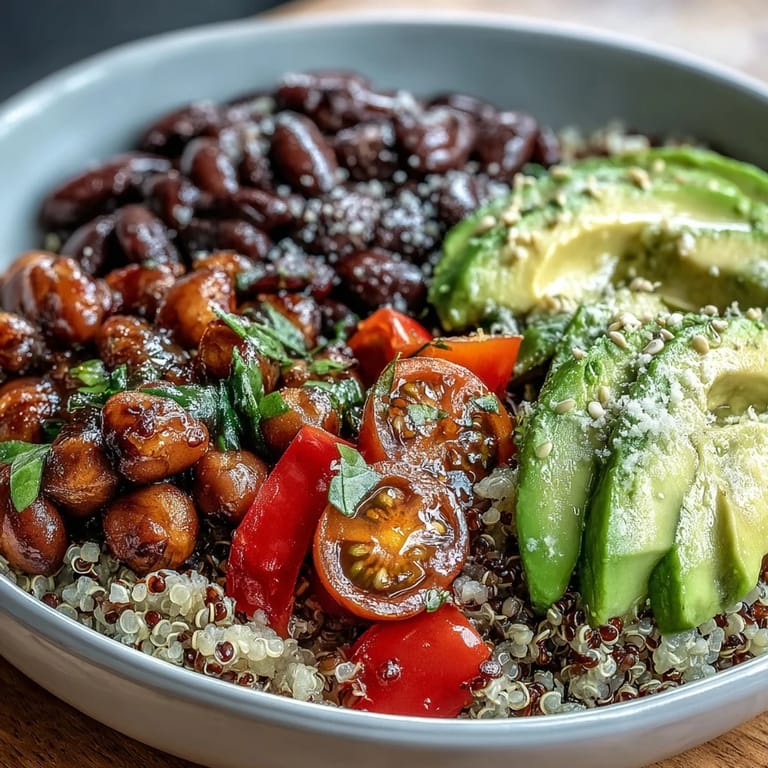
- Black beans: These hold their shape beautifully and have an earthy depth that grounds the whole bowl with substance.
- Chickpeas: They bring a buttery texture and nuttiness that makes this feel indulgent rather than virtuous.
- Kidney beans: The third player adds color and a slightly firmer bite that keeps things interesting texture-wise.
- Quinoa: Use this if you want something lighter and nutty, though brown rice works just as well if that's what you have on hand.
- Cherry tomatoes: Halving them lets their sweetness shine and prevents them from rolling around your bowl like tiny obstacles.
- Cucumber: Dice it into even pieces so each bite feels balanced and refreshing without overpowering the other vegetables.
- Red bell pepper: The sweetness and crunch of this are non-negotiable, and the red color makes the whole bowl look intentional rather than thrown together.
- Baby spinach or mixed greens: This adds a whisper of bitterness that brightens everything else and keeps the bowl from feeling one-dimensional.
- Avocado: Always add this last and right before eating, or it'll brown and lose that silky appeal that makes people smile when they see it.
- Red onion: Slice it thin and don't skip it, no matter how much you think you don't like raw onion in bowls.
- Olive oil: Quality matters here since it's a main component of the dressing, not just a background player.
- Lemon juice: Freshly squeezed makes a real difference, and if you squeeze it directly over the dressing, you'll smell why it's worth the effort.
- Apple cider vinegar: This adds a subtle tang that makes people pause and ask what's in the dressing.
- Dijon mustard: A tablespoon is all you need to add depth and make the dressing cling to everything instead of pooling at the bottom.
- Maple syrup or honey: Just a teaspoon balances the acidity and makes the dressing taste complex rather than sharp.
- Garlic: One clove minced into the dressing is enough to make itself known without shouting.
- Cilantro or parsley: Fresh herbs scattered on top transform the bowl from ordinary to the kind of thing you'd order at a trendy café.
- Toasted seeds: These are optional but truly make the difference if you want extra crunch and nutrition without thinking about it too hard.
Tired of Takeout? 🥡
Get 10 meals you can make faster than delivery arrives. Seriously.
One email. No spam. Unsubscribe anytime.
Instructions
- Gather and prep your vegetables:
- Wash everything, then chop with intention, making pieces roughly the same size so nothing dominates the other flavors. Halve your cherry tomatoes and set everything in small piles on your cutting board like you're composing a still life.
- Build your dressing:
- In a small bowl, whisk the olive oil and lemon juice together first, then add the vinegar, mustard, and maple syrup, stirring until the mustard dissolves completely. Add your minced garlic, salt, and pepper, taste it right there with a spoon, and adjust until it makes you happy.
- Combine the main components:
- Pour all three types of beans, your diced vegetables, and the greens into a large bowl, then add the cooked quinoa and gently toss everything together like you're being kind to it. The vegetables should be distributed evenly without any corner getting overcrowded with one ingredient.
- Dress and bring it together:
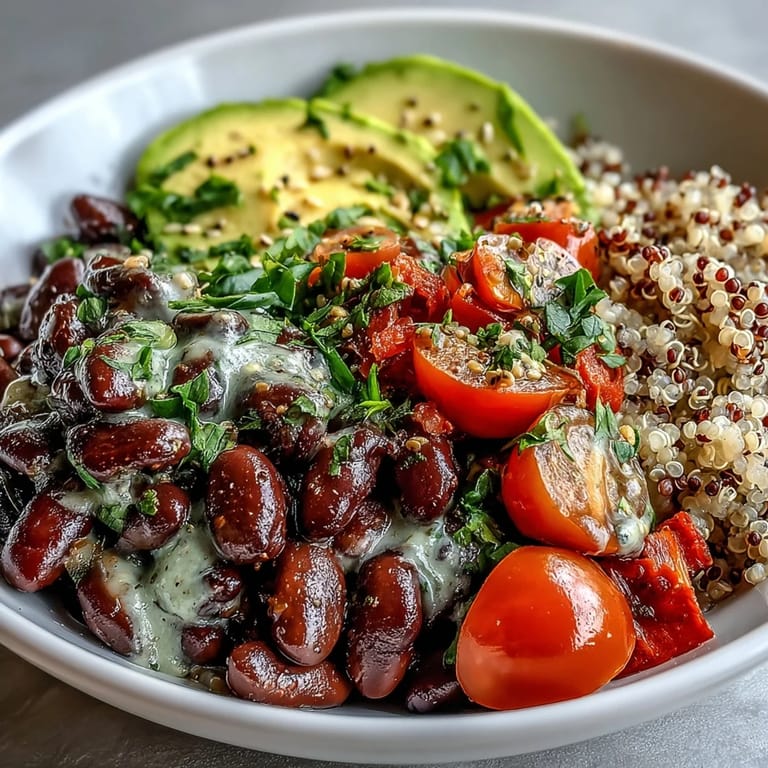
- Pour the dressing over everything and toss gently, making sure the dressing coats each piece without turning the whole thing into a soggy mess. You want every bite to have flavor, but you want the vegetables to stay recognizable.
- Serve with style:
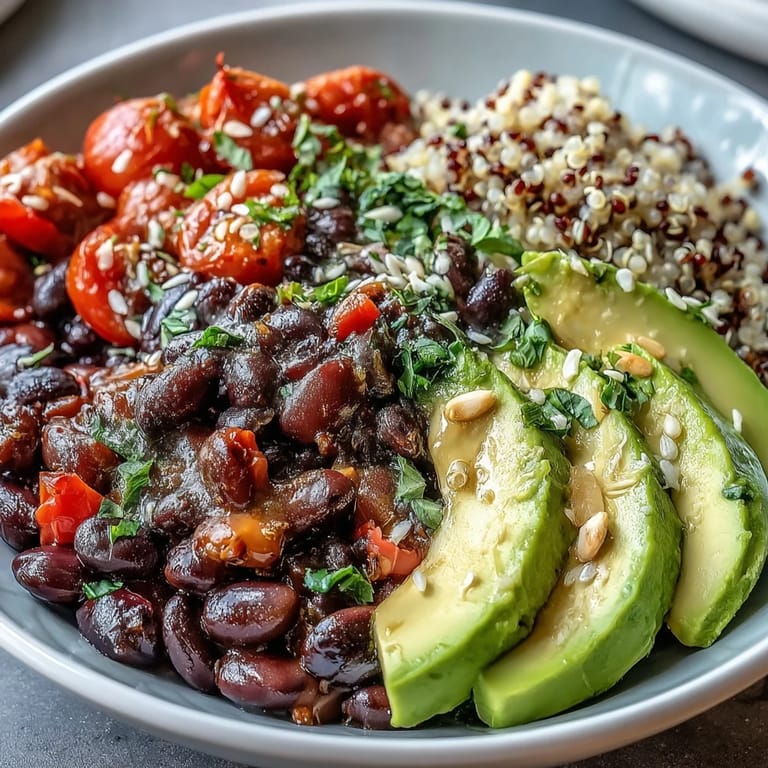
- Divide the mixture into bowls, then top each with sliced avocado and your herbs, adding toasted seeds if you're using them. Serve immediately while everything is fresh and vibrant.
 Save to Pinterest
 There was a moment when my coworker took a bite of this bowl and said it was the first time she realized that eating healthy food didn't mean accepting something bland or joyless. That comment stuck with me, because it's exactly what this bowl represents to me now, not just a recipe but a small act of kindness toward yourself and anyone else lucky enough to eat it.
Why This Bowl Works for Meal Prep
I learned early on that if you separate the components and keep the dressing in its own container, this bowl stays fresh and exciting for three days in the fridge. The beans actually taste better after a day because they absorb the flavors around them, and the grains maintain their texture when they're stored separately. The only component that deteriorates is the avocado, so buying it a day or two after you make the rest of the bowl means you get that perfect creamy texture every time.
Customizing Your Bowl Without Losing the Soul of It
The beauty of this bowl is that it's flexible enough to work with whatever vegetables are in season or on sale at your market, but structured enough that it never feels like you're just throwing things together randomly. I've made versions with roasted sweet potato instead of the red pepper, swapped spinach for kale on days when I wanted something heartier, and even added corn when the farmers market had beautiful ears. The dressing and the beans are the foundation that keeps everything feeling cohesive, so as long as you have those, you can pretty much riff on the vegetables and grain without it falling apart.
Turning This Into a Complete Meal
While this bowl is deeply satisfying as is, I've discovered that sometimes people want to add a protein that's not plant-based, or they want to turn it into something more elaborate for company. The dressing is sturdy enough to carry additional flavors, and the vegetables and beans won't be overshadowed if you layer something on top. Here are some ideas that have worked beautifully at my table:
- Grilled chicken or tofu adds substance if you want to serve this as a main course for people who expect animal protein.
- A handful of feta or goat cheese crumbled over the top adds richness and a bit of tang that plays well with the lemon in the dressing.
- A soft-boiled egg nestled into the top of the bowl adds richness and makes it feel special without requiring you to cook anything complicated.
 Save to Pinterest
 This bowl has become my go-to recipe when I want to feed myself well without drama, and I hope it becomes yours too. There's something deeply satisfying about putting together something this nourishing with your own hands.
Recipe Q&A
- → Can I make this ahead for meal prep?
Yes, this bowl keeps well refrigerated for up to 2 days. Store the dressing separately and toss just before serving to maintain freshness.
- → What other grains work in this bowl?
Brown rice, bulgur, or farro make excellent substitutions for quinoa. Adjust cooking times accordingly.
- → How can I add more protein?
Grilled chicken strips, baked tofu, or a hard-boiled egg pair beautifully with these beans and vegetables.
- → Is the dressing adjustable?
Absolutely. Add more maple syrup for sweetness, extra vinegar for tang, or chili flakes for a spicy kick.
- → What vegetables can I swap?
Shredded carrots, radishes, roasted corn, or blanched green beans work wonderfully in this versatile bowl.