 Save to Pinterest
 One Tuesday afternoon, I was scrolling through my phone while waiting for water to boil when a friend texted me a photo of her Buddha bowl—nothing fancy, just sweet potatoes and greens in a white ceramic dish. Something about its simplicity made me hungry in a way that had nothing to do with the time of day. Within an hour, I'd roasted my first batch of sweet potatoes and discovered that the magic wasn't in complexity at all, but in letting each ingredient shine while a silky peanut sauce tied everything together.
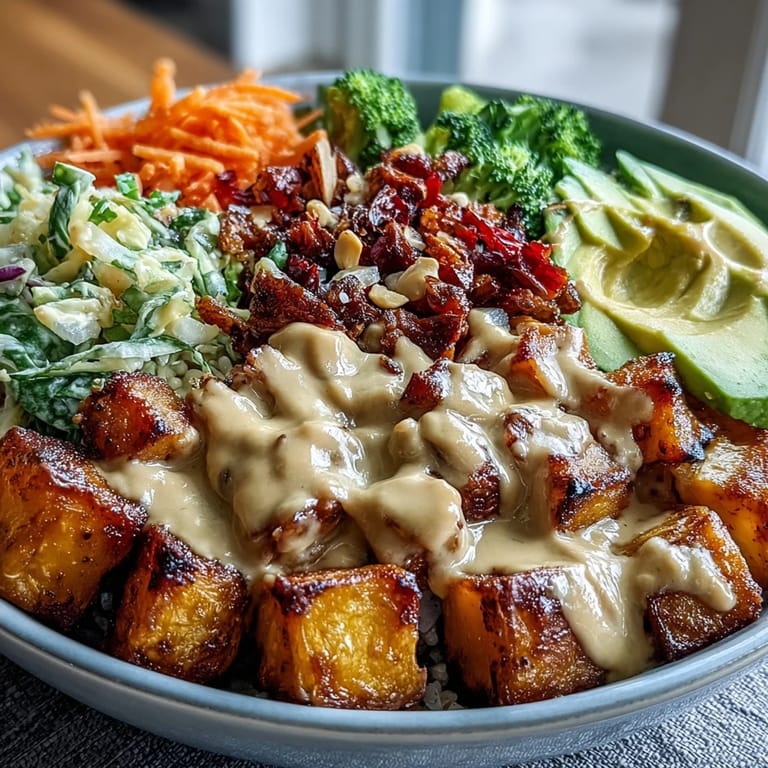
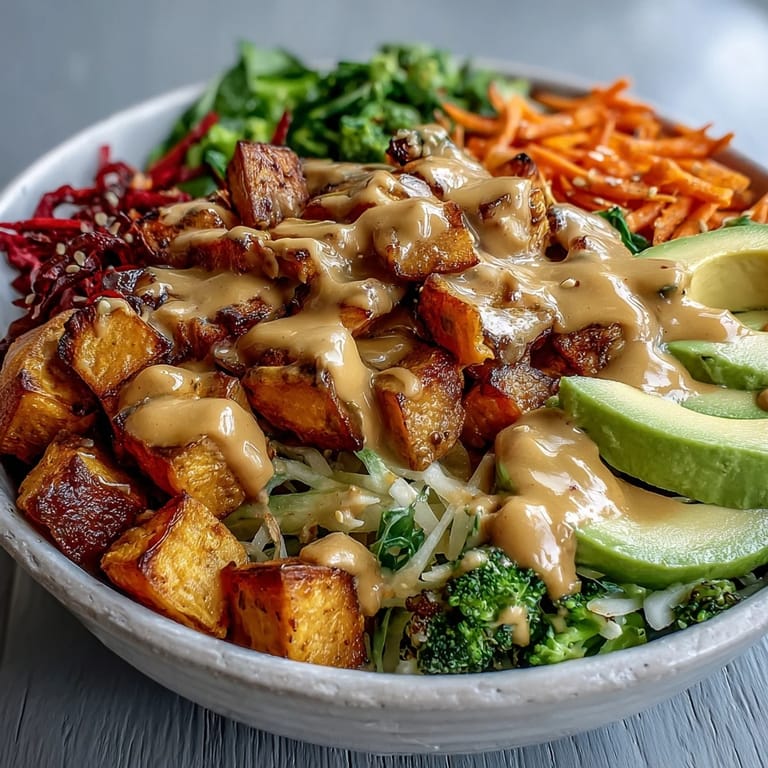
I made this for my coworkers during a particularly gray November, and I remember how the bowls looked almost defiant on our break room table—bright orange sweet potatoes, deep purple cabbage, emerald broccoli. Someone asked if I'd made it at a café, and I couldn't help but grin at how a 45-minute kitchen project had somehow transformed an ordinary afternoon into something that felt a little more like care.
Ingredients
- Sweet potatoes: Choose medium-sized ones so they roast evenly; the denser flesh holds up better than larger varieties and caramelizes gorgeously at the edges.
- Olive oil: A good quality one makes a difference in how the sweet potatoes taste—don't skip this step or use something neutral and flavorless.
- Broccoli florets: Raw broccoli adds a satisfying crunch that contrasts beautifully with the roasted potatoes; if you prefer it softer, roast it alongside the potatoes.
- Cabbage: The shredding takes two minutes with a box grater or food processor, and the slight bitterness balances the sweetness of everything else perfectly.
- Carrots: Grated raw keeps them crisp and sweet; if you want them warmer, toss them into the oven with the potatoes during the last 10 minutes.
- Avocado: Add it only when you're ready to serve, as it browns quickly and loses its buttery appeal.
- Peanut butter: Use the creamy kind for a silkier sauce; chunky works too, but the texture becomes less cohesive.
- Soy sauce: The umami depth is essential here; tamari is a natural swap if you're avoiding gluten and tastes nearly identical.
- Maple syrup: This balances the saltiness and adds warmth; agave is milder but works if you prefer less pronounced sweetness.
- Lime juice: Fresh lime is non-negotiable—bottled lime juice tastes flat and metallic by comparison.
- Sesame oil: Just a tablespoon adds an earthy, toasted complexity that makes people ask what your secret ingredient is.
- Cilantro: A personal touch that brightens everything; parsley is a functional substitute if cilantro isn't your thing, though it's milder.
- Peanuts: Chop them coarse so some pieces stay whole and add genuine texture to each bite.
Tired of Takeout? 🥡
Get 10 meals you can make faster than delivery arrives. Seriously.
One email. No spam. Unsubscribe anytime.
Instructions
- Heat your oven and prep the sweet potatoes:
- Set your oven to 400°F (200°C) and while it preheats, dice your sweet potatoes into half-inch cubes—they'll cook faster and develop more caramelized edges this way. Toss them generously with olive oil, salt, and pepper until they're all coated evenly.
- Roast until golden and crisp:
- Spread the sweet potatoes in a single layer on your baking sheet and slide them into the oven. After 15 minutes, give them a stir with a spatula so they brown on all sides rather than just the bottom—this takes about 25 to 30 minutes total, and you'll know they're ready when the edges are caramelized and the centers are tender.
- Prepare your raw vegetables while they roast:
- Use this downtime to chop, shred, and slice everything else. Set the broccoli florets, shredded cabbage, grated carrots, and sliced avocado in separate little bowls or on a cutting board—organization makes assembly feel effortless rather than chaotic.
- Whisk the peanut sauce until smooth:
- In a mixing bowl, combine the peanut butter, soy sauce, maple syrup, lime juice, and sesame oil. Whisk vigorously for about a minute; the sauce will be thick at first, but keep whisking and it'll become creamy and pourable. If it's too thick to drizzle, add warm water one tablespoon at a time until you reach the consistency you want.
- Assemble the bowls with intention:
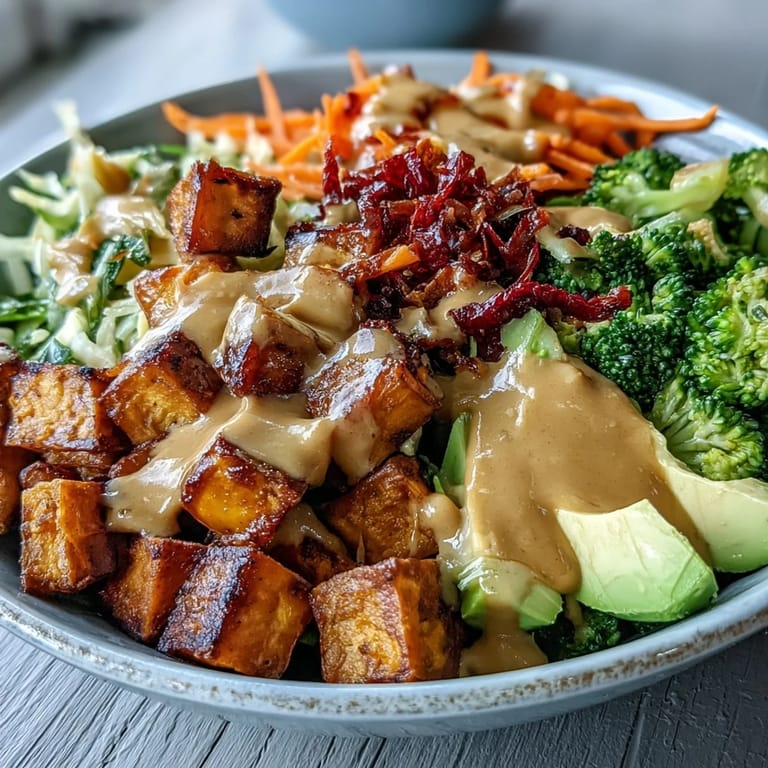
- Divide the roasted sweet potatoes among four bowls, then arrange the raw vegetables around them in a way that appeals to you—there's no wrong pattern here, just what looks appetizing to your eye. Drizzle each bowl generously with the peanut sauce, making sure it gets into all the crevices.
- Finish with garnish and serve immediately:
- Top each bowl with a handful of fresh cilantro and a scattering of chopped peanuts, then eat right away while the sweet potatoes are still warm and the vegetables are still crisp.
 Save to Pinterest
 There's a particular quiet that happens when you're eating something genuinely nourishing—less talking, more savoring. I've noticed that these bowls create that moment naturally, and I think it's because each component respects the others instead of competing for attention. The creamy sauce acts like a gentle conductor, bringing sweetness and earthiness and brightness into a conversation rather than drowning everything out.
Make It Your Own
This bowl is more of a template than a strict formula, which is partly why I love it. I've made versions with roasted chickpeas for extra protein, with quinoa instead of just vegetables, with different colors of cabbage depending on what was in the crisper drawer. The skeleton stays the same—something roasted and warm, something fresh and raw, something creamy to tie it all together—but the details shift based on what sounds good to you that day.
Storage and Make-Ahead Tips
The sweet potatoes and peanut sauce keep beautifully in the refrigerator for up to four days, which means you can batch-cook and have lunch ready to assemble every morning for several days straight. The raw vegetables are best prepped the day you plan to eat them so they stay crisp and don't release water into everything else. I usually keep the components in separate containers and assemble just before eating, which takes maybe three minutes and feels way faster than ordering takeout.
When You Want to Make It Heartier
On mornings when I know I'll be working through lunch without a break, I add a grain to the base—either rice or quinoa, cooked fresh or pulled from what I have frozen. Baked tofu is another secret weapon that adds protein and absorbs the peanut sauce beautifully without being heavy. You can also toss in some baked chickpeas if you want something that roasts alongside the sweet potatoes and comes out with a slight crisp. If you go this route, increase the sauce quantity by half so there's enough to coat everything.
 Save to Pinterest
 What started as a 45-minute project became something I find myself making at least twice a week, which tells me everything about how it fits into real life. It's nourishing without feeling austere, simple without being boring, and somehow makes midweek lunches feel a little bit like an occasion.
Recipe Q&A
- → Can I make this bowl nut-free?
Yes, substitute peanut butter with sunflower seed butter, omit sesame oil, and use sunflower seeds as garnish to keep it nut-free.
- → What vegetables work best in this bowl?
Broccoli, shredded cabbage, grated carrots, and avocado provide great texture and flavor but feel free to swap as desired.
- → How do I roast the sweet potatoes properly?
Dice evenly, toss with olive oil, salt, and pepper, then roast at 400°F (200°C) for 25-30 minutes, stirring halfway for even crispness.
- → Can I prepare components ahead of time?
Yes, roast sweet potatoes and prep vegetables separately, then assemble just before serving to keep freshness and texture optimal.
- → What protein options complement this bowl?
Baked tofu or chickpeas make excellent additions for increased protein and added heartiness without overpowering flavors.
- → Is this bowl gluten-free?
Using tamari instead of soy sauce ensures the bowl remains gluten-free without sacrificing flavor.