 Save to Pinterest
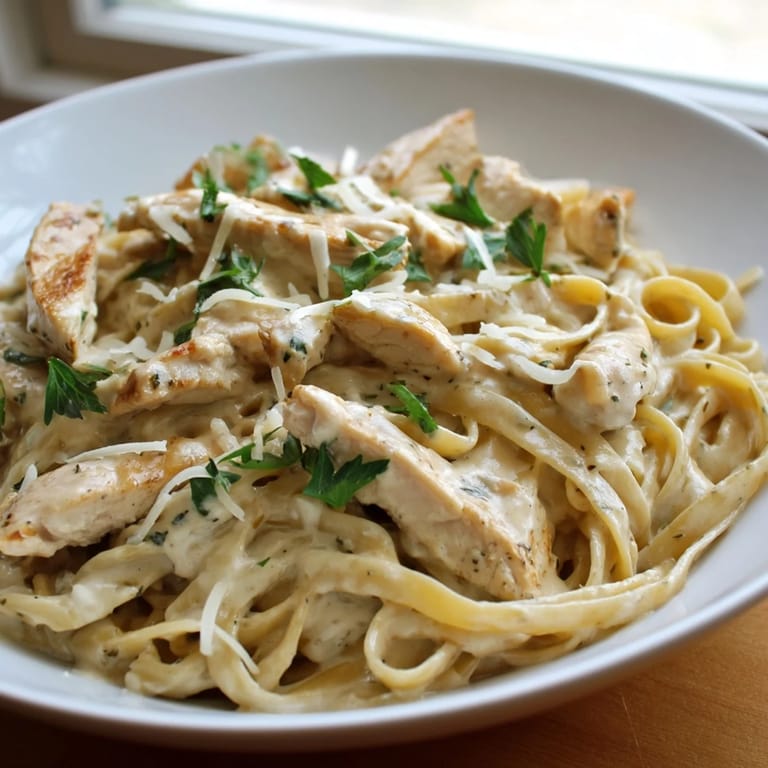
 The aroma of garlic and butter sizzling in my skillet pulls me back to those frantic weeknights when dinner seemed impossible. I discovered this one-pan chicken alfredo during a particularly chaotic Tuesday when the fridge was nearly empty. Something magical happens when cream meets parmesan in that hot pan – a silky sauce appears like culinary alchemy. Now it's my reliable Thursday night savior, requiring minimal cleanup but delivering maximum comfort.
Last winter during that three-day power outage, I fired up our camping stove on the back porch to make this alfredo. We huddled around the steaming plates in candlelight, forks twirling through creamy pasta while snow fell outside. My daughter declared it the best dinner of the blackout, and somehow the circumstances made those simple ingredients taste even more extraordinary.
Ingredients
- Boneless skinless chicken breasts: Slicing them into strips rather than cubes creates more surface area for browning and helps them cook evenly without drying out.
- Heavy cream: The real deal makes all the difference here, creating that silky mouthfeel that clings perfectly to each strand of pasta.
- Freshly grated Parmesan: Please toss that pre-grated stuff back on the shelf, as the stabilizers prevent it from melting properly into the velvety sauce we're after.
- Nutmeg: Just that tiny quarter teaspoon completely transforms the sauce from good to memorable, adding this subtle warmth that most people cant quite identify but definitely notice.
Tired of Takeout? 🥡
Get 10 meals you can make faster than delivery arrives. Seriously.
One email. No spam. Unsubscribe anytime.
Instructions
- Prepare the pasta foundation:
- Bring a large pot of water to a rolling boil and generously salt it until it tastes like the sea. Cook your pasta just shy of the package directions since itll finish cooking in our sauce.
- Sear the chicken:
- Get your skillet nice and hot before adding that first tablespoon of butter and oil. The chicken should sizzle the moment it touches the pan, creating that gorgeous golden crust that locks in moisture.
- Build the flavor base:
- When that garlic hits the pan, youll want to keep it moving constantly so it becomes fragrant without burning. This quick 60-second dance creates the aromatic foundation for our entire sauce.
- Create liquid gold:
- As you pour in the chicken broth, use your spatula to scrape up every browned bit from the bottom of the pan. Those caramelized morsels dissolve into the liquid, creating depth that makes everyone wonder about your secret ingredient.
- Achieve sauce perfection:
- When adding the Parmesan, turn your heat to low and sprinkle it gradually while stirring constantly. This prevents clumping and ensures that gorgeous, glossy emulsion weve all dreamed about.
- Bring it all together:
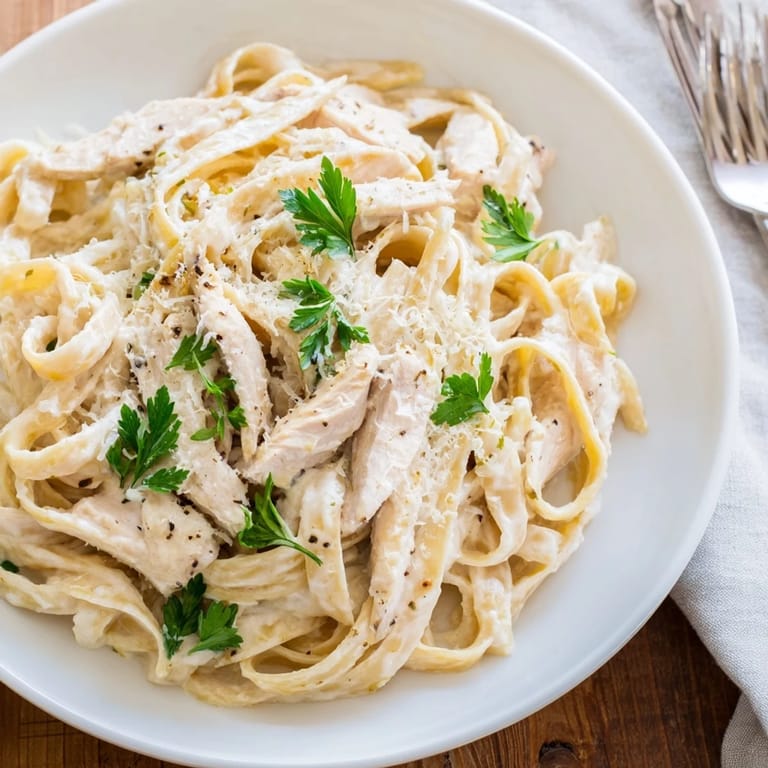
- Toss everything with tongs rather than a spoon, which helps coat each strand of pasta evenly with sauce. Add that reserved pasta water a tablespoon at a time only as needed until you see the sauce transform from thick to silky.
 Save to Pinterest
 My brother-in-law claimed he disliked cream sauces until he reluctantly tried this alfredo during a family dinner. I watched as his expression shifted from skepticism to surprise with that first bite. He ended up requesting the recipe before leaving and now makes it for his own family regularly, texting me photos of their empty plates with thumbs-up emojis.
Making It Your Own
Some nights when the vegetable drawer needs clearing, I toss in handfuls of baby spinach during the final minute of cooking, watching the bright green leaves wilt into the creamy sauce. Other times, I quickly sauté sliced mushrooms after the chicken but before starting the sauce, letting them absorb all those savory chicken bits. The recipe framework stays reliable while accommodating whatever ingredients need rescuing from your refrigerator.
Leftover Magic
Should you somehow end up with leftovers, they transform beautifully the next day. Add a splash of milk when reheating to revive the sauce, then pour it over a baked potato or fold it into a tortilla for a quick quesadilla. My personal favorite revival trick is adding a beaten egg to the cold alfredo and forming small patties to pan-fry into crispy chicken-pasta cakes that completely disguise their leftover origins.
Solving Common Challenges
If youve struggled with alfredo sauce separating or turning grainy in the past, the low-and-slow approach makes all the difference. Heat management is more important than following exact cooking times, so watch for visual cues instead of the clock. The sauce should bubble gently, never reaching a full boil after adding the cream.
- Always bring cream to room temperature before adding it to the hot pan to prevent temperature shock.
- Grate your Parmesan just before using for the freshest flavor and best melting properties.
- Keep extra pasta water on standby to rescue a sauce thats becoming too thick, which happens faster than youd expect.
 Save to Pinterest
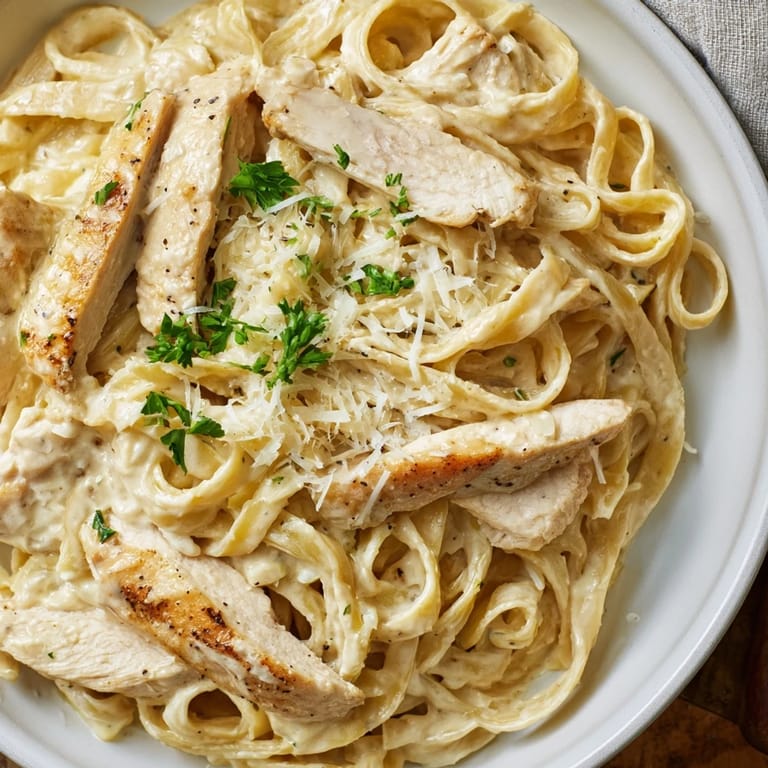
 This skillet chicken alfredo has seen us through late-night study sessions, impromptu dinner parties, and quiet Sunday suppers. Its the kind of recipe that reminds us why cooking from scratch, even on busy weeknights, feeds more than just our bodies.
Recipe Q&A
- → Can I use a different pasta shape?
Yes, fettuccine and penne work best for capturing the creamy sauce, but rigatoni, linguine, or even egg noodles are excellent alternatives. Avoid very thin pasta that may become overcooked.
- → How do I prevent the sauce from breaking?
Keep the heat at low to medium when adding cream and Parmesan. Add cheese gradually while stirring constantly. Avoid boiling vigorously, as high heat can cause the cream to separate and the sauce to become grainy.
- → What can I substitute for heavy cream?
Half-and-half creates a lighter version with similar results. Heavy cream alternative or full-fat Greek yogurt can work, though yogurt should be added off-heat to prevent curdling.
- → Is it necessary to reserve pasta water?
Yes, reserved starchy pasta water is essential for adjusting sauce consistency. It helps the sauce cling to the pasta better than plain water and creates a silkier final texture.
- → Can I make this ahead?
This dish is best served immediately. However, you can prepare components separately and combine just before serving. Store leftovers refrigerated for up to three days and reheat gently with a splash of milk to restore creaminess.
- → What wine pairs well with this dish?
Crisp white wines like Pinot Grigio, Sauvignon Blanc, or Vermentino complement the rich, creamy sauce beautifully. The acidity cuts through the richness and cleanses the palate between bites.