 Save to Pinterest
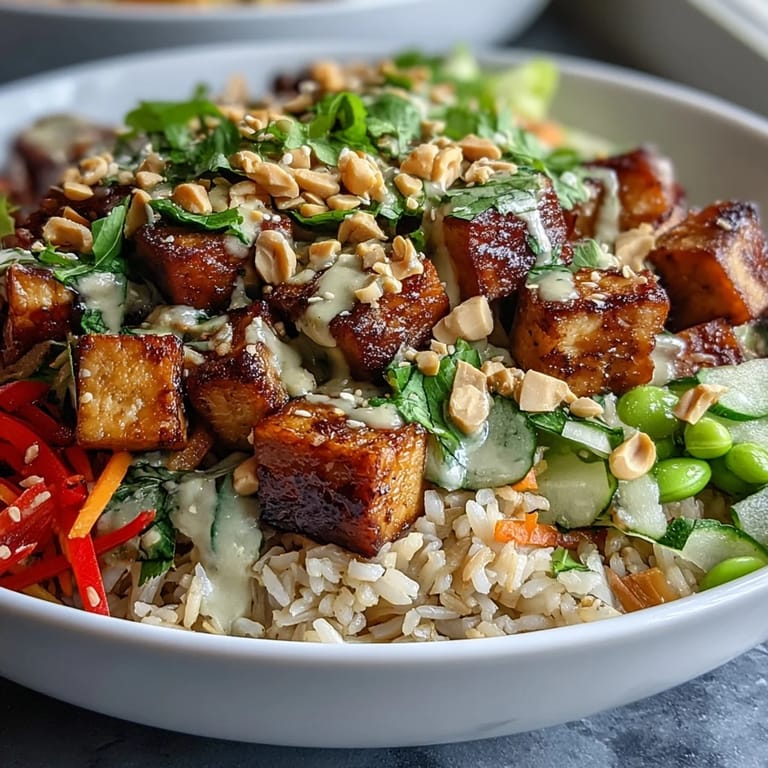
 There's something about a bowl that doesn't feel like cooking—it feels like assembling joy. I stumbled onto this peanut tofu power bowl during a phase of wanting meals that looked like rainbow explosion happened on a plate, with actual substance underneath. The crispy tofu cubes caught me off guard with how satisfying they could be, and the peanut sauce? That became the reason I'd make this again and again, even when I was supposed to be eating simpler things.
I made this for my friend Maya on a Tuesday evening when she mentioned feeling exhausted by takeout menus. Watching her face as she took that first bite—when she realized the sauce wasn't heavy but bright and alive—that's when I knew this bowl had staying power. She's made it at least twice a week since then.
Ingredients
- Extra-firm tofu: The 400g block needs pressing to release moisture, which I learned the hard way after one soggy batch; this step changes everything from texture perspective.
- Cornstarch: This creates the crispiness magic—coat it generously and don't skip the salt, it seasons as it cooks.
- Brown rice or quinoa: Pick whichever grain speaks to you that day; quinoa adds protein while rice feels more grounding.
- Rainbow vegetables: The colors matter less than variety—use what's fresh and in season at your market.
- Creamy peanut butter: Natural versions work better here because the oils emulsify smoothly into that silky sauce.
- Soy sauce or tamari: Tamari keeps this gluten-free if that matters for your table.
- Rice vinegar or lime juice: This cuts through richness and wakes up every other flavor.
- Toasted sesame oil: Just a teaspoon—the flavor is intense and perfect for grounding the whole bowl.
- Roasted peanuts and sesame seeds: These final toppings add crunch that makes you want another bite.
Tired of Takeout? 🥡
Get 10 meals you can make faster than delivery arrives. Seriously.
One email. No spam. Unsubscribe anytime.
Instructions
- Cook your grains while prepping:
- Start rice or quinoa first since it needs 20-30 minutes; this is the perfect window to prep everything else without rushing. Fluff it with a fork when done and taste for seasoning.
- Press and coat the tofu:
- Wrap your pressed tofu block in a clean kitchen towel and let it sit under something heavy for 10 minutes, then cube it and toss gently with cornstarch and salt until every piece is dusted. This coating is what transforms tofu from boring to crave-worthy.
- Crisp up the tofu:
- Either bake at 200°C for 20-25 minutes on an oiled sheet (flip halfway through) or pan-fry in a hot skillet with olive oil until golden on all sides. Either method works; the oven is hands-off while the skillet gives you more control and slightly deeper color.
- Build your peanut sauce:
- Whisk peanut butter with soy sauce, maple syrup, rice vinegar, sesame oil, minced garlic, ginger, and warm water until completely smooth. Start with 2 tablespoons of water and add more gradually—you want it pourable but substantial.
- Prep your vegetables mindfully:
- Julienne the carrot, slice the pepper and cucumber, shred the cabbage, and slice spring onions; if using frozen edamame, steam them briefly. Fresh vegetables will stay crispest if you prep them just before assembly.
- Assemble with intention:
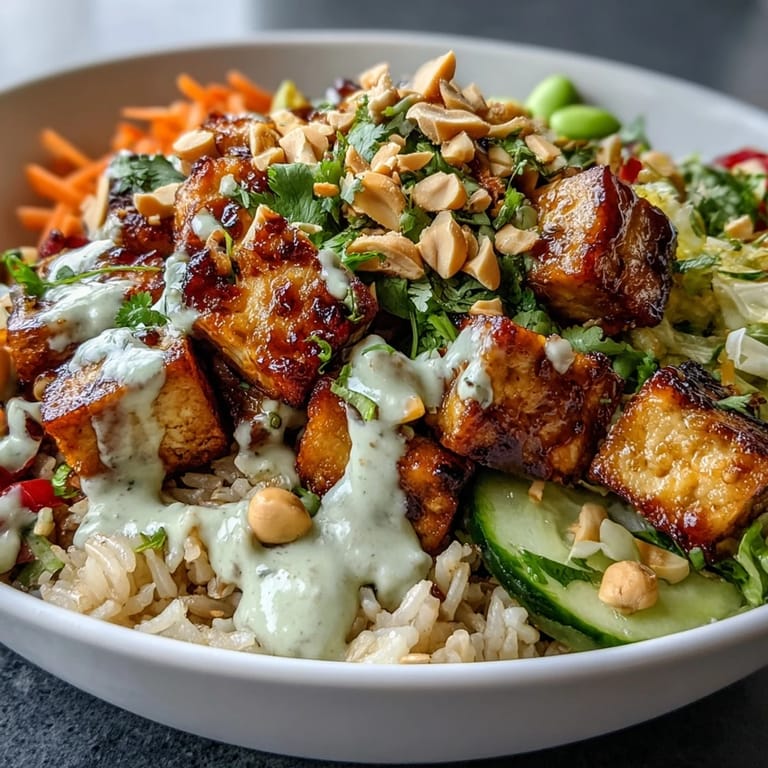
- Divide warm grains into four bowls, then arrange each vegetable and the tofu on top in sections so each bite has everything. This visual organization makes people feel like you spent more time than you actually did.
- Sauce and garnish generously:
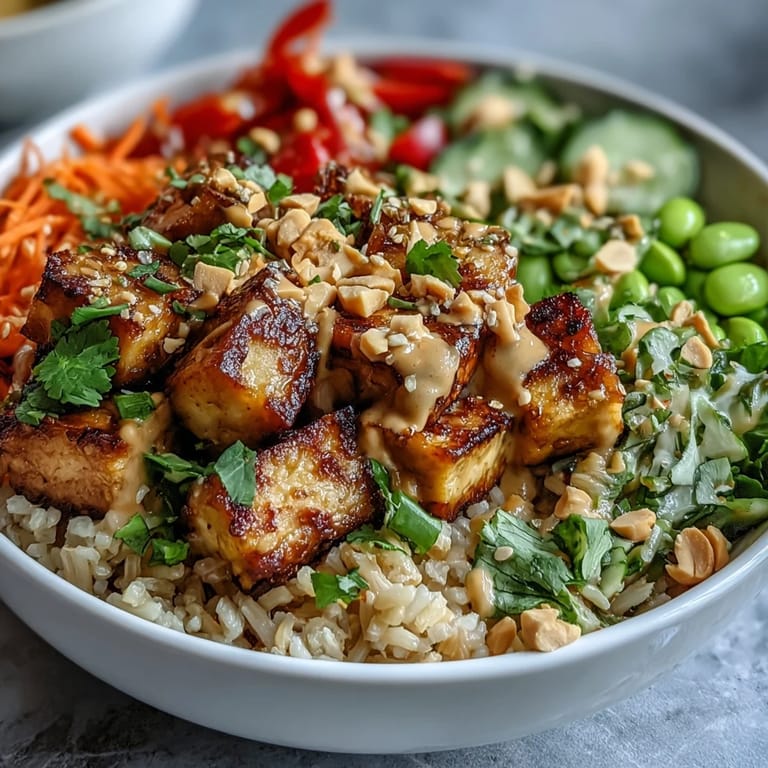
- Drizzle the peanut sauce over everything, then scatter roasted peanuts, sesame seeds, and fresh cilantro or mint across the top. Serve immediately while the tofu is still warm and the vegetables are still crisp.
 Save to Pinterest
 There was a moment when my usually skeptical partner tried this bowl and asked, mid-chew, if there was actually meat in it. When I said no, I watched something shift in how he thought about eating plants. That's when food stops being fuel and becomes a small conversation.
Why Texture Matters Here
The genius of this bowl lives in contrasts—warm grains against cool crisp vegetables, creamy sauce against crunchy peanuts, soft edamame against firm tofu. Each spoonful surprises your mouth, which is why you don't get bored halfway through. I started paying attention to which components could stay raw versus which benefit from light cooking, and that's when bowls stopped feeling like side-by-side ingredients and started feeling like actual dishes.
The Sauce Is Everything
I've made this peanut sauce enough times to know its moods. On colder days I use slightly less water and it becomes almost luxurious, clinging to each element. In summer I thin it more and it feels bright enough to make the whole bowl feel lighter. The balance of sweet maple syrup, savory soy, sharp vinegar, and warm ginger creates something that tastes like restaurant-quality but takes five minutes of whisking.
Make It Your Own
This bowl is a template, not a rule. The week my farmer's market had absolutely stunning roasted sweet potato, I swapped out some rice and it elevated everything. Another time I stirred in a handful of steamed broccoli and the whole thing felt different—earthier, more substantial. The peanut sauce adapts beautifully to add-ins like a splash of sriracha for heat or extra lime juice for brightness.
- Add avocado, roasted chickpeas, or steamed broccoli depending on what nutrition you need that day.
- For lower-carb versions, use cauliflower rice as your base instead of grains.
- Make extra peanut sauce and keep it in the fridge for the next three days of quick bowls.
 Save to Pinterest
 This bowl taught me that nourishing food doesn't have to be complicated, and that's become my favorite kind of cooking. Make this when you want to feel good, feed people well, and have leftovers that taste even better the next day.
Recipe Q&A
- → How do I get crispy tofu?
Press excess moisture from extra-firm tofu, cube it, then toss with cornstarch and salt before baking at 200°C for 20–25 minutes or pan-frying until golden brown on all sides.
- → Can I make this gluten-free?
Yes, simply substitute regular soy sauce with tamari in the peanut sauce. Ensure all other ingredients, particularly packaged items, are certified gluten-free.
- → What grains work best?
Brown rice and quinoa are excellent choices, offering nutty flavor and protein. For lower-carb options, try cauliflower rice or skip grains entirely for a lighter bowl.
- → How long does the peanut sauce keep?
Store the sauce in an airtight container in the refrigerator for up to one week. Whisk in a small amount of warm water before serving to restore creamy consistency.
- → Can I prepare components ahead?
Cook grains and prepare vegetables up to two days in advance. Make the peanut sauce and store separately. Assemble bowls just before serving to maintain crisp textures.