 Save to Pinterest
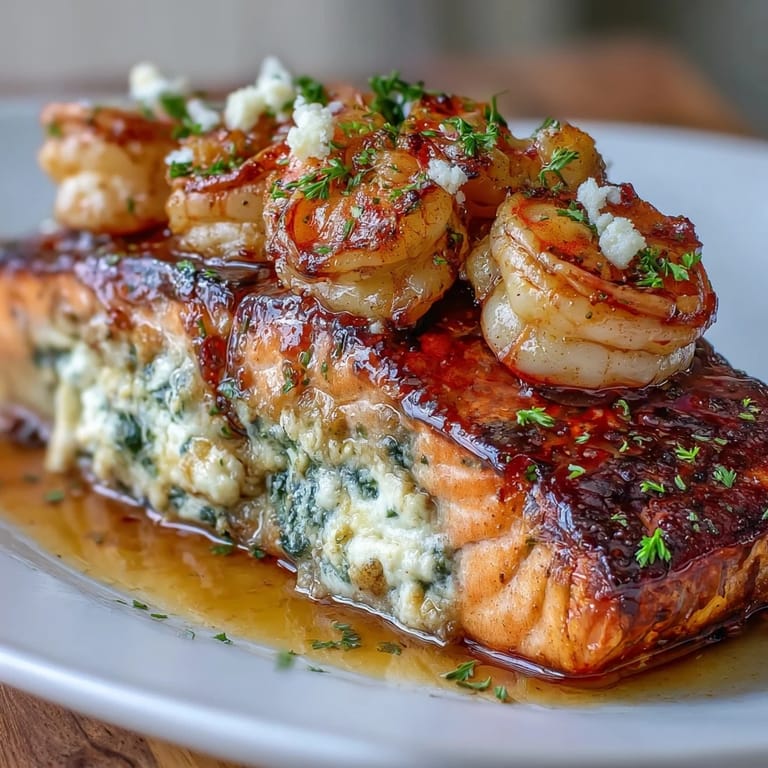
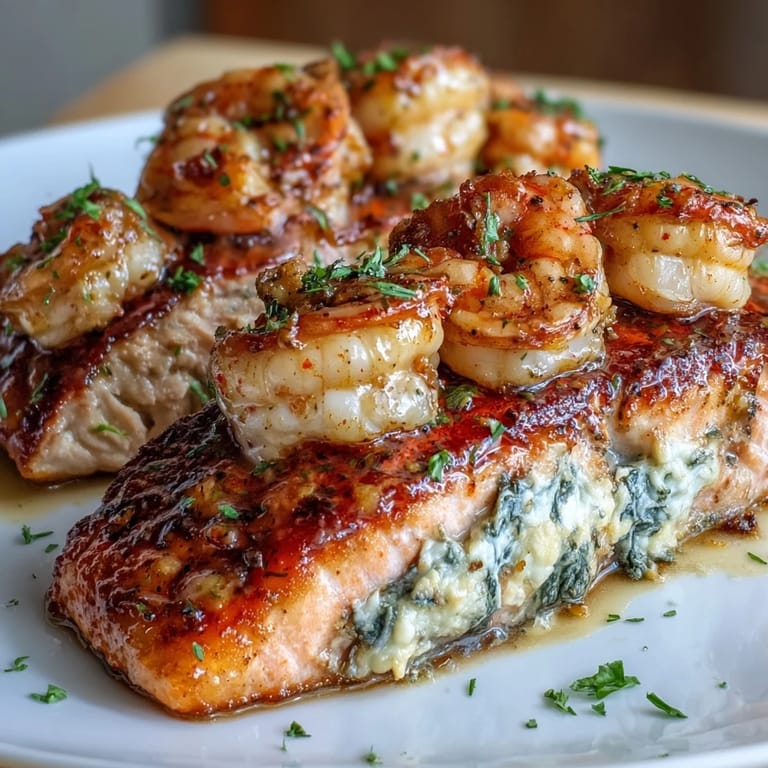
 My neighbor knocked on the door one evening holding a bag of impossibly fresh shrimp from the harbor, and I suddenly felt the pressure to make something worthy of them. I opened my fridge, saw a beautiful salmon fillet, and remembered a dish I'd eaten at a tiny seafood restaurant that tasted like the ocean had been distilled into one perfect bite. That night, I reverse-engineered it in my kitchen, layering crab, spinach, and creamy Boursin into a pocket I carved into the salmon, then topped it all with those shrimp he'd brought. What emerged from the oven made my whole family pause mid-conversation.
I made this for my partner's birthday dinner last spring, and watching their face when they cut into that salmon pocket and found all that treasure inside made me realize cooking isn't really about impressing people with technique—it's about the small moment when someone knows you took time to make something special for them. We sat on the patio with the windows open, eating slowly, not rushing, and that's when I understood why this dish stuck with me.
Ingredients
- Salmon fillets (7 oz each), skin removed: Look for fillets that feel firm to the touch and smell like the ocean, not fishy—that's always the tell of freshness.
- Avocado oil or olive oil: I use avocado oil for its higher smoke point, but either works beautifully if that's what you have.
- Salt and ground black pepper: Don't skip seasoning the salmon itself before stuffing; it's the foundation everything else builds on.
- Smoked paprika: This is what gives the salmon that subtle depth that makes people ask what you did differently.
- Cajun seasoning: Choose a good quality blend or make your own if you want to control the heat level.
- Frozen spinach, thawed and squeezed dry: This is crucial—wet spinach will make your filling soggy, so really wring it out with your hands until it feels almost tough.
- Boursin Shallot and Chive cheese: This ingredient does half the work for you, bringing its own garlic and herb flavors to the party.
- Jalapeño: Deseeding it keeps things elegant, but leave a few seeds in if your crowd enjoys heat.
- Lump or claw crab meat: Pick through it carefully even though it's tedious—one shell ruins the whole experience.
- Parmesan cheese, grated: Fresh grated tastes sharper and melds better than the pre-grated stuff in the green can.
- Minced garlic: Freshly minced is worth the 30 seconds; jarred garlic tastes like regret.
- Medium shrimp, peeled and cleaned: Medium is the sweet spot—large shrimp can overpower the delicate salmon, and small ones disappear.
- Unsalted butter, melted: This drizzle at the end brings everything together like a finishing brushstroke.
- Lemon juice: Fresh squeezed, always—it brightens the whole dish and cuts through the richness.
Tired of Takeout? 🥡
Get 10 meals you can make faster than delivery arrives. Seriously.
One email. No spam. Unsubscribe anytime.
Instructions
- Set the stage:
- Preheat your oven to 350°F and line a baking sheet with parchment paper—this is your canvas for the next 20 minutes of kitchen magic.
- Prepare the salmon:
- Pat your fillets dry (this matters more than you'd think for even cooking), drizzle lightly with oil, then season both sides generously with salt, pepper, smoked paprika, and Cajun seasoning. Using a sharp knife held at a slight angle, carefully cut a deep horizontal pocket into each fillet, being careful not to slice all the way through—you're creating a small envelope, not a butterfly.
- Build the filling:
- In a bowl, combine your squeezed-dry spinach with room-temperature Boursin cheese, diced jalapeño, picked-over crab meat, grated parmesan, and minced garlic. Fold everything together gently so the crab stays in beautiful chunks—you're not making a paste, you're making a filling.
- Season the shrimp:
- In another bowl, toss your cleaned shrimp with a tablespoon of oil, a pinch of salt and pepper, Cajun seasoning, and smoked paprika until every shrimp glistens with the spices.
- Stuff and arrange:
- Using a spoon, carefully stuff each salmon pocket with the crab mixture, dividing it evenly—you want each fillet to feel substantial but not bursting at the seams. Lay the stuffed fillets on your prepared baking sheet and give them a little breathing room.
- Crown the salmon:
- Top each fillet with 3 to 4 seasoned shrimp, arranging them so they nestle into the butter you're about to add.
- Final touches:
- Drizzle melted butter and fresh lemon juice evenly over everything—this creates a small sauce as it bakes and keeps the salmon moist and bright.
- Bake with confidence:
- Place the baking sheet in your preheated oven and set a timer for 15 to 17 minutes. The salmon is done when it flakes easily at the thickest point with a fork and the shrimp have turned opaque and firm—don't overcook or it becomes rubber.
- Plate and serve:
- Transfer each fillet to a warm plate, scatter lemon wedges around it, and bring it to the table immediately while everything is still steaming.
 Save to Pinterest
 There's something quietly powerful about pulling a dish from the oven that looks restaurant-worthy, knowing you made it yourself. That moment when your guests lean in with their fork and discover the treasure inside the salmon—that's what cooking is really for.
The Art of Stuffing Without Disaster
The first time I made this, I cut my salmon pocket too shallow and half the filling squeezed out onto the baking sheet while it cooked. Now I've learned to angle my knife almost parallel to the cutting board, working slowly down the length of the fillet to create a deep, secure pocket that holds everything snugly. Think of it like writing a letter in an envelope, not carving a canyon.
Why Timing Matters More Than You Think
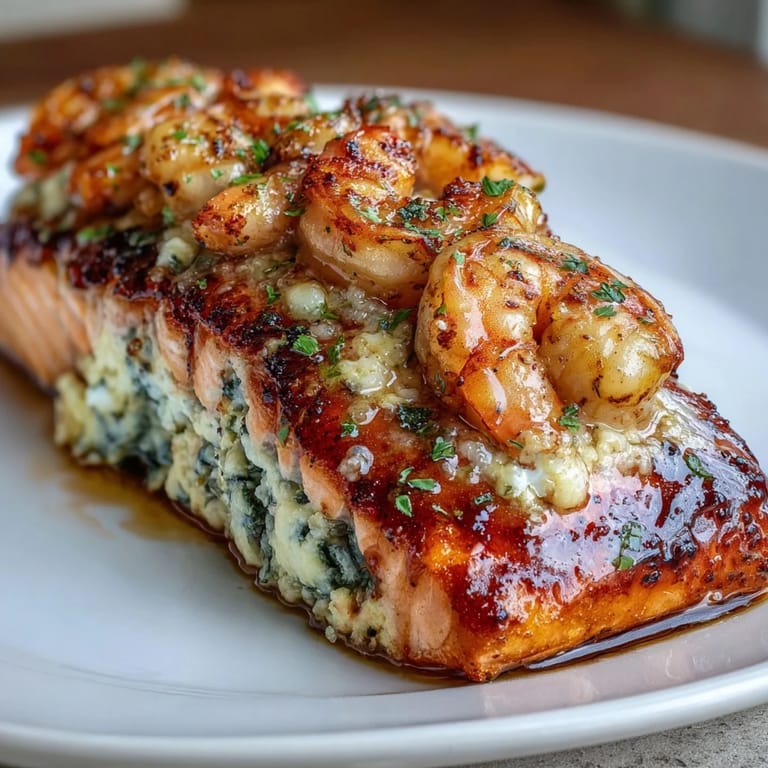
Salmon and shrimp cook at slightly different speeds, which is why I arrange the shrimp on top rather than mixing them into the filling—they need less time and sitting directly on top of the buttery salmon gives them the perfect amount of heat. If you buried them inside, they'd either be rubbery by the time the salmon was done, or the salmon would still be cold in the middle waiting for them to finish.
Flavor Combinations That Work Like Magic
The jalapeño in the filling adds a bright whisper of heat that wakes up your mouth without overwhelming the delicate seafood. The Boursin cheese is doing heavy lifting behind the scenes—its herbed, garlicky nature means you don't need to add much else to make the filling taste complex and restaurant-quality. The smoked paprika and Cajun spices tie everything together and create a visual appeal that makes people think you know what you're doing.
- If your crowd doesn't like spice, use less Cajun seasoning or skip the jalapeño seeds entirely and dial back the paprika.
- Leftovers taste even better the next day cold, flaked into a salad with fresh greens and lemon vinaigrette.
- This dish pairs beautifully with asparagus, a crisp white wine, or roasted potatoes if you need to round out the plate.
 Save to Pinterest
 This dish exists in that beautiful space where restaurant elegance meets weeknight simplicity, and once you make it once, you'll find yourself reaching for it again whenever you want to feel like you've accomplished something. That's the whole point of cooking, really.
Recipe Q&A
- → What type of cheese pairs well with the filling?
Boursin Shallot & Chive cheese adds a creamy, herb-infused flavor, but herbed cream cheese is a great substitute.
- → How can I make the filling spicier?
Leaving some seeds in the jalapeño or adding a pinch of cayenne will increase the heat.
- → What oil is best for seasoning the salmon?
Avocado or olive oil works well to add moisture and help seasonings adhere to the salmon.
- → Can this dish be prepared ahead of time?
You can prepare the filling in advance and stuff the salmon just before baking to maintain freshness.
- → What wines complement this entrée?
Sauvignon Blanc or Chardonnay pairs elegantly with the rich seafood flavors.
- → How do I tell when the salmon is done?
The salmon is finished when it flakes easily with a fork and shrimp appear opaque and cooked through.