 Save to Pinterest
 My sister called me in a panic the morning she was hosting brunch for twelve people, and somehow I became the solution. Standing in her kitchen at six in the morning with her staring at me hopefully, I remembered a caramel cream cheese French toast casserole I'd made once before, and that's when it clicked—this dish was exactly what she needed. The beauty of it is that you prep everything the night before, slip it into the fridge, and wake up to something that looks and tastes like you spent hours in the kitchen when really you just spent twenty minutes. Now whenever someone asks me for an impressive brunch recipe, this is what I hand them.
I'll never forget my neighbor Sarah's face when she took her first bite at that brunch—she literally closed her eyes and didn't say anything for what felt like forever. When she finally spoke, she just asked if I could make it for her daughter's wedding shower, which felt like the highest compliment a cook could receive. That's when I realized this casserole had crossed over from being just breakfast into something people actually remember and talk about later.
Ingredients
- Brioche or challah bread (1 loaf, about 500 g, cut into 1-inch cubes): The bread is your foundation and it needs to be sturdy enough to hold custard without falling apart, which is why brioche's soft structure actually works perfectly—it soaks up every drop.
- Cream cheese (225 g, softened): Make sure it's genuinely soft before you start, or those dollops won't distribute evenly and you'll have dense pockets instead of creamy ones.
- Eggs (6 large): They bind everything together and give you that custardy texture that makes this feel indulgent.
- Whole milk (360 ml): This keeps the custard from being too heavy while still being rich.
- Heavy cream (120 ml for custard plus 60 ml for caramel): Don't skimp here—it's what makes this taste like a special occasion.
- Granulated sugar (120 g): Sweetens the custard and balances the caramel.
- Pure vanilla extract (2 tsp): Use the real stuff; it makes a genuine difference in the final flavor.
- Ground cinnamon (½ tsp plus 1 tsp for topping): Adds warmth without overwhelming the dish.
- Salt (pinch): Enhances all the flavors around it.
- Light brown sugar (200 g, packed): The base of your caramel and what gives it that deep, molasses-forward taste.
- Unsalted butter (120 g): Melts into the brown sugar to create that silky caramel texture.
Tired of Takeout? 🥡
Get 10 meals you can make faster than delivery arrives. Seriously.
One email. No spam. Unsubscribe anytime.
Instructions
- Make the caramel sauce first:
- In a saucepan over medium heat, melt the brown sugar and butter together, stirring constantly until everything is smooth and bubbling around the edges, which usually takes two to three minutes. Once it's all combined and smells like toasted sugar and butter, pull it off the heat and stir in the heavy cream—it'll bubble up a bit but that's exactly what you want, and then pour it into your greased baking dish right away.
- Layer the bread foundation:
- Spread half of your bread cubes evenly over that caramel layer, making sure they're scattered throughout so you get caramel in every bite later. Don't pack them down yet—just let them sit there like they're floating on top.
- Distribute the cream cheese:
- Beat your softened cream cheese until it's smooth and creamy, then drop spoonfuls of it over the bread layer like you're being a little bit generous with it. Gently spread some of it around but leave some dollops unmixed so you get those pockets of pure cream cheese goodness throughout.
- Add the final bread layer:
- Top everything with the remaining bread cubes, distributing them evenly so you have a balanced structure for soaking.
- Create the custard:
- In a large bowl, whisk together the eggs, milk, heavy cream, granulated sugar, vanilla, cinnamon, and salt until the mixture is smooth and well combined. Pour this custard evenly over all your layers and then gently press down on the bread with a spatula or your hands so everything gets saturated with that eggy, creamy mixture.
- Let it chill overnight:
- Cover everything tightly with plastic wrap and slide it into the fridge overnight or for at least six hours, which gives the bread time to really absorb all that custard and transform into something almost cake-like. This step is non-negotiable if you want the final texture to be right.
- Bring it to room temperature:
- The next morning, pull the casserole out of the fridge and let it sit on the counter for twenty to thirty minutes while you preheat your oven to 175°C (350°F). This tempering step helps it bake more evenly.
- Add the cinnamon sugar topping:
- Mix together two tablespoons of granulated sugar and one teaspoon of cinnamon in a small bowl, then sprinkle it evenly over the top of the casserole before it goes into the oven.
- Bake until golden:
- Bake uncovered for forty to forty-five minutes, and you'll know it's done when the top is puffed and golden and the center feels set but still has a tiny bit of jiggle. If it's browning too quickly on top, just tent it loosely with foil for the last ten minutes.
- Rest before serving:
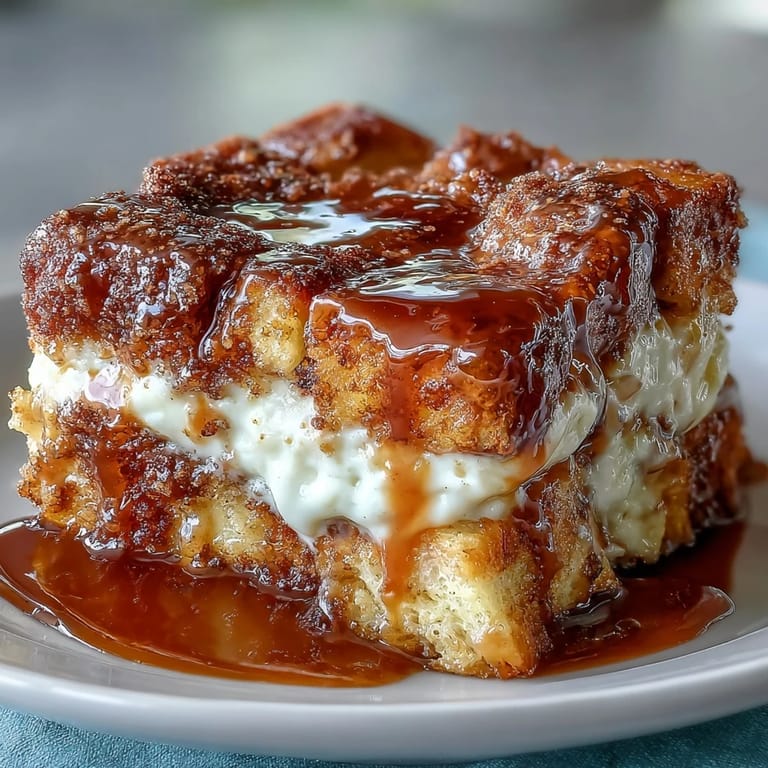
- Let it cool for ten minutes so everything sets up just a bit, then serve it warm while that caramel is still flowing underneath.
 Save to Pinterest
 There's something almost meditative about making this dish because you're forced to slow down—you can't rush the overnight chilling, and honestly, that's when the magic happens. It taught me that some of the best cooking involves doing something simple and then having the patience to wait for time to do the real work.
The Overnight Magic
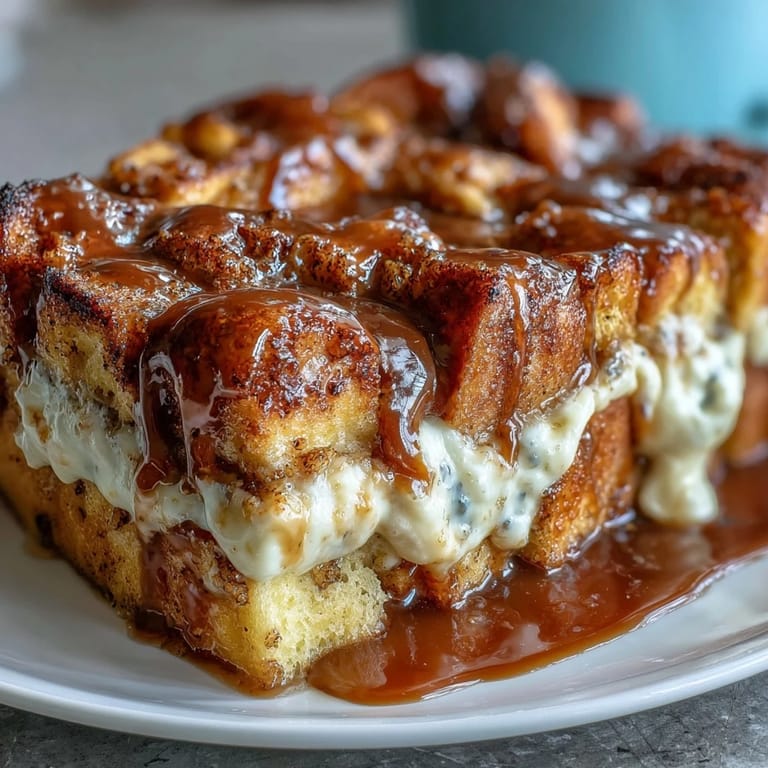
The refrigeration period isn't just a convenience step; it's actually where the bread transforms into something completely different. As it sits there overnight, those bread cubes slowly absorb the custard, becoming almost custardy themselves rather than separate pieces, and the cream cheese pockets soften into this dreamy texture that melts on your tongue. I've made this same recipe without the overnight chilling and it's just not the same—it stays more bread-like and less integrated, so trust the process even though it feels like you're just waiting around.
Customizing Your Casserole
One of the reasons I keep making this recipe is that it's genuinely flexible without losing its character, which is rare for something this fancy-looking. My sister adds chopped pecans between the layers, my neighbor once added fresh raspberries scattered throughout, and I've experimented with swapping vanilla for maple extract for a fall version. You could even substitute half-and-half for some of the heavy cream if you want something lighter, though you'll lose a bit of that luxurious richness that makes this special in the first place.
Serving and Storage Wisdom
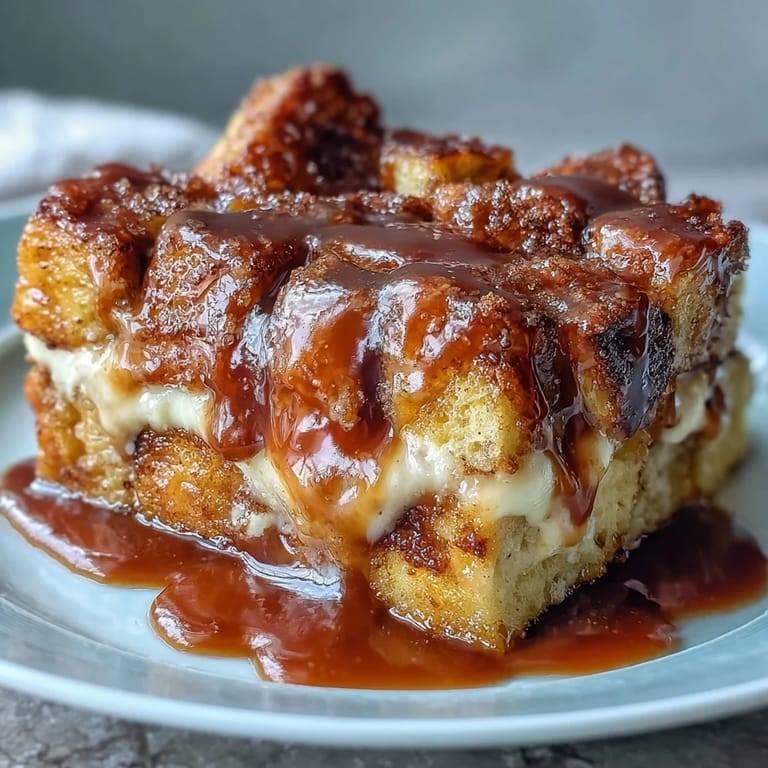
I've learned to serve this warm but not piping hot because the caramel underneath is genuinely molten and will burn your mouth if you're not careful, which I learned the embarrassing way at my sister's brunch. You can make this up to one day ahead and refrigerate it after baking, then gently reheat it in a low oven for about fifteen minutes when you're ready to serve. It also keeps beautifully in the fridge for three days, making it perfect for those weeks when you want impressive leftovers.
- Serve with fresh berries or a drizzle of extra caramel sauce for even more decadence.
- A small glass of mimosa or coffee pairs perfectly alongside this richness.
- Individual portions reheat well in the microwave or oven if you're eating it over several days.
 Save to Pinterest
 This casserole became my go-to brunch recipe because it genuinely impressed people while also giving me the gift of preparation time and peace of mind. Every time I make it, someone asks for the recipe, and I love that I get to pass along a dish that feels like a small luxury in the morning.
Recipe Q&A
- → Can I use different bread for this casserole?
While brioche and challah work best due to their rich, buttery texture, you can substitute other breads. French bread, sourdough, or even day-old sandwich bread will work. Stale bread actually absorbs the custard better than fresh, so consider letting your bread sit out overnight before assembling.
- → How long should this refrigerate before baking?
For best results, refrigerate overnight or at least 6-8 hours. This allows the bread to fully absorb the custard mixture, resulting in that perfect pudding-like texture. If you're pressed for time, 4 hours minimum will work, but the texture won't be quite as creamy.
- → Can I prepare this ahead and freeze it?
You can assemble the entire casserole, cover tightly, and freeze for up to 2 months before baking. Thaw overnight in the refrigerator, then let it sit at room temperature for 30 minutes before baking as directed. You may need to add a few extra minutes to the baking time.
- → What can I serve with this breakfast casserole?
Fresh berries, sliced strawberries, or a simple fruit salad provide a nice contrast to the richness. For a complete brunch spread, consider crispy bacon or sausage on the side. A light mimosa or fresh squeezed orange juice makes the perfect beverage pairing.
- → How do I know when it's fully baked?
The casserole is done when it's puffed up significantly, golden brown on top, and set in the center. A knife inserted near the center should come out clean, not showing liquid custard. If the top browns too quickly, loosely tent with foil for the last 10-15 minutes of baking.
- → Can I reduce the sweetness in this dish?
You can reduce the granulated sugar in the custard to ¼ cup and cut the brown sugar in the caramel to ¾ cup. The cream cheese provides enough richness that you won't miss the extra sweetness. Alternatively, serve with fresh fruit instead of additional toppings.