 Save to Pinterest
 There's something magical about waking up to a house that already smells like caramel and vanilla, especially when you've done absolutely nothing that morning except shuffle to the kitchen in your pajamas. This casserole taught me that the best brunch dishes are the ones that do most of their work while you're sleeping, leaving you free to actually enjoy your guests instead of being stuck at the stove. The first time I assembled one of these, my daughter wandered in asking what smelled so good, and I realized I'd accidentally created the ultimate kitchen magic trick.
Last spring, I made this for a group of friends who showed up expecting simple breakfast and left talking about it for weeks. One of them, Sarah, took a bite and literally closed her eyes like she was hearing music. That's when I knew this wasn't just a recipe, it was something that could turn a regular Sunday morning into an actual moment worth remembering.
Ingredients
- 1 loaf (about 500 g) brioche or challah bread, cut into 2.5 cm (1-inch) cubes: Brioche's buttery texture absorbs the custard without turning to mush, and day-old bread works even better because it's less likely to fall apart.
- 225 g (8 oz) cream cheese, softened: Letting it sit at room temperature for 30 minutes before you start makes it whip smooth and prevents lumps that can ruin the creamy layers.
- 240 ml (1 cup) whole milk: Full fat milk creates a richer custard than lower fat options, which matters when you're competing with caramel for attention.
- 240 ml (1 cup) heavy cream: This is what keeps the baked casserole from drying out and gives it that almost luxurious texture.
- 5 large eggs: They're your binder and they create that gentle, custardy set that makes this different from regular baked French toast.
- 60 g (¼ cup) unsalted butter, melted: Melted butter distributes more evenly than solid butter and helps everything cook uniformly.
- 150 g (¾ cup) granulated sugar and 100 g (½ cup) packed light brown sugar: The white sugar sweetens the custard while brown sugar adds depth and keeps things from being aggressively sweet.
- 2 tsp pure vanilla extract: Pure vanilla matters here because the casserole sits overnight and cheaper extracts can taste metallic after that long.
- ½ tsp ground cinnamon and ¼ tsp salt: Cinnamon whispers in the background, and salt is the secret that makes everything taste more like itself.
- 240 ml (1 cup) store-bought or homemade caramel sauce: Store-bought works perfectly, but homemade caramel has this complex bitter-sweet thing that elevates the whole dish.
Tired of Takeout? 🥡
Get 10 meals you can make faster than delivery arrives. Seriously.
One email. No spam. Unsubscribe anytime.
Instructions
- Prepare your baking dish:
- Butter or spray your 9 x 13 inch dish generously so nothing sticks when you're trying to serve. This matters more than you'd think.
- Build the first bread layer:
- Scatter half your bread cubes across the bottom in a single layer, letting them sit where they want rather than forcing them into neat rows. Some gaps are fine and actually help the custard distribute.
- Make the cream cheese sweetness:
- Beat your softened cream cheese with a quarter cup of sugar and a teaspoon of vanilla until it's completely smooth and fluffy. If you see any cream cheese lumps, your electric mixer isn't done yet.
- Add the cream cheese layer:
- Dollop spoonfuls of the cream cheese mixture over the bread, then spread it gently with a spatula or the back of a spoon so it nestles into the cubes. It doesn't need to cover every spot perfectly.
- First caramel drizzle:
- Pour half your caramel sauce over the cream cheese layer in a thin stream, letting it find its own path into the nooks. Stand back and enjoy how beautiful this looks.
- Top with remaining bread:
- Add your second batch of bread cubes over the caramel, again letting them settle naturally rather than packing them down. You're building layers, not engineering bricks.
- Make the custard mixture:
- Whisk together eggs, milk, cream, melted butter, remaining sugars, vanilla, cinnamon, and salt in a large bowl until everything is completely combined and you can't see any streaks. Taste it (yes, raw egg risk, but one tiny taste tells you if your cinnamon is right).
- Pour and soak:
- Pour the custard slowly and evenly over the bread layers, then press down very gently with a spatula or the back of a spoon to help the bread absorb the liquid. You want saturation, not submersion.
- Chill overnight:
- Cover the dish tightly with plastic wrap or foil and refrigerate for at least eight hours, though overnight is ideal. This waiting period is when the magic happens and the bread drinks up all the flavor.
- Get ready to bake:
- Take the casserole out of the fridge while your oven preheats to 350°F so it comes closer to room temperature. A cold casserole takes longer to bake evenly.
- Bake to golden:
- Bake uncovered for 40 to 45 minutes until the top is deep golden brown and the center feels set when you gently jiggle the pan. If it's browning too fast, lay a sheet of foil loosely over the top.
- Final caramel finish:
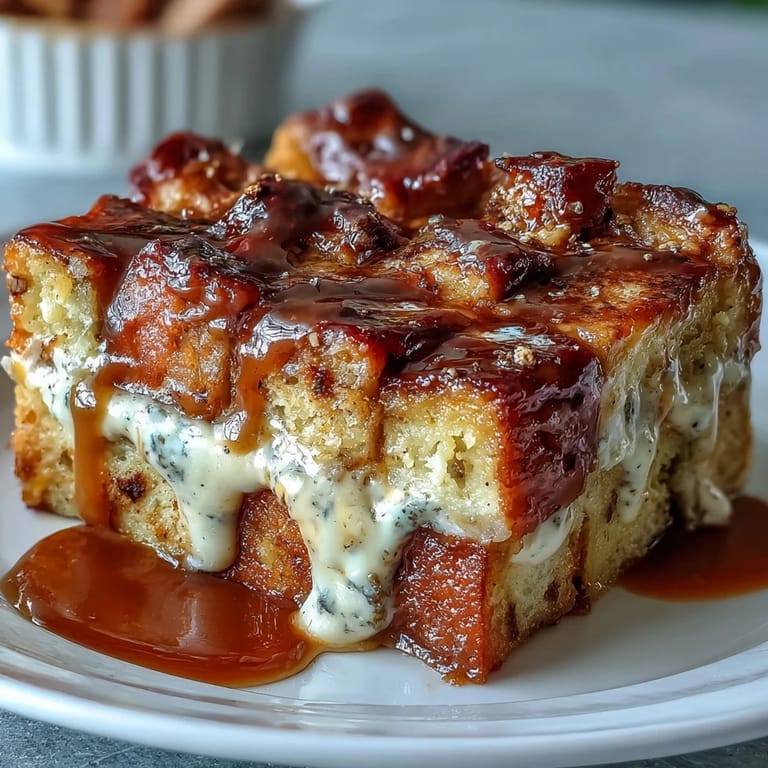
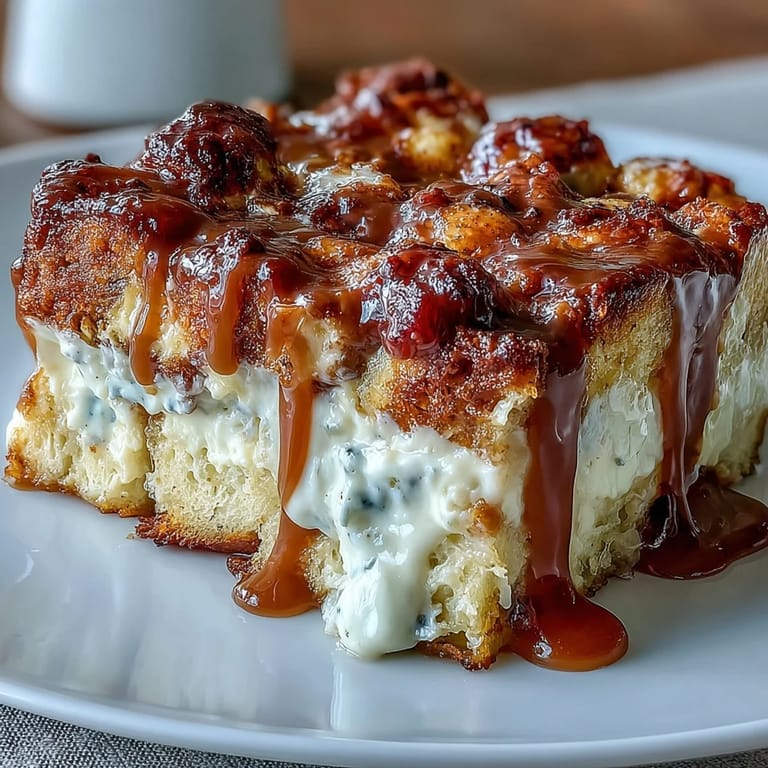
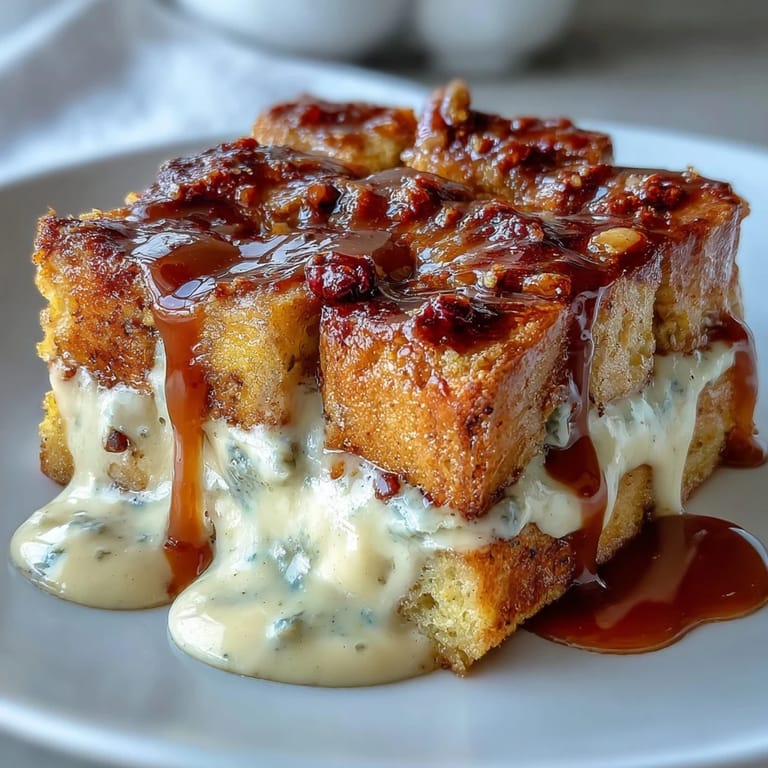
- Warm your remaining caramel sauce and drizzle it over the hot casserole just before serving so it's glossy and warm. This last drizzle is what makes people lean forward and say yes to a second slice.
 Save to Pinterest
 There was a morning when my ten-year-old son insisted on helping me pull this out of the oven, and he was so proud watching it rise and brown that he asked if we could make it for his school bake sale. That's when I understood this dish had become his favorite part of our weekend routine, not because it's complicated, but because it feels like something special.
Why Overnight Chilling Transforms Everything
The magic of letting this sit overnight isn't just about convenience, it's chemistry. While the casserole chills, the bread cubes slowly absorb the custard mixture, the flavors meld into something more cohesive than if you baked it fresh, and the cream cheese stays distinct but integrated instead of separate pockets. By morning, you've got a dish that's essentially already cooked halfway, which is why the baking time is so forgiving and the results are so consistent.
Customizing Your Toppings Without Losing the Balance
The beauty of this casserole is that you can dress it up without overwhelming the caramel and cream cheese flavors that make it work. I've added chopped pecans, walnuts, or macadamia nuts before baking, and they add crunch without competing. Fresh raspberries scattered on top after baking give you brightness, whipped cream makes it feel indulgent, and a dusting of sea salt before serving makes people pause and ask what that flavor is.
Storage, Reheating, and Making It Ahead
Leftovers, if you have them, keep beautifully in the fridge for three days covered, and they taste almost better the next day when all the flavors have settled even further. Reheating in the oven at 300°F for about 10 minutes brings back the soft texture without drying anything out, though the microwave works in a pinch. You can even assemble this dish three or four days ahead of baking as long as everything stays covered, which means you could theoretically have this ready for a holiday brunch with zero morning stress.
- Room temperature caramel sauce pours more smoothly than cold, so keep that in mind when doing your final drizzle.
- If your casserole cracks slightly on top during baking, that's completely normal and doesn't affect anything except appearance.
- Serve this straight from the baking dish so people can see all the layers, which makes it look as impressive as it tastes.
 Save to Pinterest
 This casserole has become my answer to the question of what to make when you want to impress people without spending your entire morning in the kitchen. It's the kind of dish that reminds you why cooking for people matters.
Recipe Q&A
- → Can I use different bread instead of brioche?
Yes, challah works beautifully as a similar rich, eggy bread. French bread or thick-cut white sandwich bread can also be used, though the texture will be slightly less tender. Stale or day-old bread actually works best as it absorbs the custard without becoming mushy.
- → How long should I refrigerate the casserole before baking?
The dish needs at least 8 hours of refrigeration, ideally overnight. This allows the bread to fully absorb the egg mixture and develop the desired pudding-like consistency. You can refrigerate up to 24 hours before baking.
- → Can I make this caramel dish ahead and freeze it?
Assemble the complete casserole, cover tightly, and freeze for up to 2 months. Thaw overnight in the refrigerator, then bake as directed. The texture remains excellent after freezing, making it perfect for meal prep.
- → What can I serve with this brunch casserole?
Fresh berries like strawberries, blueberries, or raspberries provide bright contrast to the rich flavors. Whipped cream adds extra indulgence. For a savory balance, serve with crispy bacon or breakfast sausages. A light fruit salad also complements the sweetness.
- → How do I know when the casserole is fully baked?
The casserole is done when the top is golden brown and the center is set, not jiggly or liquid. A knife inserted near the center should come out clean. Baking typically takes 40-45 minutes at 180°C (350°F). Cover loosely with foil if the top browns too quickly.
- → Can I reduce the sugar or make this less sweet?
You can reduce both sugars by half, though the texture will be slightly different. Using less granulated sugar in the custard and a lighter drizzle of caramel will decrease sweetness significantly. Adding more cinnamon helps compensate for flavor depth.