 Save to Pinterest
 I discovered this dish during a particularly uninspired Tuesday when I was determined to prove that appetizers didn't have to be fussy or pretentious. Roasting a beet filled the kitchen with this deep, earthy warmth, and by the time I'd swirled the magenta hummus onto a plate, something clicked—it was beautiful without trying too hard. My guests that evening kept circling back to it, not just because it looked like edible art, but because it tasted honest and alive.
I made this for a dinner party where I was already running late, and somehow the beet hummus became the focal point of the whole evening—people were taking photos, asking for the recipe, and genuinely delighted by something I'd almost skipped making. It reminded me that sometimes the simplest things, done with intention, carry more weight than elaborate productions.
Ingredients
- Beet: One large one roasted until completely tender transforms into the soul of this hummus, giving it that stunning deep crimson color that no food coloring can fake.
- Chickpeas: A full can creates that creamy, substantial base—they're the reason this feels substantial rather than like a colored sauce.
- Tahini: Two tablespoons is the secret to luxurious texture, adding a subtle nutty undertone that deepens the whole flavor.
- Extra-virgin olive oil: Two tablespoons brings richness and helps the flavors meld together into something silky.
- Garlic: Just one small clove keeps things balanced—too much would overpower the earthy sweetness you're after.
- Lemon juice: The brightness from one lemon cuts through everything and keeps the hummus from feeling heavy.
- Ground cumin: Half a teaspoon adds warmth and a hint of earthiness that complements beets beautifully.
- Salt and pepper: Season to your taste as you go, tasting between additions to find your perfect balance.
- Cold water: Keep this handy in tablespoon measures to control the exact creaminess you want.
- Radicchio leaves: These bitter, purple-veined leaves become both plate and vehicle, their slight bitterness a perfect foil to the hummus's sweetness.
- Flaky sea salt and microgreens: These finishing touches add texture and visual interest, turning a simple dish into something memorable.
Tired of Takeout? 🥡
Get 10 meals you can make faster than delivery arrives. Seriously.
One email. No spam. Unsubscribe anytime.
Instructions
- Roast your beet until it surrenders:
- Wrap it in foil and let the oven work for 40–45 minutes at 400°F until a fork glides through effortlessly. The skin will slip off like tissue paper once it cools.
- Build the hummus base:
- Throw the cooled beet chunks, drained chickpeas, tahini, olive oil, garlic, lemon juice, cumin, salt, and pepper into your food processor and let it run until completely smooth. Scrape the sides occasionally—there's always a stubborn pocket of ingredients hiding up there.
- Add water mindfully for the perfect texture:
- Drizzle in cold water one tablespoon at a time, pulsing between additions, until the hummus is creamy enough to hold a shape but still has movement. This is where patience matters.
- Taste and adjust your seasoning:
- A pinch more salt, a squeeze of lemon—trust your palate here because every beet has its own personality.
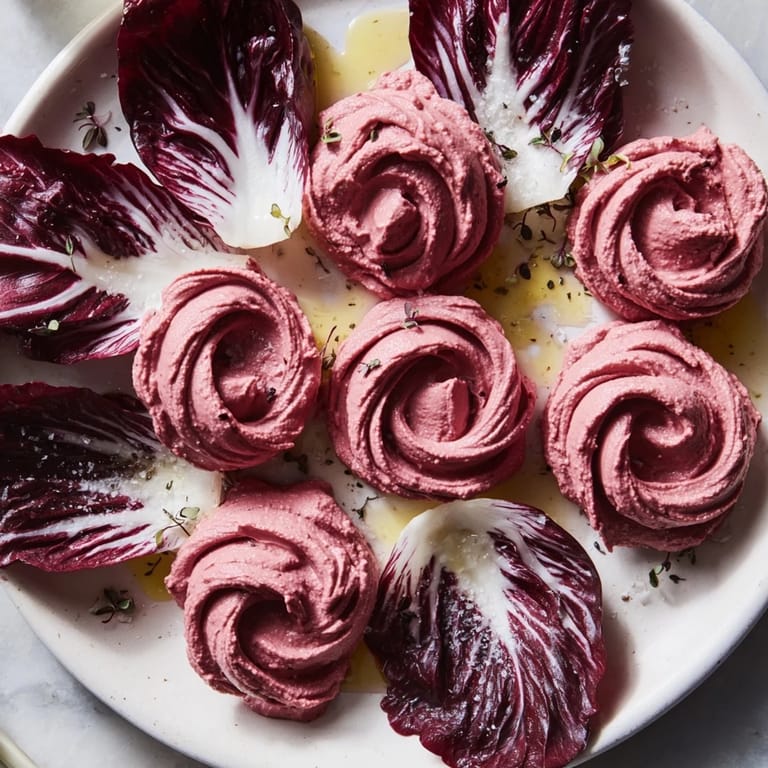
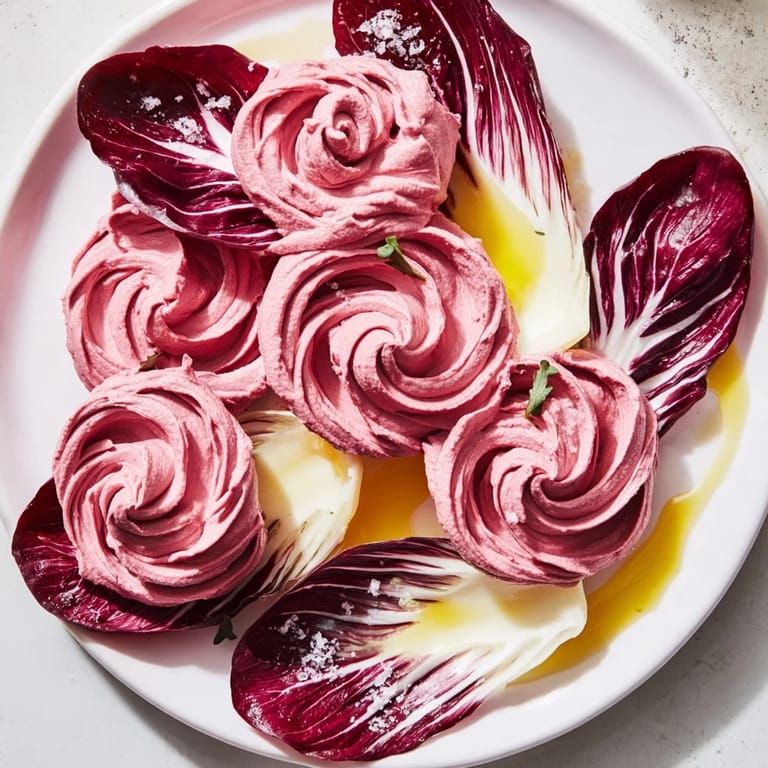
- Pipe or spoon into rose shapes:
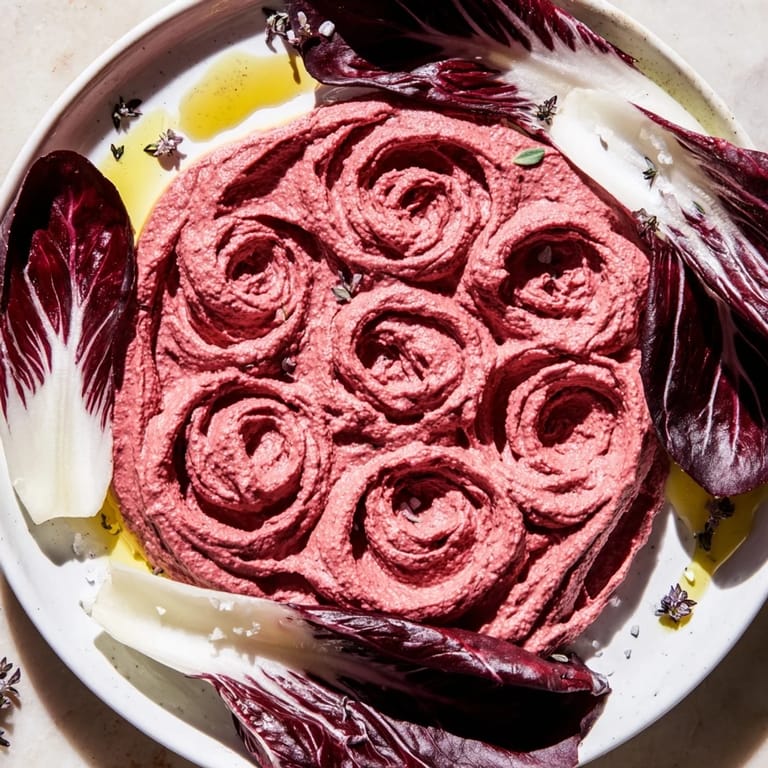
- If you're using a piping bag with a large star tip, hold it perpendicular to the plate and create spiraling motions, lifting as you go. If you're spooning by hand, embrace the beautiful imperfection—swirled and organic is just as lovely.
- Compose your plate:
- Arrange radicchio leaves around the hummus roses like you're setting a scene rather than just plating food. This is where the dish becomes an experience.
- Finish with intention:
- Drizzle everything with olive oil, scatter flaky sea salt across the surface, and add microgreens or edible petals if you have them. Serve immediately while the radicchio is still crisp.
 Save to Pinterest
 This dish has become my answer to the question of how to feed people something that feels both nurturing and celebratory at once. It's the kind of appetizer that lingers in memory long after the plate is cleared, not because it's complicated, but because it proves that real beauty comes from respecting your ingredients and showing up for them.
Why Beets Deserve Better Than Salads
Roasted beets have this quality of turning almost molten when they're hot, and then as they cool, they develop a silky sweetness that feels almost luxurious. I spent years thinking of them as a side dish, something to be diced into salads, until I realized they wanted to be the star. When you take that time to roast them low and slow, they transform into something with real presence on the plate, and pairing them with tahini and chickpeas feels like a natural conversation.
The Power of Working in Small Batches
I learned this the hard way after over-processing a batch of hummus and watching it turn from silky to somehow simultaneously grainy and separated. It taught me that food processors work best when you stop them periodically, scrape the sides, and let each ingredient have its moment rather than expecting one long blitz to do all the work. The pauses are where the magic actually happens.
Building Your Presentation Skills One Plate at a Time
Plating this dish forced me to slow down and think about the space on the plate, the negative space, the way colors interact with each other. It's taught me that food presentation isn't pretentious—it's a form of respect for the person eating it, a way of saying their meal deserves care in every dimension.
- Practice your piping technique on a separate plate first if you're new to it; it takes three or four attempts to find your rhythm.
- The radicchio leaves don't have to be perfectly arranged to be beautiful—sometimes the most appealing presentations are slightly asymmetrical and organic.
- If you're worried about getting the rose pattern exactly right, remember that even an approximate swirl looks elegant with the right garnish on top.
 Save to Pinterest
 This recipe became my reminder that entertaining doesn't require stress—sometimes the most impressive moments come from simple ingredients treated with respect and a willingness to present them beautifully. Make this when you want to impress without fuss, or simply when you want to remember why you love cooking in the first place.
Recipe Q&A
- → How do I achieve the smooth texture for the hummus?
Roast the beets until tender, then blend them thoroughly with chickpeas, tahini, lemon juice, and olive oil. Adding cold water gradually helps reach a creamy consistency.
- → Can I substitute radicchio leaves with other greens?
Yes, Belgian endive or endive leaves work well as alternatives to radicchio, offering a similar crisp texture and mild bitterness.
- → What is the best way to create the rose shapes?
Use a spoon or a piping bag fitted with a large star tip to swirl the beet hummus on the plate, forming delicate rose-like patterns.
- → How should I store leftovers?
Keep any leftovers in an airtight container refrigerated for up to two days. Stir before serving to restore creaminess.
- → Can smoked paprika enhance the flavor?
Adding a pinch of smoked paprika to the hummus introduces a subtle smoky depth that complements the earthiness of the beets.