 Save to Pinterest
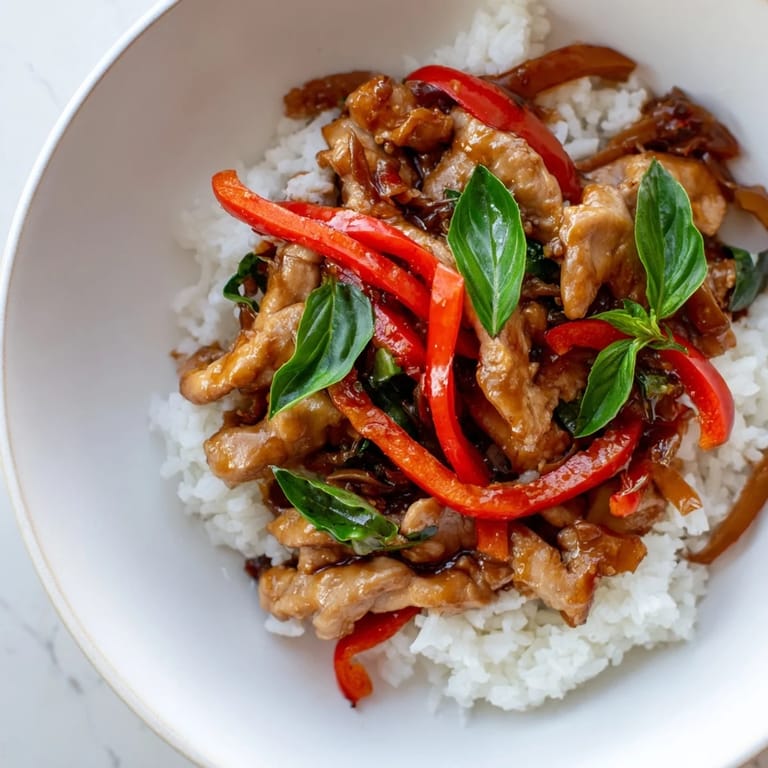
 The smell hit me before I even opened the door, sharp garlic and chili cutting through the hallway. My neighbor was cooking something that made my apartment feel instantly boring. When I asked what it was, she handed me a bowl of Thai basil chicken over rice, and I ate it standing in her kitchen. That night I bought holy basil from the Asian market, even though I had no idea what to do with it yet.
I made this for my brother on a Tuesday night after he helped me move furniture, and he went quiet after the first bite. He does not usually care about food beyond whether it fills him up, but he asked for the recipe on his way out. Now he texts me every few weeks asking if I remembered to buy more fish sauce, which is his way of inviting himself over.
Ingredients
- Boneless, skinless chicken thighs or breasts: Thighs stay juicier and handle high heat better, but breasts work if you slice them thin and do not overcook.
- Soy sauce: This is your salt and umami base, so use regular soy sauce, not the low-sodium kind unless you want to adjust the fish sauce up.
- Oyster sauce: It adds a deep, slightly sweet richness that balances the fish sauce funk.
- Fish sauce: Smells intense in the bottle but mellows into savory magic when cooked, do not skip it.
- Brown sugar: Just enough to round out the salty and spicy edges without making it sweet.
- Garlic: Mince it fresh, the jarred stuff turns bitter in the high heat.
- Thai chilies: Small but brutal, start with one if you are cautious, you can always add more but you cannot take it back.
- Onion: Any kind works, I use yellow because it is always in my pantry.
- Red bell pepper: Adds color and a little sweetness, green bell pepper works but tastes more vegetal.
- Holy basil leaves: This is the star, it has a spicy, clove-like bite that Thai basil only halfway mimics.
- Jasmine rice: The floral aroma ties everything together, plain white rice feels like a downgrade here.
- Lime wedges: Optional but the acid wakes everything up if the sauce tastes too heavy.
Tired of Takeout? 🥡
Get 10 meals you can make faster than delivery arrives. Seriously.
One email. No spam. Unsubscribe anytime.
Instructions
- Prepare the sauce:
- Whisk together soy sauce, oyster sauce, fish sauce, brown sugar, and water in a small bowl until the sugar dissolves. Set it within reach of the stove because things move fast once you start cooking.
- Heat the pan:
- Add a tablespoon of vegetable oil to a large skillet or wok over medium-high heat and let it shimmer, not smoke.
- Bloom the aromatics:
- Toss in the garlic and chilies, stirring constantly for about thirty seconds until the garlic turns golden and the kitchen smells incredible. Do not walk away or the garlic will burn and taste bitter.
- Cook the onion:
- Add the sliced onion and stir-fry for a minute until it softens at the edges but still has some snap.
- Stir-fry the chicken:
- Add the chicken in an even layer and let it sit for a minute before stirring, so it gets a little color. Cook for four to five minutes, stirring occasionally, until no pink remains.
- Add the bell pepper:
- Toss in the sliced bell pepper and stir-fry for two minutes until it is just tender but still bright.
- Coat with sauce:
- Pour the sauce over everything and stir well, letting it bubble and thicken for one to two minutes. The chicken should be glossy and coated.
- Finish with basil:
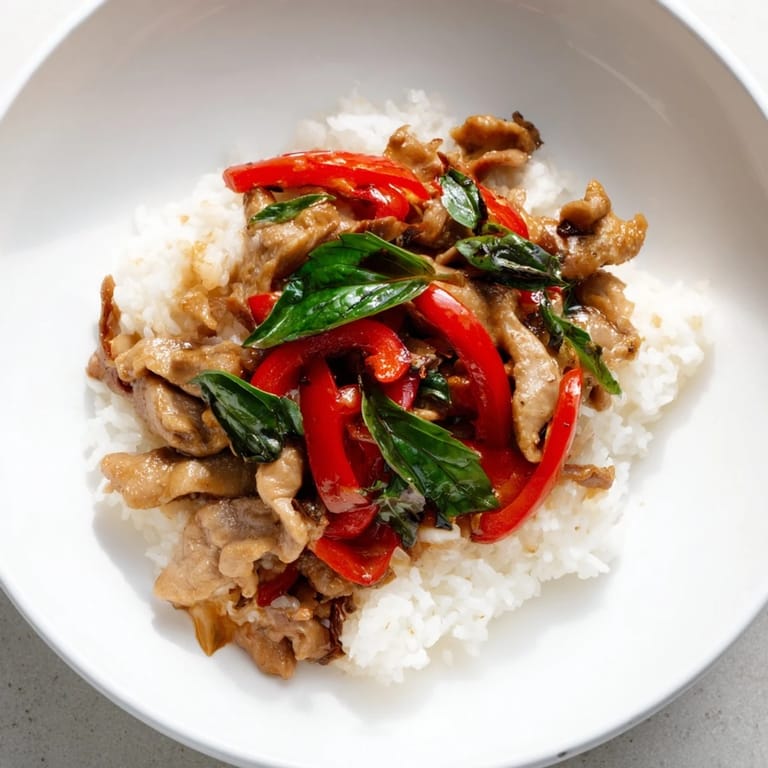
- Pull the pan off the heat and immediately stir in the holy basil leaves, they will wilt in seconds from the residual heat. Serve right away over jasmine rice with lime wedges on the side.
 Save to Pinterest
 One night I cracked an egg into the pan after plating everything and let it fry in the leftover oil and sauce. When the edges got crispy and lacy, I slid it on top of the rice and broke the yolk with my fork. It turned the whole bowl creamy and rich, and now I cannot make this without frying an egg.
Choosing Your Basil
Holy basil is spicy and almost minty with a peppery kick that Italian basil does not have. Thai basil is the middle ground, with a sweet anise flavor that works in a pinch. I have used Italian basil when desperate, and while it is milder and more herbal, it still tastes good. If you have an Asian grocery nearby, grab holy basil, it makes the dish taste like the version you would get in Thailand.
Adjusting the Heat
Thai chilies are small and fierce, and two is enough to make my lips tingle. If you want warmth without pain, slice them in half and scrape out the seeds before adding them. You can also use red pepper flakes or a squirt of sriracha in the sauce, though fresh chilies have a brighter, grassier heat that dried flakes cannot match.
Storing and Reheating
Leftovers keep in the fridge for up to three days in an airtight container. Reheat in a skillet over medium heat with a splash of water to loosen the sauce, microwaving works but the chicken can get rubbery. The basil will darken and lose its punch, so I sometimes toss in a few fresh leaves right before serving.
- Store the rice separately so it does not get soggy.
- If meal prepping, undercook the bell pepper slightly so it does not turn mushy when reheated.
- Freeze individual portions for up to two months, thaw overnight in the fridge before reheating.
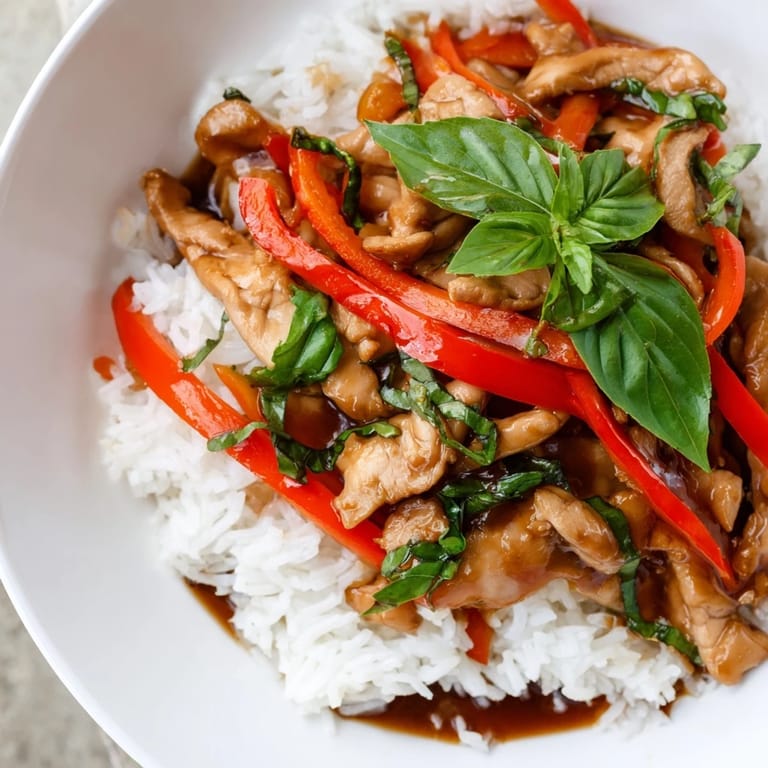 Save to Pinterest
 This is the kind of meal that makes weeknights feel less like a chore and more like something worth sitting down for. Once you make it twice, you will stop measuring and just cook by smell and taste.
Recipe Q&A
- → What can I use if holy basil is unavailable?
Substitute with Thai basil or Italian basil for a similar aromatic touch, though flavors vary slightly.
- → How spicy is this dish?
It has a moderate heat from Thai chilies which can be adjusted according to taste by adding more or less.
- → Can I use chicken breasts instead of thighs?
Yes, thinly sliced chicken breasts work well and cook quickly in the stir-fry method.
- → What kind of rice pairs best with this dish?
Fluffy jasmine rice is ideal, providing a fragrant and light base to complement the flavors.
- → Is the sauce gluten-free?
Use gluten-free soy and oyster sauce alternatives to keep the sauce gluten-free.
- → Can I add extra vegetables?
Absolutely, bell peppers are included, but other quick-cooking veggies like snap peas or carrots suit the stir-fry well.