 Save to Pinterest
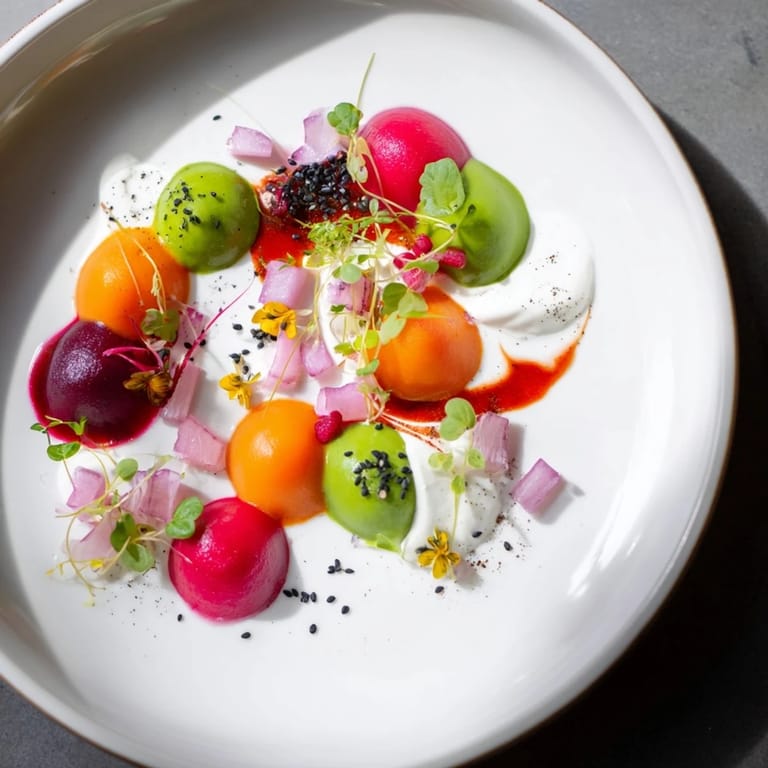
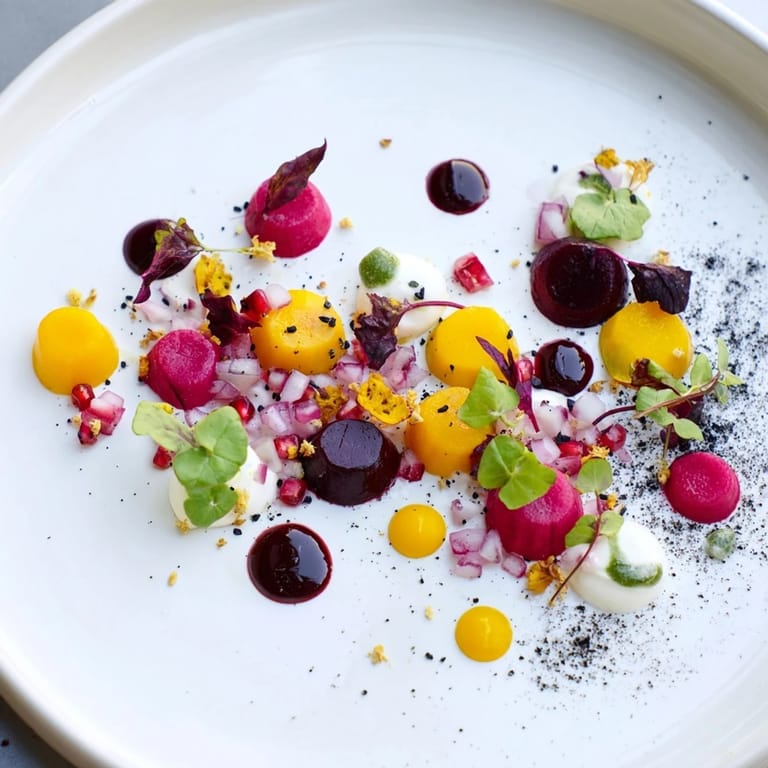
 I'll never forget the afternoon I stood in front of a Monet exhibition, mesmerized by how thousands of tiny dots of color created something breathtaking when viewed as a whole. That evening, back in my kitchen, I wondered: what if I could paint a plate the same way? The Pointillism Dot Matrix was born from that moment—a dish that transforms the simple act of eating into an artistic experience, where every dot and mound tells its own story of flavor.
I made this for my sister's book club last spring, and what I remember most isn't just their gasps when they saw the plates—it was watching them lean back and say, 'This doesn't even look like food. It looks like something in a museum.' Then they took that first spoonful and everything changed. They realized that beauty and flavor could exist together, without compromise.
Ingredients
- Beetroot puree (80g): This deep crimson becomes your most dramatic dot—its earthiness grounds the dish and provides visual anchor points that make everything else pop
- Carrot puree (80g): The warmth of roasted carrots brings a subtle sweetness that balances the more assertive flavors around it
- Green pea puree (80g): This is your fresh, almost floral note—bright and clean, it reminds people that vegetables have their own delicate beauty
- Yellow bell pepper puree (80g): Roasting brings out a honeyed quality that adds complexity; it's the bridge between the sharp and the subtle
- Greek yogurt (60g): Creamy and tangy, this becomes a neutral canvas that lets other flavors breathe
- Crème fraîche (40g): Richer than yogurt, it adds elegance and a slight nuttiness that elevates the whole composition
- Basil pesto (1 tbsp): This is your herbaceous moment—use quality pesto where you can still see the basil leaves
- Red pepper coulis (1 tbsp): Silky smooth, this brings a gentle pepper sweetness that ties the warm tones together
- Balsamic reduction (1 tbsp): A touch of this adds sophistication and helps darken certain areas for visual depth
- Pickled red onions, finely diced (20g): These provide a sharp, acidic note that cuts through richness and adds textural contrast
- Microgreens (20g): Whatever variety you use, these are your living garnish—they add height and remind people this dish is alive
- Toasted black sesame seeds (1 tbsp): Toast them yourself until fragrant; they add an almost nutty crunch that surprises
- Pomegranate seeds (1 tbsp): These jewel-like seeds bring bursts of tartness and a satisfying bite
- Edible flower petals (optional): Use what's available locally—they're the final brushstroke that makes this unmistakably artistic
- Sea salt flakes and freshly ground black pepper: These aren't afterthoughts; they season each individual dot, ensuring no bite is underseasoned
Tired of Takeout? 🥡
Get 10 meals you can make faster than delivery arrives. Seriously.
One email. No spam. Unsubscribe anytime.
Instructions
- Create your color palette:
- Blend each vegetable separately, adding just a pinch of salt and a few drops of olive oil. The puree should be smooth enough to pipe but substantial enough to hold its shape. This is where patience matters—don't rush it. Each puree is its own little masterpiece before it even hits the plate.
- Prepare your tools:
- Fill separate piping bags with the yogurt and crème fraîche, and separate squeeze bottles with the pesto, coulis, and balsamic reduction. Lay them out in front of you like an artist with their brushes. Organization here means less stress when you're actually plating.
- Begin the composition:
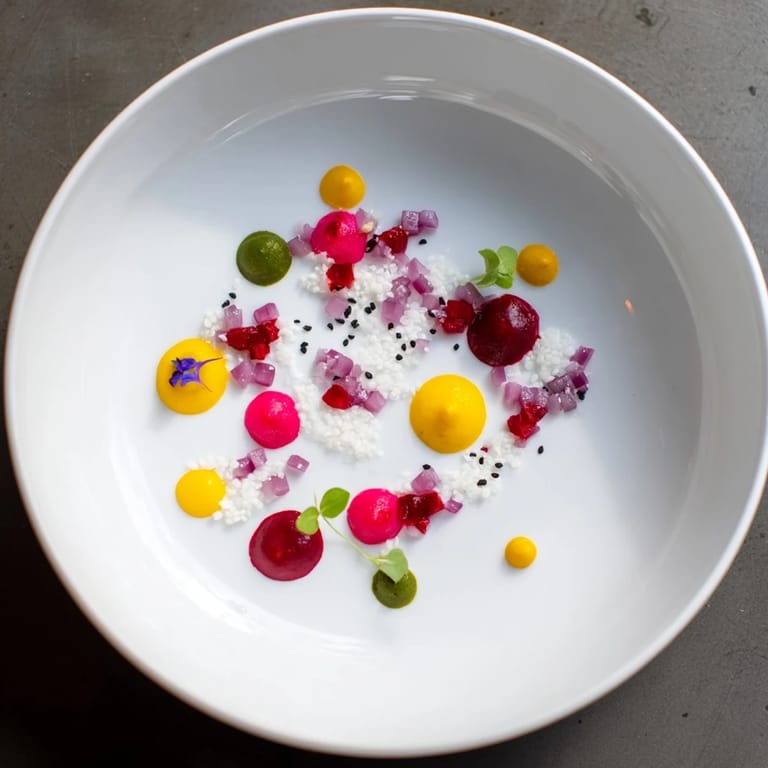
- Start with your serving plates at room temperature. Using your piping bags and squeeze bottles, begin dotting and creating small mounds across the entire surface. Think of it like pointillism—no two dots should touch. Vary the sizes deliberately; some dots should be barely visible, others more assertive. Step back and look at what you've created before moving to the next plate.
- Layer in the accents:
- Scatter the pickled red onions carefully across the dots—their deep red will anchor your composition. Add microgreens in small clusters, then sprinkle the toasted sesame seeds and pomegranate seeds where they'll catch the light. If using edible flowers, place them where they'll be seen, not buried.
- Season and serve:
- Finish each plate with a few flakes of sea salt and a whisper of freshly ground black pepper. Then serve immediately. This dish is meant to be seen before it's tasted, so don't let it sit waiting to be admired—get it to the table while its visual impact is still sharp.
 Save to Pinterest
 There was a moment during that book club dinner when everyone went quiet. Not the polite quiet of people looking at their food, but the reverent quiet of people realizing they were about to eat something they'd remember. That's when I understood this dish wasn't really about the vegetables or the technique—it was about creating a moment where people felt like they were part of something larger, something beautiful.
The Art of Plating as Storytelling
In a professional kitchen, plating is a language. Every dot, every height, every color choice communicates something to the person about to eat. With the Pointillism Dot Matrix, you're not just serving food—you're creating a visual narrative. The viewer's eye should travel across the plate naturally, discovering new elements with each glance. Think about where you want them to look first, then where you want to draw them next. This is less about rules and more about intention.
Customizing Your Palette
The beauty of this technique is that you can change the vegetables based on what's in season or what you're craving. Summer might call for roasted asparagus or corn; autumn invites purple sweet potato or roasted beet variations. I've even experimented with avocado puree (though it must be served immediately to prevent browning) and a vibrant spinach variation. The structure stays the same; the colors change with your mood and the market's offerings.
Wine and Company
This dish deserves company and conversation. A crisp Sauvignon Blanc cuts through the richness of the creams while its acidity echoes the pickled onions and pomegranate. If wine isn't your thing, consider a sparkling water with fresh lemon—you want something that cleanses and refreshes between bites. And perhaps most importantly, invite people to the table who will appreciate not just the food, but the intention behind it. Good food tastes better when shared with the right people.
- Serve with thinly sliced sourdough or delicate crackers on the side for those who want to scoop and create their own bites
- Have extra edible flowers on hand—if you have them, use them generously; they're more forgiving than you think
- If you're nervous about plating, practice with water and food coloring first to build your confidence with the piping bags
 Save to Pinterest
 Every time I make this dish, I'm reminded that cooking isn't just about feeding people—it's about seeing them, delighting them, and creating moments they'll remember. The Pointillism Dot Matrix does exactly that.
Recipe Q&A
- → How are the vegetable purees prepared?
Each vegetable is cooked and pureed separately with a pinch of salt and olive oil until smooth, then placed in piping bags for precise application.
- → What gives this dish its vibrant colors?
The separate purees of beetroot, carrot, green pea, and yellow bell pepper create a palette of vivid colors applied as small dots across the plate.
- → Can the dairy components be substituted?
Yes, plant-based yogurt can replace dairy yogurt and crème fraîche to make the dish vegan-friendly.
- → What garnishes add texture and flavor?
Finely diced pickled red onions, microgreens, toasted black sesame seeds, pomegranate seeds, and optional edible flower petals provide contrasting textures and fresh notes.
- → How is the Pointillism effect achieved on the plate?
By arranging dots and tiny mounds of purees, sauces, and creams in a scattered, non-touching pattern with varied sizes and complementary colors.
- → What tools aid in plating this dish precisely?
Using piping bags, squeeze bottles, and optionally chefs tweezers or small offset spatulas helps create precise dots and place garnishes delicately.