 Save to Pinterest
 There's something about poaching that feels like a gentle secret in the kitchen, a way of cooking that whispers rather than shouts. I discovered this dish on a quiet Tuesday evening when a friend brought fresh cod from the market and I had a fennel bulb that needed rescuing from the crisper drawer. The combination seemed obvious in hindsight, but in that moment it felt like stumbling upon something precious, the way the orange brightened everything it touched.
I made this for my sister during a visit in early spring, and I'll never forget how she closed her eyes after the first bite, the way the steam rose from her plate and fogged her glasses. She said it tasted like what she imagined the Mediterranean coast smelled like, which made me laugh because I'd never really thought about it that way until she said it out loud.
Ingredients
- Fresh cod fillets: Look for fillets that are firm and smell faintly briny, never fishy, and ask your fishmonger to confirm they're fresh that day if possible.
- Fennel bulb: The white part slices into delicate, sweet layers that soften into silk in the poaching liquid, while the fronds become your finishing touch of anise-scented green.
- Orange: Use one with thin skin if you can find it, zest it before slicing so you capture all that volatile oil, and don't skip the zest because it's where the flavor lives.
- Shallot and garlic: Smashed garlic cloves release their sweetness without overpowering, while shallot adds a gentle savory note that keeps everything balanced.
- Fish or vegetable stock: Low-sodium matters here because the poaching liquid concentrates as it simmers, and you want to control the salt yourself.
- Dry white wine: A crisp, unoaked wine like Sauvignon Blanc or Pinot Grigio adds acidity that brightens the whole dish without heaviness.
- Extra virgin olive oil: The good stuff, because it's not being cooked aggressively and its fruity notes become part of the final flavor.
- Bay leaf: Just one, restraint is key or it becomes herbaceous rather than aromatic.
Tired of Takeout? 🥡
Get 10 meals you can make faster than delivery arrives. Seriously.
One email. No spam. Unsubscribe anytime.
Instructions
- Build Your Flavor Base:
- Heat the olive oil in your largest skillet over medium heat and add the sliced fennel, shallot, and smashed garlic cloves. You're looking for them to soften and turn translucent at the edges, which takes about three to four minutes, and the kitchen will smell suddenly Mediterranean and alive.
- Create the Poaching Liquid:
- Add the orange slices, orange zest, bay leaf, wine, and stock to the pan and bring everything to a gentle simmer. The liquid should look inviting and smell like something you want to nestle into, and it should be steaming gently but never rolling with bubbles.
- Introduce the Cod:
- Pat your cod fillets dry with a paper towel, season them very lightly with salt and pepper, and nestle them into the simmering liquid in a single layer. If your fillets are different thicknesses, tuck the thinner ones under slightly so they cook at the same pace.
- Poach with Patience:
- Lower the heat to low, cover the pan, and let time do the work for eight to ten minutes. The cod is ready when it's opaque and flakes easily with a fork, which you can check gently at the thickest part of one fillet without disrupting the others.
- Plate with Care:
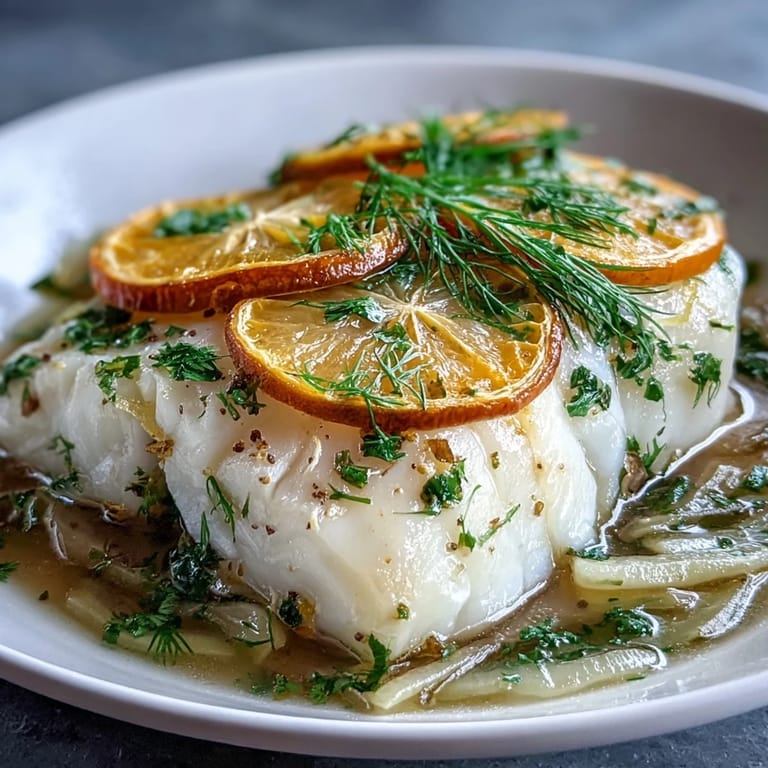
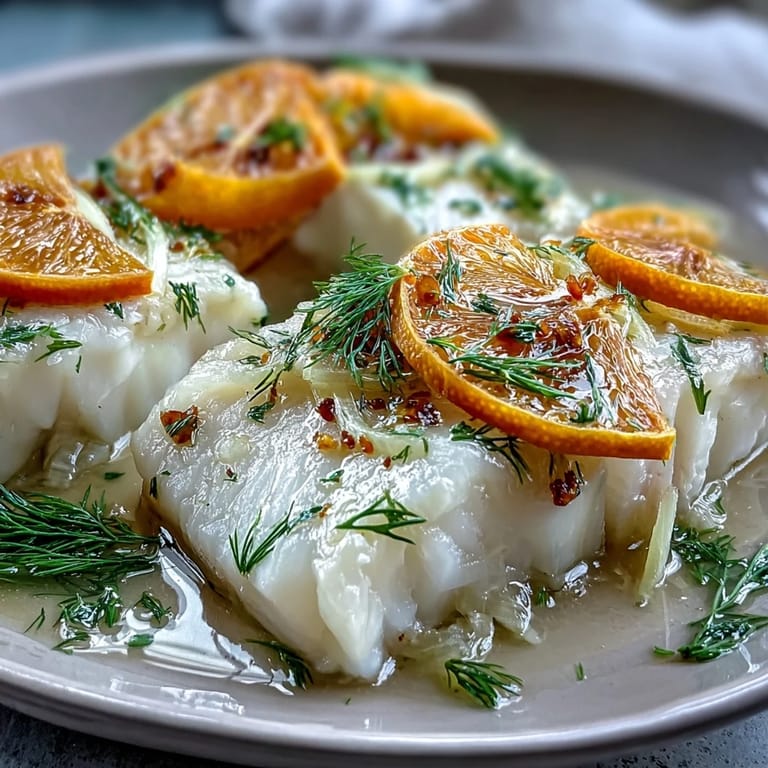
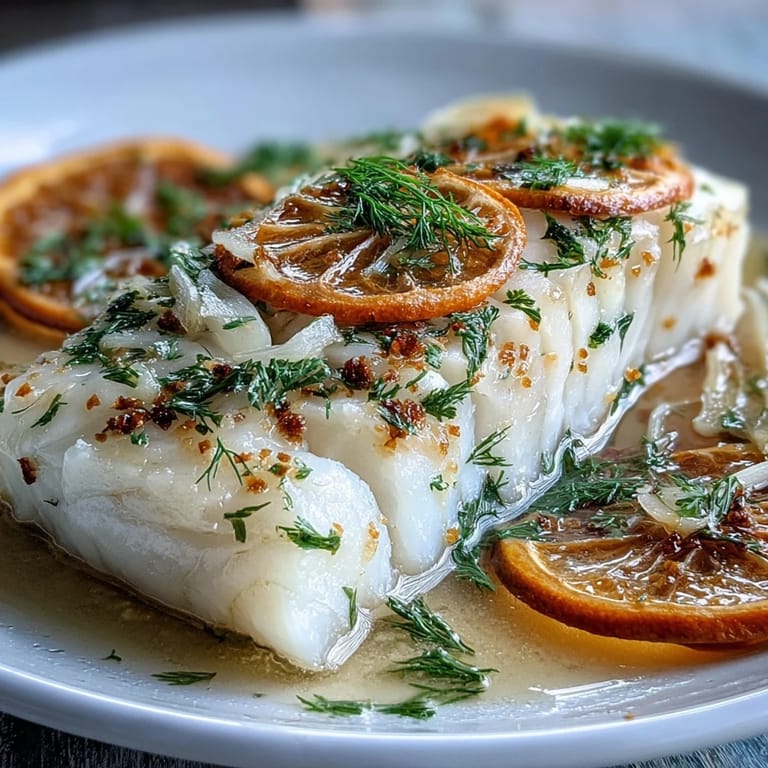
- Using a slotted spatula, carefully transfer each fillet and some of the soft fennel to warm plates. Spoon some of the amber poaching liquid and a few orange slices over each portion so every bite has that bright, aromatic broth.
- Finish and Serve:
- Scatter chopped fennel fronds across the top like you're adding the final brushstrokes, add a light sprinkle of extra orange zest, crack fresh black pepper over everything, and serve immediately while the aroma is still rising from the plate.
 Save to Pinterest
 There's a moment right before serving when you lean over the pan and breathe in, and the aroma of orange and fennel and white wine hits you all at once. That's when you know you've made something that tastes like more than just dinner, something that tastes like you cared about the person eating it.
Why Poaching Works for Delicate Fish
Poaching is gentle cooking, the opposite of aggressive, and it keeps the fish moist and tender because the surrounding liquid protects it from the harsh dry heat of an oven. The fish cooks in an environment that's warm but never hot, which means the proteins stay tender and the delicate flesh stays intact instead of turning into flakes before you even get it on a plate. I learned this the hard way by pan-searing cod in my early cooking days, watching it turn into a chalky disappointment before I understood that some things deserve gentleness.
Building Layers of Flavor
The magic of this dish lives in the way each ingredient adds something different to the whole, and none of them shout over the others. The fennel brings sweetness and that distinctive anise character, the orange zest adds volatile oils and brightness, the wine brings acidity that keeps everything lively, and the stock becomes the canvas that holds it all together. By the time the cod nestles into the liquid, you've built something complex that tastes like you spent all day cooking when you actually spent less than twenty minutes.
Serving Suggestions and Variations
I serve this with crusty bread for soaking up the liquid because it seems wrong to leave any of it behind, and sometimes I add steamed potatoes so there's something to anchor the delicate fish. You could add fresh thyme sprigs to the poaching liquid if you want earthier notes, or a splash of Pernod if you want to lean harder into the anise direction and create something more assertively French. If you can't find cod, halibut, haddock, or sea bass will poach beautifully, though they may need slightly different timing so watch them carefully as they cook.
- Serve with warm crusty bread, grilled lemon halves, or steamed fingerling potatoes to make a complete meal.
- The poaching liquid keeps in the refrigerator for three days and becomes even more flavorful, perfect for poaching another batch of fish or sipping as a refined broth.
- This dish tastes best served immediately while the aromas are still rising, but it's also lovely at room temperature if you need to make it ahead.
 Save to Pinterest
 This is the kind of dish that reminds you why you cook in the first place, why you bother with fresh ingredients and a little patience when the takeout menu is right there. It's simple enough to make on a Tuesday but feels special enough to remember.
Recipe Q&A
- → What type of fish works best for poaching?
Firm, mild white fish like cod, halibut, haddock, or sea bass work beautifully. These varieties hold their shape during gentle poaching while absorbing the aromatic flavors of the broth.
- → Can I make this dish ahead of time?
While best served fresh, you can poach the cod up to 2 hours ahead. Gently reheat in the poaching liquid over low heat, being careful not to overcook the fish. The flavors often develop even more after resting.
- → What can I substitute for the white wine?
Additional fish or vegetable stock works perfectly as a non-alcoholic alternative. You could also use vermouth or omit it entirely—the broth will still be flavorful from the fennel, orange, and herbs.
- → How do I know when the cod is done?
The cod is ready when it turns opaque throughout and flakes easily with a fork. This typically takes 8–10 minutes. Avoid overcooking, as the fish will continue to cook slightly from residual heat after removing from the liquid.
- → What sides pair well with this dish?
Steamed potatoes, crusty bread for soaking up the aromatic broth, or a simple green salad with lemon vinaigrette complement the delicate flavors. Roasted vegetables like asparagus or zucchini also work beautifully.
- → Can I freeze the poached cod?
Freezing is not recommended as the texture may become watery upon thawing. This dish is best enjoyed fresh when the fish is at its most tender and the flavors are brightest.