 Save to Pinterest
 I discovered the magic of circular platters at a friend's dinner party last summer when everything felt like it needed to mean something more. We were celebrating a milestone, and I wanted the food to reflect that sense of continuity and wholeness. That's when I first arranged ingredients in a perfect ring, intentionally creating what felt like an edible mandala. The Ouroboros Circle was born that evening—a platter that literally eats its own tail, where the last bite connects back to the first, making something beautiful that's also deeply satisfying to break apart together.
The first time I made this for a small gathering, I watched people arrive, spot the platter, and actually stop mid-conversation. Someone called it poetry. That moment reminded me that food is rarely just about taste—it's about the story you tell with your hands, the care you show in how you arrange things, and the permission you give people to slow down and really see what's being offered.
Ingredients
- Brie, sliced (100 g): The soft, creamy anchor that melts slightly as guests serve themselves, especially important on warmer days when you want something that feels luxurious but approachable
- Aged cheddar, cubed (100 g): Your structural element that stays firm and bold, providing umami depth that balances the delicate cheeses
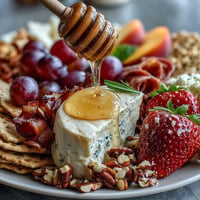
- Goat cheese, rolled into small balls (80 g): The unexpected texture moment, and the perfect canvas for that honey and rosemary finishing touch
- Prosciutto, thinly sliced (80 g): Optional but transforms this into something dinner-party worthy, the paper-thin translucence catching light beautifully
- Salami, folded (80 g): Adds color and a subtle peppery note that makes people keep reaching
- Artisanal crackers, fanned (1 handful): These become your platter's head—choose something visually interesting because they're the focal point, not just a vehicle
- Small baguette slices (6 pieces): The bridge between sections, filling gaps while maintaining the circular flow
- Red grapes, in small clusters (1 cup): The tail of your ouroboros, gleaming and plump, the visual counterpoint to the cracker head
- Mixed berries (1 cup): Blueberries, raspberries, and blackberries serve as color pockets throughout, adding jewel-like moments of deep purple and red
- Sliced fig (optional): When in season, the deep interior color adds sophistication and a subtle honeyed sweetness
- Roasted almonds (1/3 cup): Choose ones still warm from roasting if possible—they anchor the textural variety
- Marcona almonds (1/3 cup): Buttery and slightly softer than roasted, these offer a different mouthfeel and a subtle luxury feel
- Honey (2 tbsp): Use something beautiful—raw, golden, something you'd actually want to taste on its own
- Fresh rosemary sprigs (1 tbsp): The finishing herb that ties everything together with its piney, grounding aroma
Tired of Takeout? 🥡
Get 10 meals you can make faster than delivery arrives. Seriously.
One email. No spam. Unsubscribe anytime.
Instructions
- Gather your canvas:
- Find your largest round platter or wooden board—this becomes the stage for everything. If you're using a wooden board, wipe it clean and maybe give it a moment under warm water so it's ready. There's something about the weight and presence of a good board that changes how people receive food arranged on it.
- Create the head:
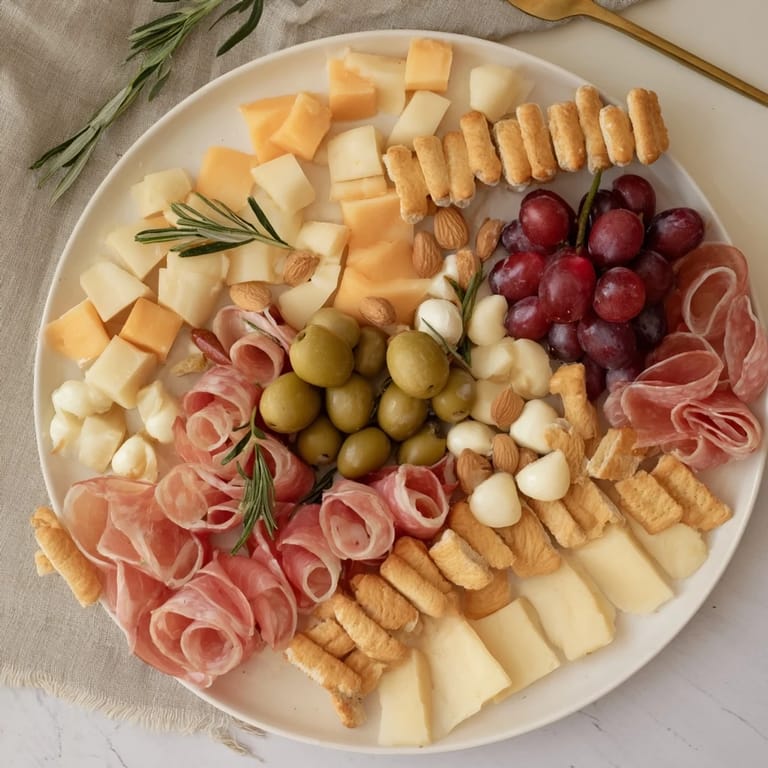
- Start with those artisanal crackers fanned out like a peacock's tail at one point on your circle. Arrange them so they're slightly overlapping, catching light, looking intentional. This is your visual anchor, so take a moment to get it right—lean them against each other in a loose fan shape that feels both wild and controlled.
- Begin the ring:
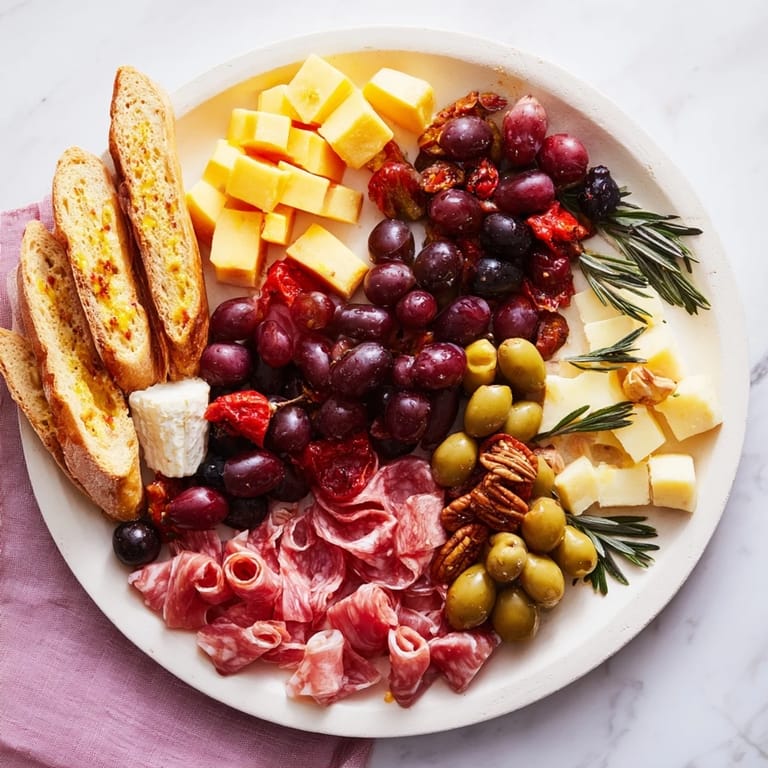
- Moving clockwise from the cracker head, start arranging your cheeses and meats in alternating sections. Think of it like creating natural color zones around your circle. The brie's pale cream here, then the golden-orange cheddar there, then the white of goat cheese studded with berries. You're not being rigid about it—you're creating flow, allowing colors to speak to each other.
- Weave in the bread:
- Slot those baguette slices into the open spaces between larger elements, curving with the ring as you go. They're the connective tissue that makes the journey around the circle feel continuous and complete. Break or cut them if needed to fit your vision—nothing here is precious until it's on the platter.
- Place the tail:
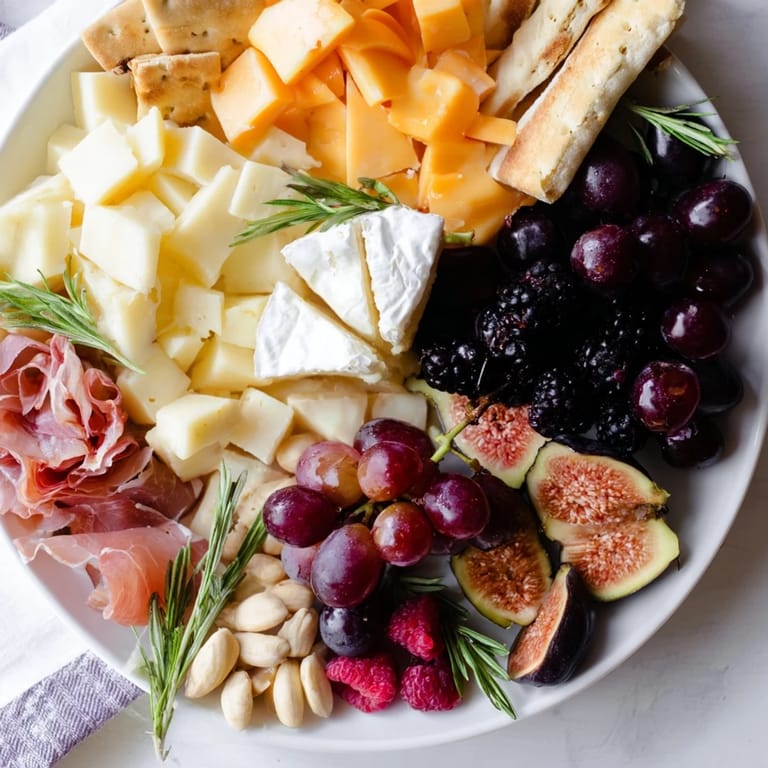
- At the point directly opposite your cracker head, arrange those red grape clusters. Let them cascade slightly, creating visual weight that balances the geometry of the fanned crackers. The grapes should feel like they're answering the crackers, like they're meant to meet.
- Fill the spaces with intention:
- Now scatter your mixed berries, nuts, and fig slices throughout the gaps. This is where you play—letting raspberries nestle against cheddar, placing a perfect blueberry next to a marcona almond. You're adding texture, color, and little moments of surprise around the entire ring.
- The finishing touch:
- Drizzle that beautiful honey directly over the goat cheese balls—let it pool slightly, creating little amber pockets. Tear or scatter the fresh rosemary over the same area, letting the herb settle into the honey. The warmth of rosemary against the coolness of goat cheese and the sweetness of honey is the flavor moment that ties your whole platter's story together.
- Make sure the circle is complete:
- Step back and look. The head should feel like it's just about to meet the tail, creating that sense of eternity, of a cycle returning to its beginning. If there are bare spots, add a cluster of berries or a few almonds. There should be a sense of abundance and continuity.
- Bring it to the table:
- Serve immediately so everything is at its optimal temperature and freshness. Invite guests to break the circle wherever they'd like, to interrupt the eternal pattern and become part of the meal. That's when the Ouroboros truly comes alive.
 Save to Pinterest
 Months after that first dinner party, someone told me they still thought about how beautiful that platter was, how it made them slow down and really taste each thing. It wasn't the flavors alone—it was knowing that someone had thought carefully about how to present food as both nourishment and meaning. That's when I understood that this recipe isn't really about cheese and fruit at all. It's about creating a moment where people feel invited into something thoughtful.
There's something deeply satisfying about arranging food in a circle. It breaks the conventional rectangular platter habit and creates a flow that feels more natural, more like a conversation that keeps circling back to itself. When you build this platter, you're not working toward an endpoint—you're creating a journey that returns to where it began. This changes how people interact with the food. They don't just eat; they navigate. They discover.
The beauty of this platter is that it's endlessly adaptable, but not randomly so. Every element serves a purpose beyond just being delicious. The brie represents softness, the aged cheddar brings structure, the goat cheese offers tang, the nuts provide crunch. The berries are your color, the meats are your umami anchor, the crackers are your transition points. Before you arrange anything, think about what role each ingredient plays in the whole composition. This isn't just a cheese board—it's a balanced composition where every voice is heard.
There's a meditative quality to arranging this platter. It asks you to slow down, to think about placement, to consider how colors speak to each other, to notice the natural beauty in ingredients most people take for granted. The 25 minutes this takes is less about the food and more about creating a transition moment between you and your guests—a chance to show them that you've thought about their experience before they even arrived. That intention translates, and people taste it not in the food but in the feeling of being genuinely welcomed.
- Work on a cool surface if possible—even sliding a cold plate under your platter for a few minutes helps everything hold its shape and freshness
- Prep all your elements before assembly so you're not hunting for things while you're trying to create something beautiful
- Take a photo before anyone eats if you want to remember this moment—you've created something worth documenting
 Save to Pinterest
 Every time you make this, you're not just feeding people—you're creating a small ceremony around the idea that food matters most when it's made with attention. The Ouroboros Circle reminds us that eating is cyclical, that meals connect us to moments past and moments yet to come, and that sometimes the most nourishing thing is simply to slow down together.
Recipe Q&A
- → How can I make this platter vegan?
Replace dairy cheeses with plant-based alternatives and omit any meats for a fully vegan version.
- → What fruits work best for the tail section?
Red grape clusters are ideal for the tail, but mixed berries and figs can add vibrant color and texture.
- → Can I prepare this platter ahead of time?
Assemble close to serving to maintain freshness, especially for delicate fruits and crackers. Honey drizzle can be added last minute.
- → What types of nuts complement the platter?
Roasted almonds and marcona almonds add a crunchy contrast and pair well with the creamy cheeses.
- → Which wines pair nicely with the arrangement?
A crisp Sauvignon Blanc or sparkling rosé complements the creamy cheeses and fresh fruits effectively.
- → How do I create the continuous ring effect?
Arrange crackers as the head and grape clusters as the tail on opposite ends of a circular platter, then fill the space with cheeses, meats, and bread to close the loop.