 Save to Pinterest
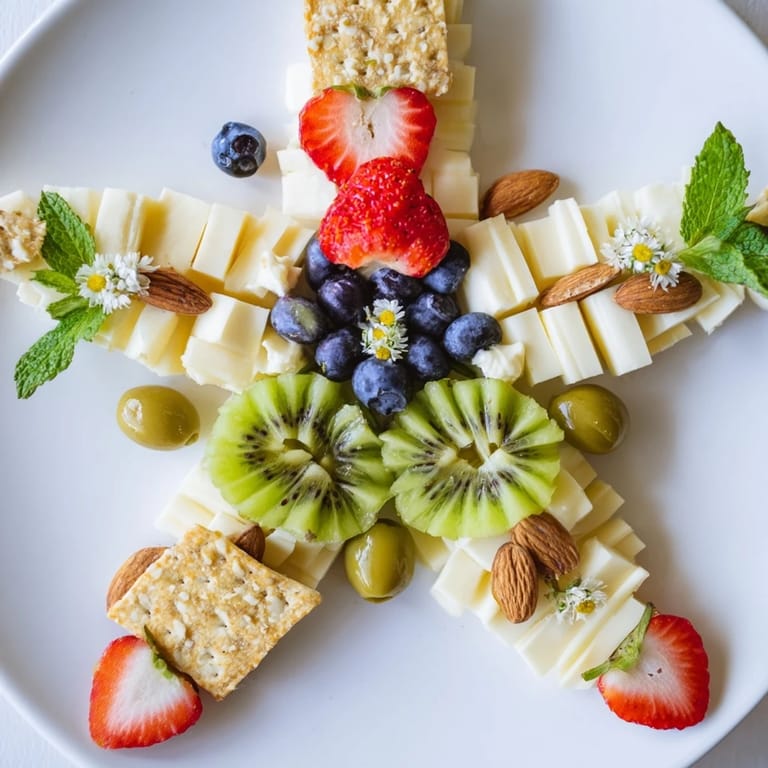
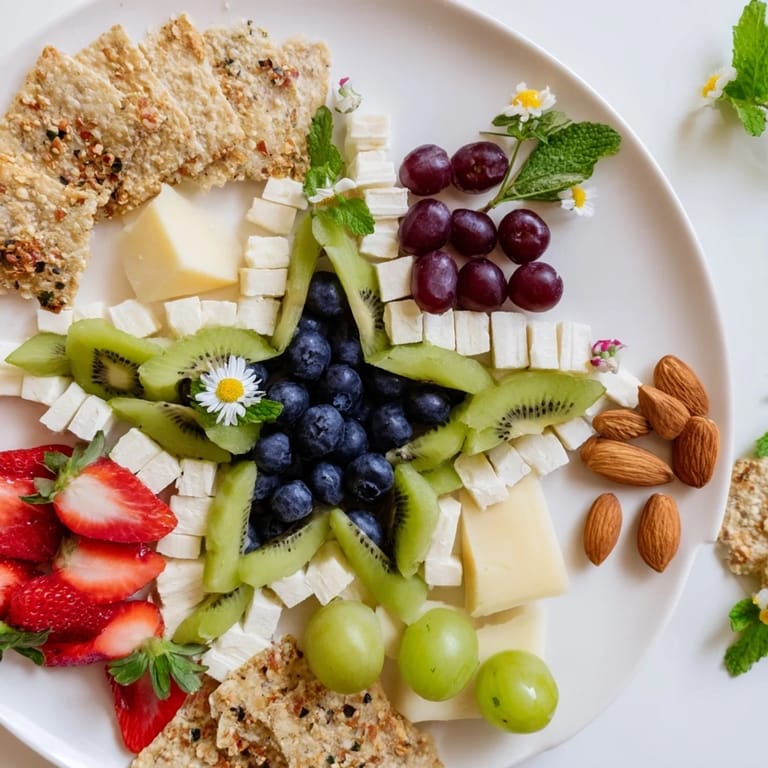
 I'll never forget the moment I saw a photograph of a cheese board arranged to spell out someone's initials in negative space—it was so ingeniously simple yet visually striking that I became obsessed. That night, I stayed up sketching designs on paper, imagining how I could turn empty space itself into the star of the platter. The next time I hosted friends, I decided to try it, and watching their faces light up when they realized the negative space formed a perfect star was worth every minute of careful arrangement.
I remember bringing this platter to a birthday dinner last spring, and a guest actually gasped when I revealed the design—it was their first initial, a D, rendered perfectly in white space. They told me later it was the most thoughtful presentation they'd ever seen, and honestly, that moment made me realize how much the artistry of food can matter just as much as the taste.
Ingredients
- Brie cheese, sliced (100 g): The soft, creamy anchor that melts on your tongue and deserves pride of placement—slice it just before assembling so it stays fresh and doesn't dry out.
- Manchego cheese, sliced (100 g): This Spanish treasure brings a nutty, slightly firm texture that contrasts beautifully with the Brie; it's sturdy enough to hold its shape as you arrange.
- Goat cheese, crumbled (100 g): The tangy wild card that adds sophistication and a beautiful creamy white color that really pops against the negative space.
- Seedless red grapes (1 cup): They're like little jewels that roll into gaps and add pops of color—buy them a day or two ahead and store in the fridge for the crispest texture.
- Strawberries, halved (1 cup): Fresh strawberries are non-negotiable here; they should smell fragrant and be firm to the touch, not mushy.
- Kiwi, sliced (1): The lime-green slices are pure visual magic against darker cheeses and create unexpected pockets of color in your design.
- Blueberries (1/2 cup): These tiny flavor bombs add both color and texture; get them fresh and use them within a day for best results.
- Thin crackers (12): Choose ones that look elegant and hold their shape—avoid anything too crumbly or thick.
- Roasted almonds (1/2 cup): The texture and earthy flavor ground the platter, and they photograph beautifully in little clusters.
- Green olives, pitted (1/4 cup): Their briny, sophisticated flavor and round shape make them natural punctuation marks on your board.
- Fresh mint leaves: Never underestimate what a few green leaves can do—they bring freshness and life to the finished platter.
- Edible flowers (optional): If you can find them, these are the cherry on top, adding elegance and a delicate, ethereal touch.
Tired of Takeout? 🥡
Get 10 meals you can make faster than delivery arrives. Seriously.
One email. No spam. Unsubscribe anytime.
Instructions
- Sketch Your Vision:
- Before you touch any food, take a moment to imagine what shape wants to emerge. Will it be a star, a heart, initials, or something more abstract? Lightly sketch it on parchment paper with a pencil, making sure it fits comfortably on your platter and leaves enough room for the food around it.
- Lay Your Guide:
- Place the parchment on your platter as a template. This is your safety net, your map. Don't overthink this part—it's just there to help you stay true to your vision.
- Build the Foundation:
- Start arranging your cheeses in clusters around the outlined design, leaving that precious negative space completely bare. Think of it like framing a picture—the frame matters as much as what's inside. Place crackers nearby in small groups, creating visual weight and balance.
- Paint with Fruit:
- Now begin filling the gaps between cheese and crackers with your fruit. This is where you get to be playful—arrange the strawberries, grapes, kiwi, and blueberries with intention, almost like you're painting a landscape. Let the colors speak to each other. Fill everything except that sacred negative space.
- Add Texture and Contrast:
- Scatter the almonds and olives in small piles across the platter. These aren't just ingredients—they're punctuation marks that add depth and dimension. Step back and look at your work from above. Does it feel balanced? Does your eye know where to rest?
- Reveal the Magic:
- This is the moment that never gets old. Carefully, almost ceremonially, lift the parchment away and see your negative space revealed. That white emptiness you so carefully protected? It's now the most striking part of your platter.
- The Final Flourish:
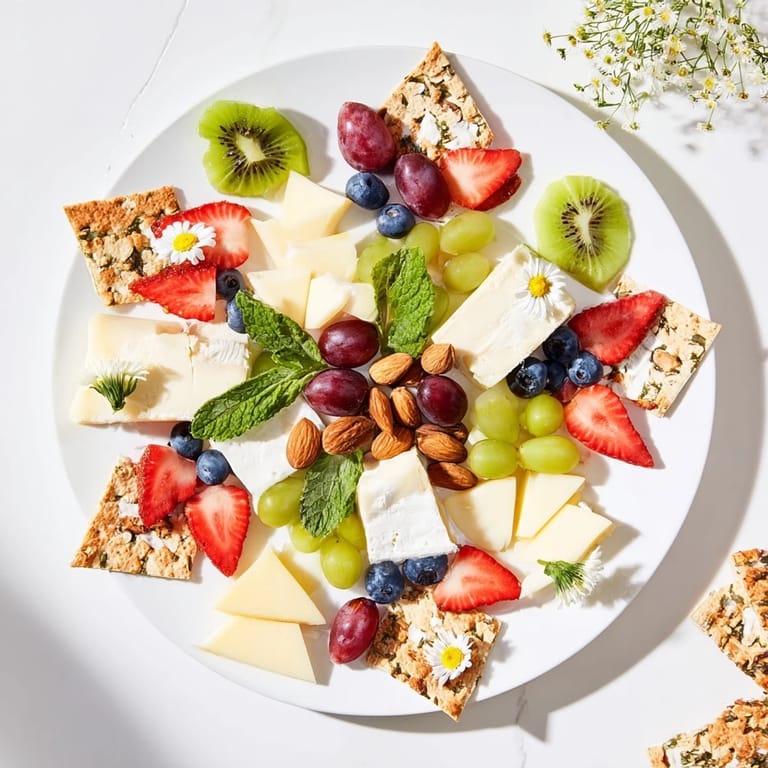
- Scatter mint leaves across the board and, if you're using them, place edible flowers sparingly for an almost ethereal quality. You're done—and you've just created something that's as much art as it is food.
- The Grand Reveal:
- Present it to your guests before inviting them to eat. Let them have a moment to appreciate the thoughtfulness before diving in. This is about the whole experience, not just the flavors.
 Save to Pinterest
 There's something quietly powerful about watching someone understand the concept for the first time. A friend recently asked me why I left space empty when I could fill it, and I found myself explaining how sometimes what you leave out is more important than what you put in. That philosophy has quietly worked its way into how I think about everything now.
Choosing Your Design
The beauty of this platter is that it works with whatever shape calls to you. I've done initials that made guests feel personally celebrated, stars for a sophisticated dinner party, and even a moon for a late-night gathering that felt magical. Think about your occasion and your guest of honor. What would make them smile? What shape feels right for this moment? Don't overthink it—even simple geometric shapes have a striking elegance when rendered in negative space.
Adapting for Different Occasions
For a dessert version, I swap the cheeses for dark chocolate pieces, add dried apricots and figs, scatter biscotti and amaretti cookies, and use candied nuts instead of roasted ones. It's the same principle—the same visual language—but it speaks to a sweeter occasion. You can also do a completely vegetarian version by loading up on more vegetables: roasted tomatoes, cucumber slices, bell pepper strips, and hummus swirls. The negative space technique works with whatever ingredients make sense for your menu.
The Psychology of Empty Space
I've learned that our eyes are naturally drawn to what's missing, not what's there. That's the magic of negative space in design, and it translates perfectly to food presentation. When everything is crowded and full, our brains have nowhere to rest. But when there's intentional emptiness, that emptiness becomes its own statement. It shows restraint, intention, and a confidence that says you don't need to fill every corner to impress someone. That's what makes this platter feel sophisticated, and honestly, a little bit like art.
- Pro tip: arrange your platter at least 15 minutes before guests arrive so you're not stressed when they walk in—your calm energy is part of the presentation.
- Take a photo before anyone touches it; you'll want to remember how beautiful it looked before the feast began.
- Trust your instincts about what looks balanced; if something feels off visually, move it—your eye knows more than you think.
 Save to Pinterest
 Every time I make this platter, I'm reminded that food is about so much more than flavor—it's about the care you take and the story you're telling with every placement. This is the platter you make when you want someone to feel seen.
Recipe Q&A
- → What is negative space in plating?
Negative space refers to the empty areas between arranged ingredients, designed to form visually appealing shapes that highlight the overall presentation.
- → Which ingredients work best for this platter?
Soft and firm cheeses, fresh fruits like grapes and berries, crunchy nuts, and crackers create contrasting textures and colors ideal for this arrangement.
- → Can the platter accommodate dietary restrictions?
Yes, ingredients like gluten-free crackers can be used and cheese varieties adapted for vegetarian needs, ensuring inclusivity.
- → How do you maintain the negative space shape?
Use parchment paper guides drawn with the desired design to place ingredients precisely and remove it carefully to reveal clean shapes.
- → What occasions suit this platter style?
Its elegant, artistic presentation makes it perfect for parties, special events, or as a sophisticated appetizer or dessert accompaniment.
- → Are there variations for dessert preferences?
Yes, substituting cheeses and crackers with chocolates, biscotti, and dried fruits transforms this into a sweet, visually appealing platter.