 Save to Pinterest
 My first fattoush came together on a humid summer evening when my Lebanese neighbor brought over leftovers from her family dinner. I watched her toss the salad with such casual confidence, the pita chips still crackling as they hit the greens, and I was struck by how something so simple could taste so alive. The bright burst of sumac and lemon, the tender herbs, the satisfying crunch—it felt less like a recipe and more like an invitation to eat the way her family always had. I went home that night determined to recreate it, and now it's become my go-to when I want something that feels both nourishing and celebratory.
I made this for a potluck last spring and brought it in a wide shallow bowl, figuring the pita chips would survive the short car ride. They didn't. But when I tossed everything together at the gathering, someone asked what that tangy smell was, and suddenly three people wanted to know the recipe. By the end of the night, the bowl was completely empty and someone had written down the ingredient list on a napkin. It's one of those dishes that makes people genuinely curious about what you're eating.
Ingredients
- Mixed greens (romaine, arugula, or purslane): Choose whatever feels freshest at your market—the combination matters less than the quality and crispness.
- Tomatoes and cucumber: Ripe, room-temperature tomatoes will taste infinitely better than cold ones from the fridge, and they won't water down the salad.
- Radishes: These add a peppery bite that keeps the salad from feeling flat, so don't skip them even if you usually do.
- Red onion and fresh herbs: The parsley and mint are non-negotiable—they're what make this taste authentically Lebanese rather than just another salad.
- Pita bread: Use pita that's soft and pliable, not the crispy packaged kind, so you can get a good crunch when you bake it.
- Extra-virgin olive oil: This is the foundation of the dressing, so choose one you actually enjoy tasting.
- Sumac: This is the secret ingredient that everyone notices but can't quite name—it's tart without being sour, almost like a lemony spice.
- Fresh lemon juice and red wine vinegar: The combination gives the dressing depth rather than just one-note acidity.
Tired of Takeout? 🥡
Get 10 meals you can make faster than delivery arrives. Seriously.
One email. No spam. Unsubscribe anytime.
Instructions
- Toast your pita into crispy chips:
- Cut the pita into bite-sized pieces and toss with olive oil and salt until every piece glistens. Spread them on the baking sheet in a single layer and listen for that moment around minute eight when the oven smells toasted and golden—that's when you check them, turning if needed. They'll crisp up even more as they cool, so pull them out when they still look slightly soft.
- Build your salad base:
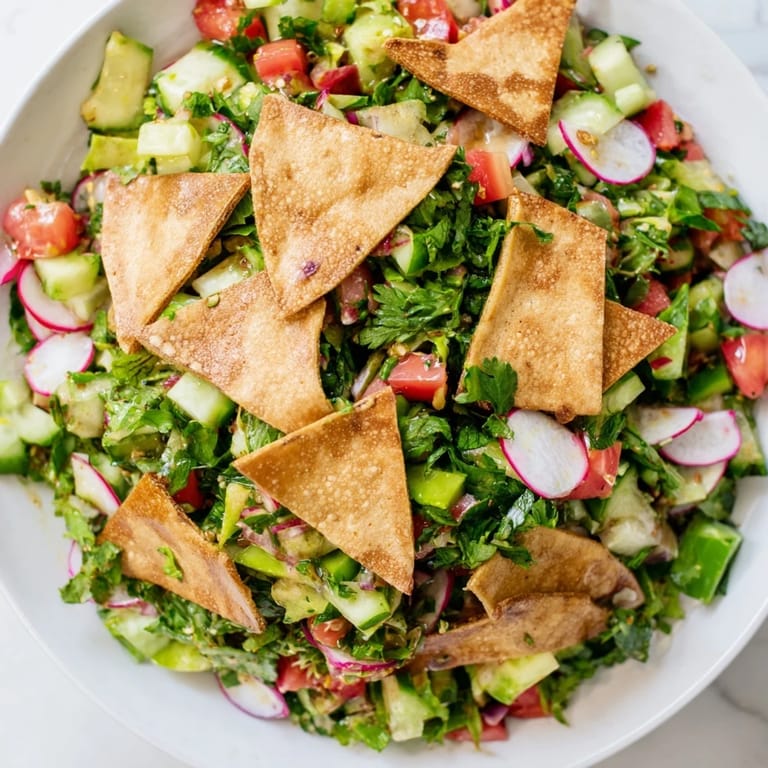
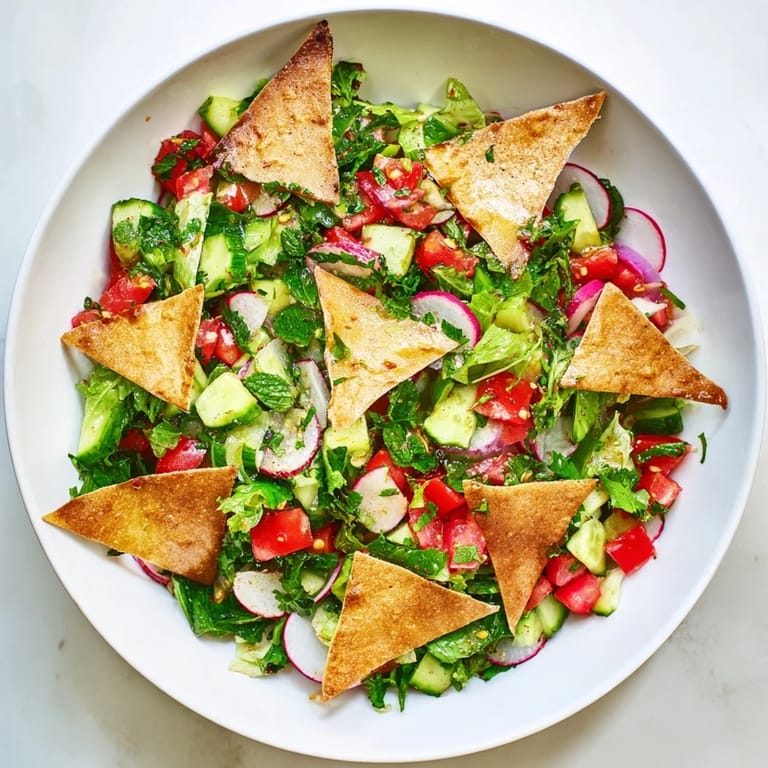
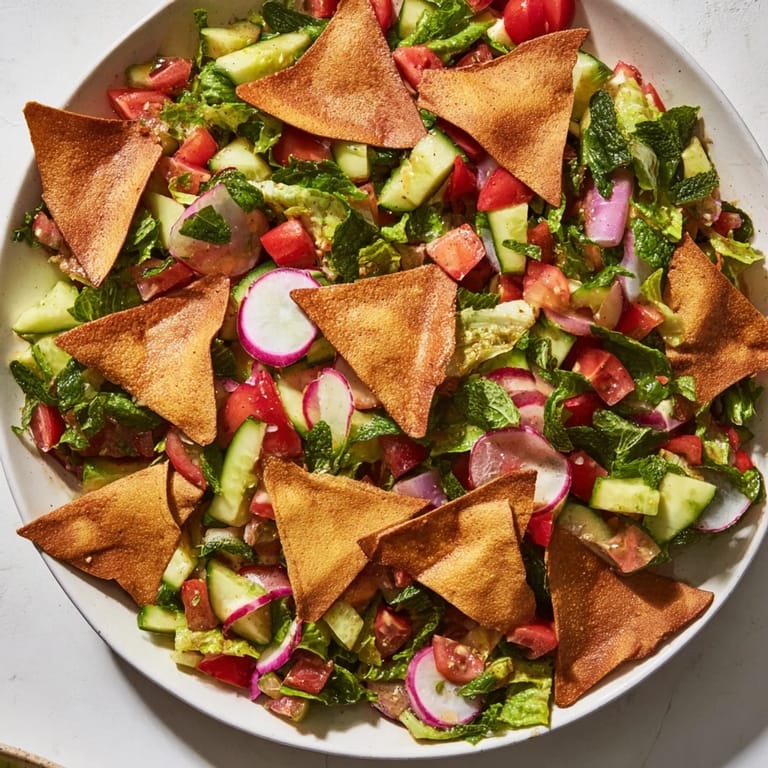
- Chop everything fresh and arrange it in a large bowl—the color combination is part of the joy here. Keep the greens as the foundation and pile the other vegetables on top so they don't get crushed.
- Make the dressing:
- Whisk the oil, lemon juice, vinegar, and sumac together, watching as the mixture becomes this beautiful golden-pink color. Add the minced garlic, salt, and pepper and taste it straight from the whisk—it should make your mouth water immediately.
- Bring it all together:
- This is the crucial moment: add the pita chips only when you're ready to serve, because if they sit in the dressing too long they'll soften and lose their whole purpose. Toss gently so you don't crush anything, and taste as you go so you can adjust the seasoning one last time.
 Save to Pinterest
 What I love most about this salad is that it tastes like someone cares—not in a fussy way, but in the way that comes from understanding why each ingredient matters. It's the kind of dish that reminds you why fresh herbs and good olive oil are worth keeping on hand.
The Magic of Sumac
Sumac is what separates this fattoush from a regular salad, and I didn't understand that until I tasted one without it. The first time I made this for myself, I couldn't find sumac at my usual grocery store so I thought I'd just use more lemon juice instead. It was fine, pleasant even, but it tasted like a vinaigrette. When I finally found sumac and tried again, everything clicked—it has this dry, almost chalky quality that makes the lemon juice taste brighter and more complex, and somehow it makes you taste the herbs more vividly. Now I always buy it and keep it on hand.
Variations Worth Trying
The beauty of fattoush is that it's genuinely flexible, which is partly why it became such a staple dish across the Levantine region. I've added thinly sliced bell peppers for sweetness, thrown in some torn labneh for creaminess, and scattered pomegranate seeds on top when I've had them. You can add chickpeas to make it more substantial, or include grilled chicken or fish alongside it. The bones of the dish stay the same—the fresh herbs, the crisp greens, the sumac dressing—but you can build around them based on what you have or what feels right for the meal.
Serving and Storage
Fattoush is at its best served immediately after you assemble it, when everything is cold and crispy and the herbs smell alive. If you're feeding a crowd, you can prep everything ahead and assemble at the last moment, or let people toss their own bowls if you're in a casual setting. The individual components keep fine separately—the dressed greens for a day, the pita chips in an airtight container for several days, the dressing in a jar for up to a week—so really the only thing you need to time is the final assembly.
- Make the pita chips up to two days ahead and store them in an airtight container so they stay crispy.
- Prep all your vegetables and herbs several hours in advance, keeping them separate so nothing wilts.
- Whisk the dressing together just before serving, or you can make it hours ahead and let the flavors marry.
 Save to Pinterest
 This salad has a way of making you feel good about what you're eating and making you feel good about the people you're sharing it with. Make it often.
Recipe Q&A
- → What is the role of sumac in this salad?
Sumac adds a tangy, lemony flavor that brightens the salad and complements the fresh vegetables and herbs.
- → Can I make the pita chips gluten-free?
Yes, use gluten-free pita bread or omit the chips altogether for a gluten-free option.
- → How do I keep the pita chips crisp?
Bake them until golden and allow to cool completely before adding to the salad to maintain their crunch.
- → What herbs work best in fattoush?
Fresh parsley and mint are traditional and add a refreshing herbal note to the mix.
- → Can I prepare the dressing in advance?
Yes, the dressing can be whisked together ahead of time and stored in the fridge for up to two days.