 Save to Pinterest
 The first time I truly understood how to balance heat with creaminess was in my kitchen on a Tuesday evening, salmon fillets waiting on the counter and a jar of tikka paste catching the last light from the window. I'd been cooking Indian food for years, but something clicked when I realized the yogurt wasn't just a binder—it was a shield, a way to let the spices cling to the fish without overwhelming its delicate flesh. Now, whenever I make this, I think of that moment of clarity, and how something so simple could taste so alive.
I remember making this for friends on a Thursday night when someone asked at the last minute if they could come over, and I had salmon thawing and not much else decided. There was this beautiful panic of it, actually—the kind that makes you creative instead of stressed. By the time they arrived, the kitchen smelled like cumin and paprika, the salmon was resting on warm plates, and I'd somehow become the person who could pull together something that looked intentional and tasted like I'd been planning it all week.
Ingredients
- Salmon fillets (4, about 150 g each): Look for fillets that are firm and smell like the ocean, not fishy—your nose knows when something's fresh. Skin-on or skinless both work beautifully; skin-on gives you that crackling texture if you want it.
- Plain yogurt (3 tbsp): Use the thickest yogurt you can find; it clings better and creates a creamier marinade. Plant-based yogurt works perfectly if you need it to.
- Tikka masala paste (2 tbsp): This is your flavor shortcut, where the real magic lives. A good paste already balances the spices so you don't have to think too hard.
- Lemon juice (1 tbsp): Cuts through the richness and brightens everything. Fresh juice makes a difference you can taste.
- Ground cumin and coriander (1 tsp each): These are the backbone of the flavor, the gentle spices that remind you this is Indian food done right.
- Smoked paprika (½ tsp) and chili powder (½ tsp): Paprika brings depth and color; chili powder is your heat control knob, so adjust it to how you like to feel when you eat.
- Olive oil (1 tbsp): Helps the marinade coat evenly and gives the salmon something to sizzle in.
- Salt and black pepper (1 tsp and ½ tsp): Season boldly; this salmon can take it.
- Lemon wedges and fresh coriander: These aren't garnishes—they're the finale, the moment the dish becomes complete on the plate.
Tired of Takeout? 🥡
Get 10 meals you can make faster than delivery arrives. Seriously.
One email. No spam. Unsubscribe anytime.
Instructions
- Heat your oven and prep your stage:
- Get the oven to 220°C (425°F) and line a baking tray with parchment or foil so you don't spend 20 minutes scrubbing later. A hot oven is essential—it creates that beautiful crisp edge on the salmon while keeping the center tender.
- Make the marinade—this is where flavor happens:
- In a bowl, stir together yogurt, tikka paste, lemon juice, cumin, coriander, paprika, chili powder, olive oil, salt, and pepper until you have something that looks like spiced cream. Taste a tiny bit on your finger; it should make you want more.
- Dry the salmon like you mean it:
- Pat each fillet with paper towels until the surface feels dry. Moisture is the enemy of crispy edges, so don't skip this.
- Coat and arrange:
- Spread the marinade over each fillet, getting all sides and edges. Arrange them on the prepared tray with space between each piece so the heat can circulate properly.
- Let time work for you:
- Even 10 minutes of marinating helps, but if you have an hour (or even overnight in the fridge), the flavors deepen and the salmon becomes even more tender. This is flexibility built in.
- Roast until the edges call to you:
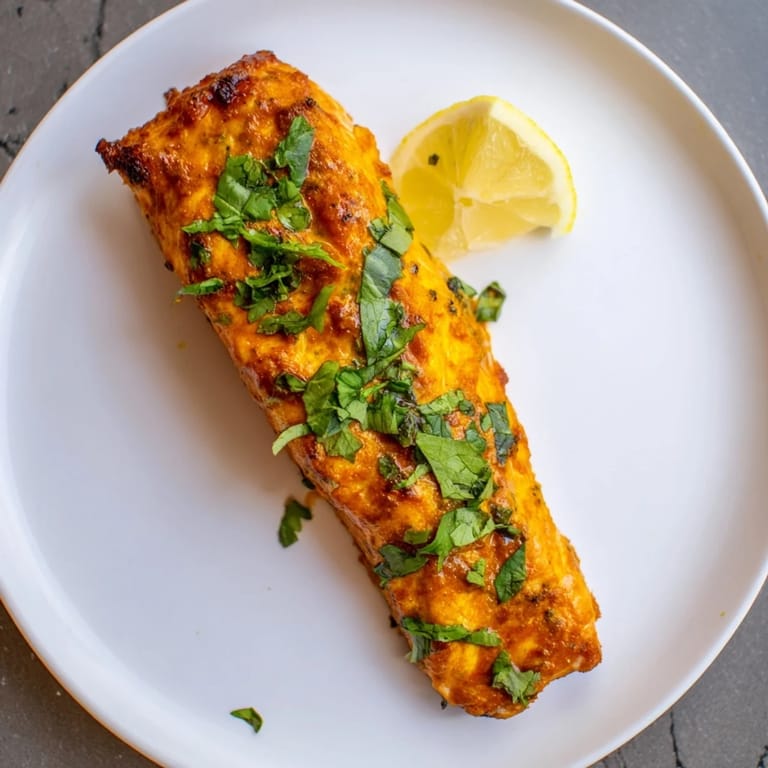
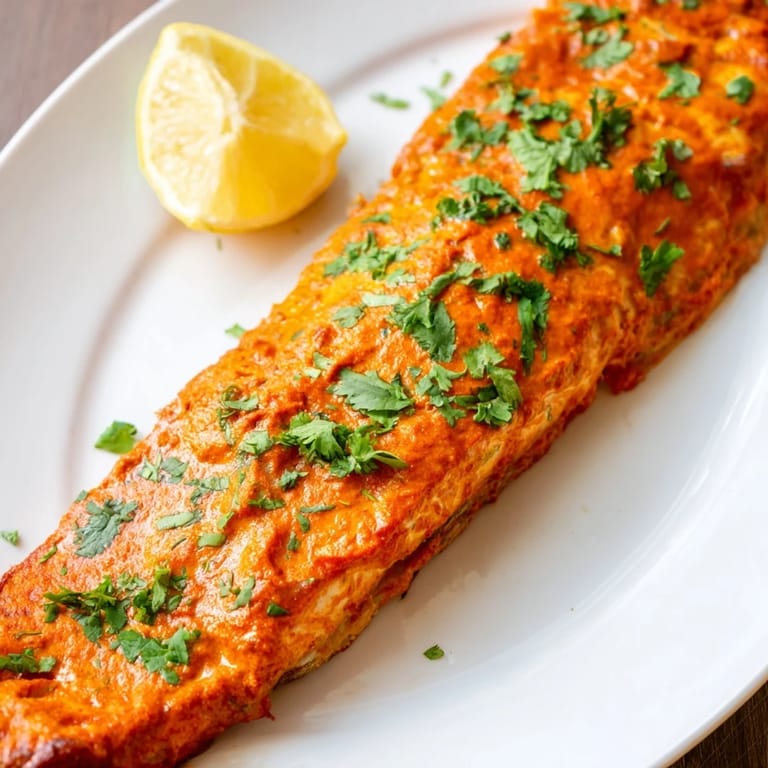
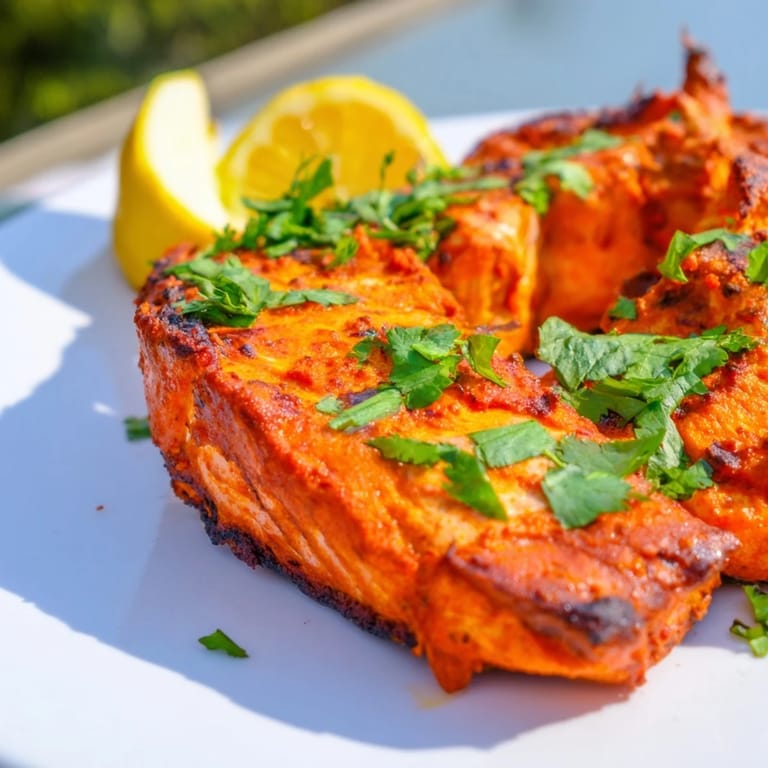
- Pop the tray into the hot oven for 15–18 minutes. You'll know it's done when the salmon flakes easily at the thickest part and the edges are bronzed and slightly crisp. If you want extra char, finish under the broiler for a minute or two, watching closely so it doesn't burn.
- Serve with intention:
- Transfer to warm plates, scatter fresh coriander over top, squeeze a lemon wedge alongside. Those small touches turn dinner into an experience.
 Save to Pinterest
 There was an evening when my partner came home stressed from work, and I'd made this salmon mostly because it was easy and I had the ingredients. By the time they sat down with a plate of it and a fork, something shifted. They slowed down. They asked about the spices. We talked about flavor and texture and why certain dishes calm you down instead of demanding your attention. That's when I understood this recipe wasn't just quick—it was also a kindness.
Why This Marinade Works So Well
The genius of using yogurt as your base is that it's a blanket for the spices, protecting the delicate salmon while also adding creaminess that you don't usually get from a dry rub. The yogurt carries the flavors deep into the fish while the heat of the oven caramelizes the surface, creating this contrast between tender and crisp. When you add lemon juice, you're not just adding flavor—you're adding brightness that keeps the dish from feeling heavy, which matters when you're eating something rich like salmon.
What to Serve Alongside
Basmati rice is the obvious choice, and it's perfect—the mild grains absorb sauce without competing. But naan is my secret weapon because you can use it to scoop up every last bit of spiced coating that falls off the salmon, and there's something satisfying about that. A simple cucumber salad with yogurt and a pinch of salt is the cooling contrast your palate will crave, especially if you've gone heavy on the chili powder.
Make It Your Own
Tikka salmon is a template, not a rule book. If you don't love chili heat, dial it back or skip it entirely—cumin and coriander are enough to make this taste authentic and warm. If you have cilantro instead of coriander leaves, use it. If someone at your table eats white fish instead of salmon, this marinade works beautifully on cod or haddock, and it's just as fast.
- Try a squeeze of pomegranate molasses in the marinade for tartness instead of just lemon juice.
- Finish with a small drizzle of ghee and a scatter of toasted sesame seeds if you want richness and texture.
- Make extra marinade and use it on roasted vegetables or chicken—the formula is strong enough to carry any protein.
 Save to Pinterest
 This recipe has taught me that sometimes the best meals are the ones you don't overthink, where the technique is simple enough that you can focus on the joy of cooking instead of the mechanics. Make this when you want dinner to taste intentional without feeling like work.
Recipe Q&A
- → What is the best way to marinate the salmon?
Mix yogurt, tikka masala paste, lemon juice, and spices into a smooth marinade. Coat salmon fillets thoroughly and allow to rest at least 10 minutes, up to an hour refrigerated, for deeper flavor absorption.
- → How do you achieve a crisp exterior on the salmon?
Roast the salmon at 220°C (425°F) until edges turn golden and slightly crisp, about 15–18 minutes. For extra char, finish under the broiler 1–2 minutes.
- → Can this marinade be adjusted for heat preferences?
Yes, chili powder quantity can be increased or reduced to suit your preferred spice level without altering the marinade’s balance.
- → What side dishes complement this salmon preparation?
This spiced salmon pairs well with basmati rice, naan bread, or refreshing cucumber salad to balance the spices and offer texture contrast.
- → Are there suitable substitutions for salmon?
Cod, haddock, or firm tofu can be used instead; just adjust cooking times to ensure even roasting without drying out.