 Save to Pinterest
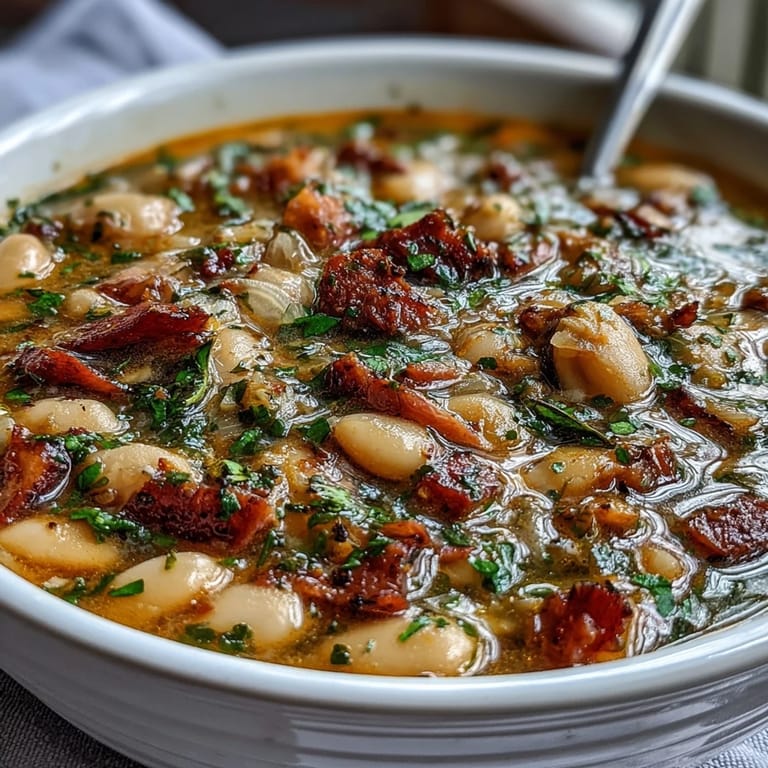
 There's something about the smell of ham and beans simmering together that instantly makes a kitchen feel like home, even if you're nowhere near one. My neighbor Maria taught me this stew on a gray November afternoon when she had too much ham left over from Sunday dinner and a pantry full of canned beans. She moved through her kitchen with such ease, throwing vegetables into the pot without measuring, tasting as she went, and somehow it all came together into something warm and deeply satisfying. I've made it dozens of times since, and it never fails to fill a room with that same comforting aroma.
I made this for my sister when she was going through a rough patch, and she sat at my kitchen counter for three hours just talking while the stew bubbled away. By the time it was ready, the whole house smelled like Italy, and somehow that small thing—the warmth, the aroma, the effort—mattered more than the words we'd exchanged. She still texts me asking for this recipe, which tells you everything you need to know about its power.
Ingredients
- Cooked ham, 400 g diced: This is your protein and flavor anchor, so don't skimp on quality here—look for ham that's been properly cured and smoked, as it adds depth the stew really needs.
- Cannellini beans, 2 cans (400 g each) drained and rinsed: Rinsing them removes the starchy liquid and prevents the broth from becoming gluey, which I learned the hard way early on.
- Carrots, 2 medium diced: The sweetness balances the saltiness of the ham beautifully, so don't rush chopping them—a good dice means even cooking.
- Celery stalks, 2 diced: This is part of the holy trinity with onion and carrot, building an aromatic foundation that makes everything taste more complex.
- Onion, 1 large finely chopped: The tears you cry chopping this are worth it, as onions caramelize slightly and become silky as they cook down.
- Garlic, 3 cloves minced: Mince it fine and add it to the tomato paste so it blooms in the hot oil—this single step transforms the entire flavor profile.
- Canned diced tomatoes, 400 g: San Marzano varieties are wonderful if you can find them, but any good quality canned tomato works beautifully here.
- Tomato paste, 2 tbsp: This concentrated umami bomb deepens the broth, so let it cook with the garlic until it smells almost sweet.
- Fresh spinach or kale, 2 handfuls chopped (optional): I add kale when I want something heartier, and it wilts down to almost nothing while adding iron and nutrition.
- Chicken or vegetable broth, 1 L low-sodium: Low-sodium is essential so you can control the salt level yourself as the broth reduces and concentrates.
- Bay leaf, 1: Don't forget to fish this out before serving—I learned that lesson when a friend bit into one.
- Dried oregano, 1 tsp: Oregano and thyme together create that unmistakable Italian herbaceousness that makes people ask what your secret is.
- Dried thyme, 1 tsp: A little goes a long way with thyme, so this amount is just right for six servings without overpowering.
- Crushed red pepper flakes, 1/2 tsp (optional): I add this when I want a gentle warmth that doesn't mask the other flavors, adjusting to taste at the end.
- Salt and freshly ground black pepper, to taste: Always taste and adjust at the very end when the beans have absorbed some of the broth and the flavors have melded.
- Olive oil, 2 tbsp: Use a good quality oil here since it carries flavor, and let it get shimmering hot before adding vegetables.
- Fresh parsley, chopped for garnish: The brightness of fresh parsley at the end wakes up the whole bowl and adds a fresh note to something so hearty.
- Grated Parmesan cheese (optional): A small handful of Parmesan creates little pockets of umami and richness that elevate each spoonful.
Tired of Takeout? 🥡
Get 10 meals you can make faster than delivery arrives. Seriously.
One email. No spam. Unsubscribe anytime.
Instructions
- Build Your Flavor Base:
- Heat the olive oil in your Dutch oven over medium heat until it shimmers, then add the onions, carrots, and celery. Let them soften for a full 8 minutes, stirring occasionally—this creates a sweet, caramelized foundation that everything else builds on.
- Wake Up the Aromatics:
- Stir in the minced garlic, tomato paste, oregano, and thyme, letting them cook together for about a minute. You'll know it's ready when the kitchen smells intensely herbaceous and toasty, and that's when you know the flavors are blooming.
- Bring in the Ham:
- Add your diced ham and cook it for 2 to 3 minutes, stirring as you go. This lets the ham warm through and begins releasing its smoky essence into the oil.
- Add Liquid and Bring to a Boil:
- Pour in the canned tomatoes with their juices and the broth, then add the bay leaf. Let it come to a rolling boil, which should take about 5 minutes.
- Simmer with the Beans:
- Add the drained cannellini beans, reduce the heat to low, and partially cover the pot. Simmer gently for 50 minutes, stirring every 15 minutes or so to ensure nothing sticks to the bottom. The longer it simmers, the more the flavors marry into something greater than their individual parts.
- Finish with Greens if Using:
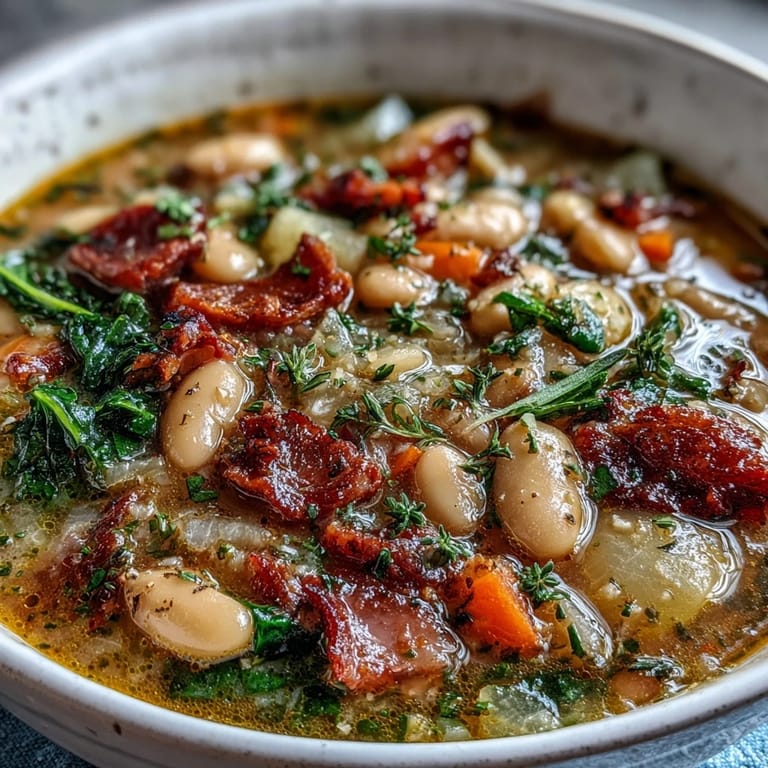
- In the final 5 minutes of cooking, add your spinach or kale if you're using it, stirring it in until it wilts completely. Taste the stew now and adjust your seasoning with salt, pepper, and red pepper flakes to your preference.
- Serve with Grace:
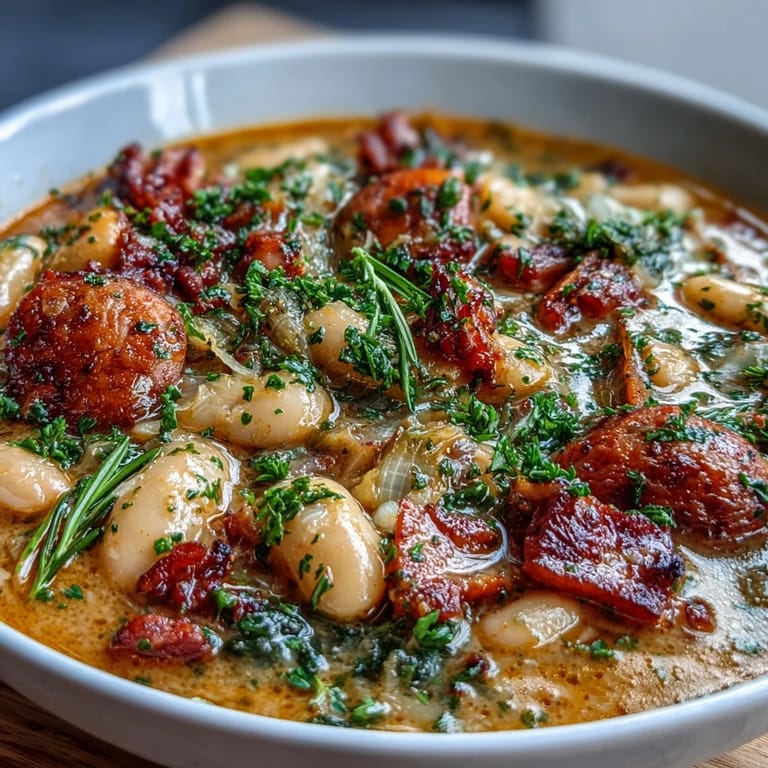
- Remove the bay leaf, ladle the stew into bowls, and finish with a scatter of fresh parsley and a generous handful of Parmesan cheese. The warmth of the stew will help the cheese melt slightly, creating little moments of richness throughout.
 Save to Pinterest
 My father, who was never particularly sentimental about food, once told me this stew reminded him of eating in a small trattoria outside Rome forty years ago. He never asked for the recipe, but he always accepted a bowl when I offered, and he always ate every last spoonful while gazing out the window. That's when I realized this dish had transcended being just something tasty—it had become a bridge between memories and moments.
Why Ham and Beans Are Perfect Together
There's a reason this pairing shows up in so many cuisines across Europe—the salt and smoke of the ham create a contrast that makes the beans taste more like themselves, while the beans' creamy texture and mild flavor balance the ham's intensity. The longer they simmer together, the more they understand each other, if that makes sense. By the time the stew is ready, they're no longer separate ingredients but something unified and complete.
The Magic of the Soffritto
That initial step where you sauté the onions, carrots, and celery isn't just about softening vegetables—it's about building flavor layers that everything else will rest on. I used to rush this part, thinking more time cooking meant a better stew, but I was wrong. Those 8 minutes are sacred; they're when the natural sugars in the vegetables caramelize just slightly, creating a sweet, rich base that makes people ask if you've been cooking since morning.
Serving and Storage Wisdom
This stew tastes even better the next day, so don't hesitate to make it ahead—the flavors deepen as everything sits together overnight in the refrigerator. I always serve it in deep bowls with crusty bread on the side for soaking up every last drop of broth, and a glass of something robust like Chianti makes the whole experience feel intentional and special.
- Leftovers keep beautifully in the refrigerator for up to four days, and you can reheat them gently on the stovetop without losing any of that hard-won flavor.
- If the stew becomes too thick as it sits, thin it with a splash of broth or water when reheating to restore the silky consistency.
- You can also freeze this stew for up to three months, which means you've essentially made comfort available whenever you need it most.
 Save to Pinterest
 Make this when you want to feel like you're taking care of someone, including yourself. There's quiet power in a bowl of stew that tastes like someone's been paying attention.
Recipe Q&A
- → Can I use smoked ham for this stew?
Yes, smoked ham or a ham bone can add extra depth of flavor. Just remember to remove the bone before serving.
- → What beans substitute well for cannellini beans?
Great substitutes include navy beans or great northern beans, as they have a similar creamy texture.
- → How can I make this stew more colorful?
Adding fresh spinach or kale in the last minutes of cooking brightens the stew and adds nutritional value.
- → Can I prepare this in a slow cooker?
Yes, sauté the vegetables and ham first, then combine all ingredients in a slow cooker and cook on low for 6-8 hours.
- → What wine pairs well with this dish?
A robust Italian red wine like Chianti complements the rich flavors of the ham and beans beautifully.