 Save to Pinterest
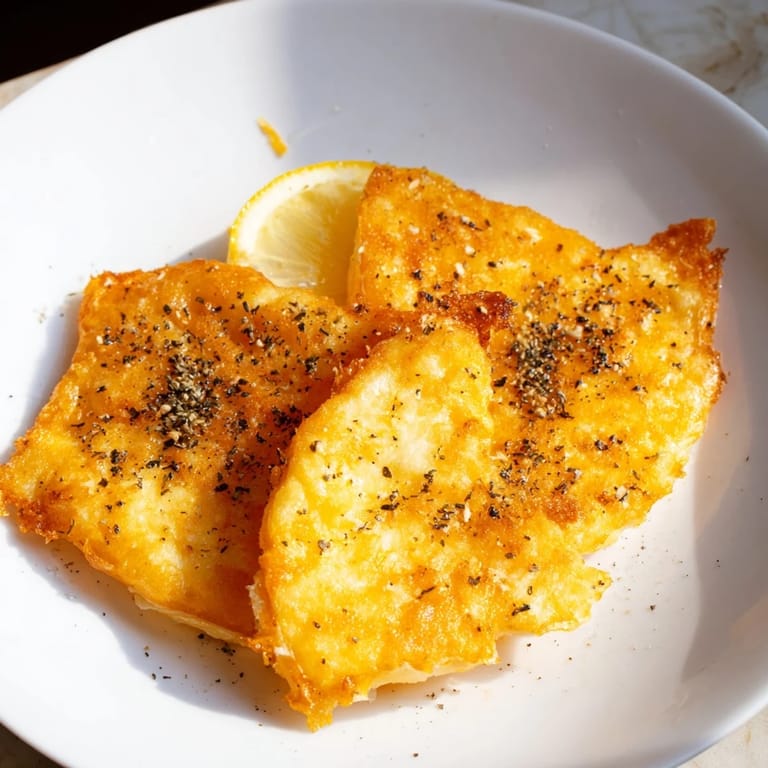
 My first saganaki wasn't supposed to happen. I was standing in a tiny taverna near Plaka, watching an older woman in the kitchen flip golden cheese slices with practiced speed, and when she slid them onto my plate still sizzling, something shifted. The squeeze of lemon made them sing. Years later, I realized I could recreate that exact moment in my own kitchen, and now it's my favorite way to prove that sometimes the most memorable dishes are the simplest ones.
I served this at a dinner party once, right when everyone was starting to feel restless waiting for the main course. I brought the hot saganaki straight to the table, warned them it was burning hot, and watched their faces light up with that first bite. Nobody wanted to share.
Ingredients
- Firm Greek cheese (kasseri, kefalotyri, or halloumi), 200 g, sliced 1 cm thick: This is the star, and thickness matters because you want that molten center. I learned the hard way that too-thin slices just become hard little coins, so don't skimp on the cut.
- All-purpose flour (or gluten-free), 2 tbsp: A light coating is all you need to create that golden crust; too much flour makes it heavy and masked the cheese's flavor.
- Olive oil, 2 tbsp: Use good oil you'd actually eat by itself because it's not just cooking here, it's flavoring the whole dish.
- Lemon, 1 whole, cut into wedges: This is essential, not optional—the brightness is what makes the richness bearable.
- Dried oregano, 1/2 tsp: Sprinkle it on while the cheese is still hot so the heat brings out its herbal warmth.
- Freshly ground black pepper, to taste: Fresh pepper adds a tiny bite that keeps this from feeling one-dimensional.
Tired of Takeout? 🥡
Get 10 meals you can make faster than delivery arrives. Seriously.
One email. No spam. Unsubscribe anytime.
Instructions
- Dry your cheese:
- Pat each slice with paper towels until completely dry. Any moisture will make the flour clump and prevent that perfect golden crust from forming.
- Coat lightly:
- Dredge each slice in flour and shake off the excess until barely visible. You're looking for the thinnest coating, not a thick layer.
- Heat the oil:
- Let the oil get properly hot over medium-high heat so it sizzles loudly the moment the cheese hits the pan. If it's not hot enough, you'll end up with greasy cheese instead of crispy.
- Fry with confidence:
- Add the cheese slices and don't touch them for the first minute. You'll hear that satisfying crackle, and when you flip, you'll see deep golden brown. Cook the second side for about 1 to 2 minutes until it matches the first.
- Drain briefly:
- Slide them onto paper towels for just 30 seconds to catch the excess oil, but don't wait longer or they'll start cooling down and losing their texture.
- Finish and serve immediately:
- Transfer to a plate, sprinkle with oregano and pepper while still hot, and get them to the table before they firm up. The lemon wedges go right alongside.
 Save to Pinterest
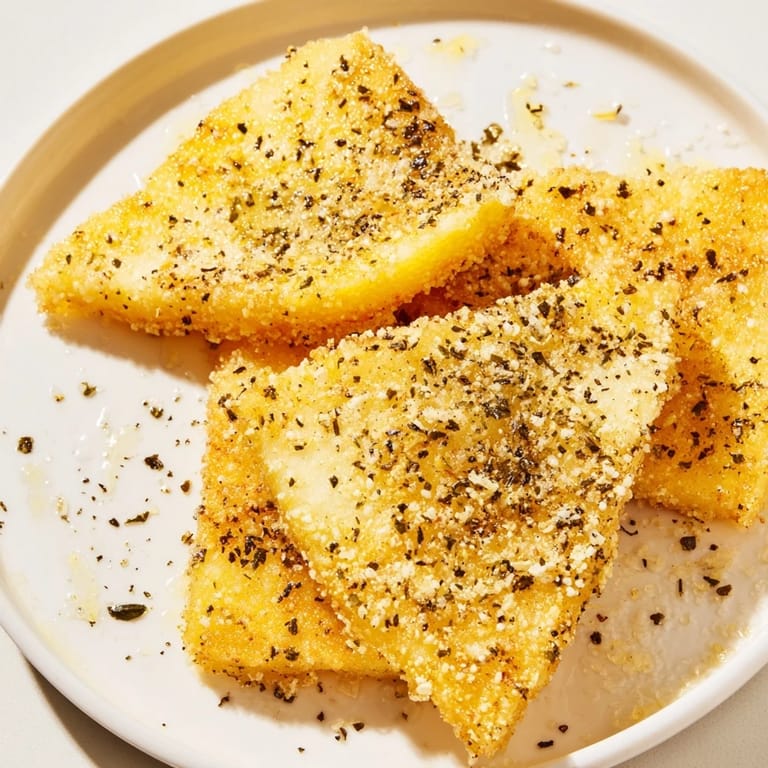
 There's a moment when you bite into warm saganaki, that split second when the outside cracks and the inside is still soft enough to coat your mouth, that makes you understand why Greeks have been making this for centuries. It's not fancy, but it's perfect.
Cheese Choices Matter
Kasseri is the traditional choice because it holds its shape while softening inside, but I've had equally good results with kefalotyri, which gets a deeper golden color. Halloumi works if you need something easier to find, though it stays firmer and less creamy. Graviera is another solid option if you see it at a Greek market.
The Oil and Heat Question
Medium-high heat is the sweet spot—too high and the outside burns before the inside melts, too low and you get something that tastes fried rather than caramelized. Olive oil gives the best flavor, but make sure it's hot enough that it responds immediately when the cheese hits the pan.
Making It Your Own
I've seen versions with honey drizzled on top, and they're lovely if you want something sweet against the salt. Some people add a sprinkle of red pepper flakes or even a tiny touch of thyme. The lemon is non-negotiable in my opinion, but everything else can bend to your mood.
- Try pairing it with crusty bread to soak up the flavored oil.
- Serve as part of a mezze platter alongside olives, hummus, and fresh vegetables.
- A crisp white wine like Assyrtiko or even a light beer makes it feel like you're at that taverna again.
 Save to Pinterest
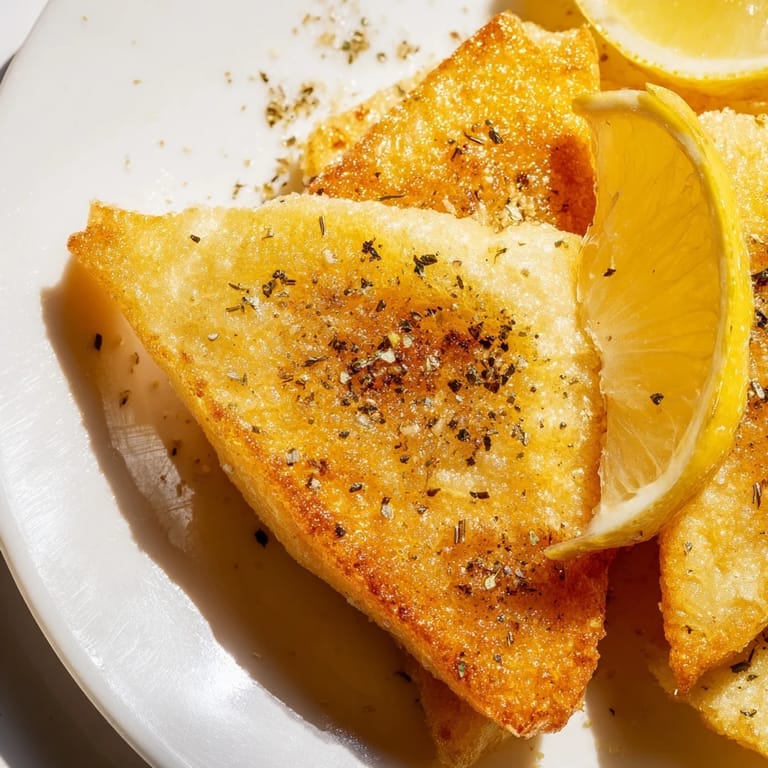
 Saganaki taught me that simplicity isn't lazy—it's elegant. Serve this hot, squeeze that lemon, and taste why this dish has survived for so long.
Recipe Q&A
- → What type of cheese is best for saganaki?
Firm Greek cheeses such as kasseri, kefalotyri, or halloumi work best due to their texture and melting properties.
- → Can I use gluten-free flour for coating?
Yes, gluten-free flour can be used as a coating to make the preparation suitable for gluten-sensitive diets.
- → Why is lemon served with the fried cheese?
The fresh lemon adds a bright, tangy contrast that balances the rich, savory fried cheese perfectly.
- → What is the ideal cooking method for saganaki cheese?
Lightly dredge in flour and pan-fry in olive oil over medium-high heat until golden and crisp on both sides.
- → How should saganaki cheese be served?
Serve immediately hot with a sprinkle of oregano, freshly ground pepper, and lemon wedges for squeezing.