 Save to Pinterest
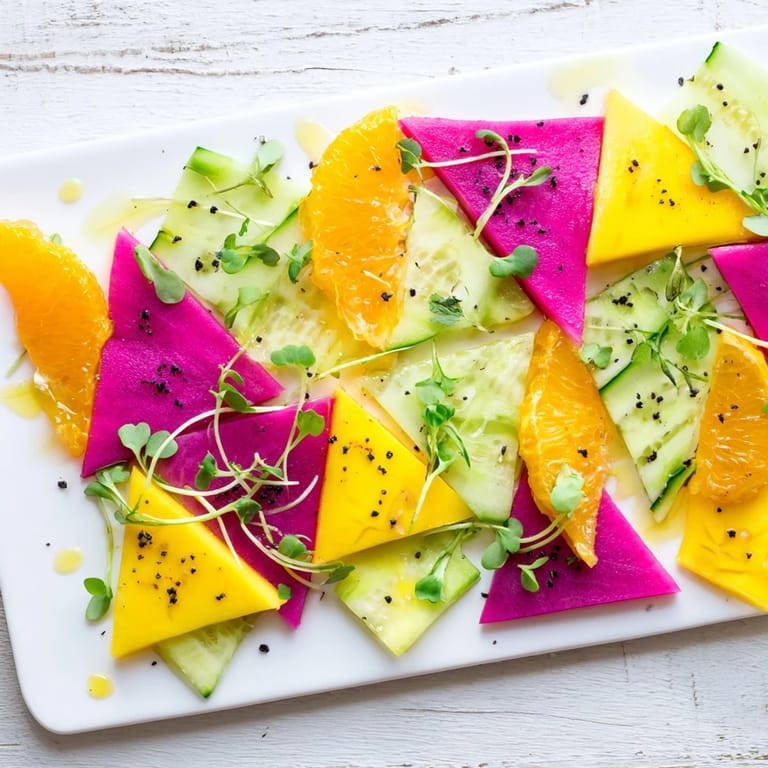
 I'll never forget the afternoon I wandered into a small gallery in the city and found myself captivated by a Picasso painting—fragmented, geometric, alive with color and possibility. That evening, I returned to my kitchen inspired, thinking about how food could tell the same visual story. What if I deconstructed a simple salad into pure geometry? That's when The Cubist Deconstruction was born, a dish that transforms humble vegetables into edible art, where every shape and color becomes a brushstroke on the plate.
I made this for the first time when my sister was visiting from out of town, and she actually gasped when she saw it on the table. We sat there for a full minute just admiring the arrangement before anyone dared to take the first bite. That's when I knew this dish was special—it made people pause and really *see* their food before tasting it.
Ingredients
- 1 small cucumber, peeled: The cool, crisp base that grounds the composition. Peeling it gives you a clean canvas and removes any bitterness from the skin
- 1 medium golden beet, cooked and peeled: Sweet, earthy, and stunningly golden. Cook it ahead of time—the deep color is part of your visual story
- 1 medium watermelon radish, peeled: This is your showstopper vegetable. When sliced, it reveals pink and white rings that feel like a secret only you know
- 1 ripe avocado: Choose one that yields gently to pressure. It adds creaminess and its pale green is essential to your color palette
- 100 g feta cheese, block form: Not crumbled—you need geometric precision here. A good block of feta makes clean lines possible
- 1 ripe mango, peeled: Golden and fragrant, it brings sweetness and brightness that balances the salty feta
- 2 tbsp extra virgin olive oil: Use something you actually love to taste. This is your final binding element
- 1 tbsp lemon juice: The acid that wakes up every other flavor and prevents the avocado from browning
- Flaky sea salt and fresh cracked black pepper: These aren't afterthoughts—they're the shadows that make your composition complete
- Microgreens or fresh herbs for garnish: Basil or cilantro add color and fragrance. Microgreens feel more sophisticated and delicate
Tired of Takeout? 🥡
Get 10 meals you can make faster than delivery arrives. Seriously.
One email. No spam. Unsubscribe anytime.
Instructions
- Prep your canvas:
- Start by laying out your large flat platter. This is where your edible art will live. Take a moment to imagine how the colors will flow across the space. You want room to move pieces around, so think bigger than you normally would for an appetizer
- Cut with intention:
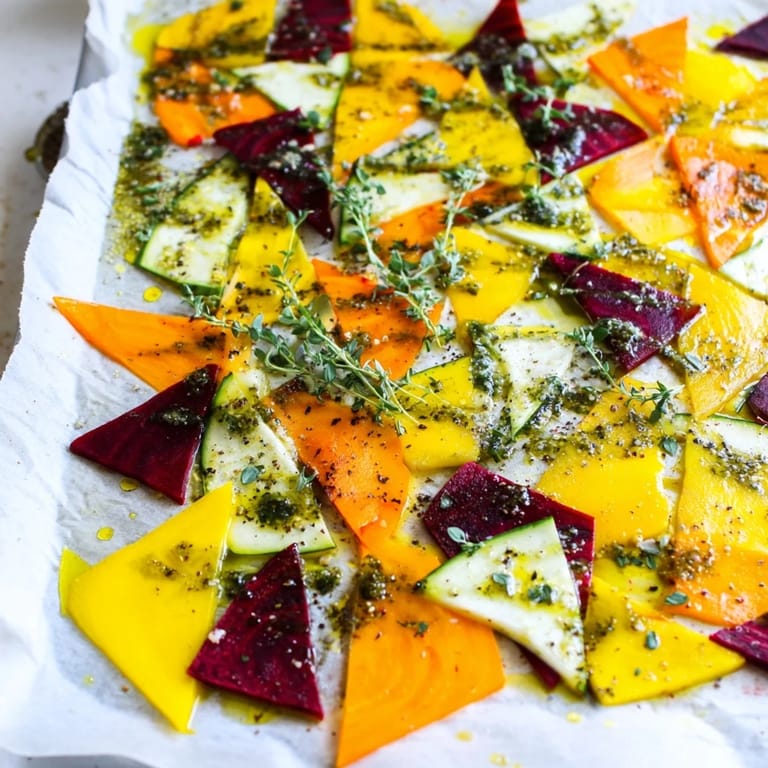
- Now comes the meditation part. Slice your cucumber, beet, watermelon radish, and mango into thin geometric shapes—think triangles, parallelograms, irregular polygons. Keep them roughly 1 cm thick so they stand proudly on the platter. A sharp knife is your friend here. If you have small cookie cutters, they can help you create perfectly uniform shapes, but honestly, the slight irregularity of hand-cut geometry is what makes this feel artistic rather than overly precious. Take your time. This isn't rushing
- Dice the avocado and feta:
- Cut your avocado into small cubes or wedges. Do this just before assembly so it stays bright and won't oxidize. For the feta, cut it into geometric blocks or prisms that echo the shapes around it. This cheese is salty, so a little goes a long way visually and flavor-wise
- Build your mosaic:
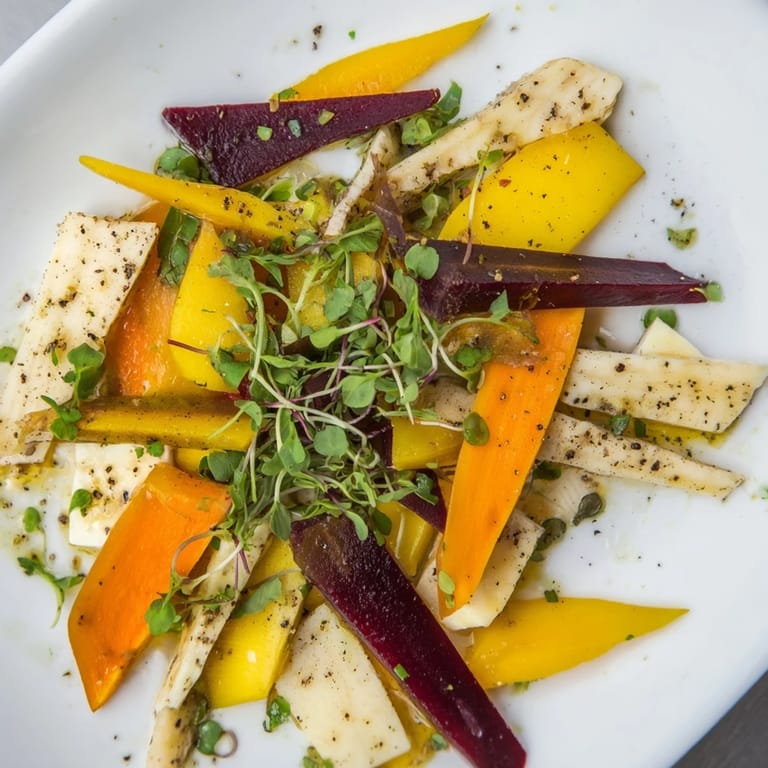
- This is where the magic happens. Arrange all your pieces across the platter, placing them close together without overlapping. You're creating a visual composition here—think about color distribution. Don't cluster all the golden tones together. Let the pale cucumber sit beside the ruby beet beside the pink watermelon radish. Step back. Adjust. Move things around like you're a curator arranging a gallery wall
- Finish with oil and acid:
- Drizzle your best olive oil evenly over the entire arrangement. Then add the lemon juice, letting it pool gently between the pieces. This is what brings everything together—literally and emotionally
- Season with care:
- Sprinkle flaky sea salt across the composition. The bigger flakes matter here because you can see them, and they catch the light. Crack fresh black pepper over everything. Don't be shy—the pepper adds visual depth and a gentle bite of spice
- The final touch:
- Scatter microgreens or fresh herbs across the top like confetti. Cilantro adds a bright green that makes everything pop. Basil feels more Mediterranean and elegant. Choose based on your mood and what you have on hand
- Serve immediately:
- This dish is about clean lines and vibrant colors. The longer it sits, the more the liquids mingle and soften the edges. You want to present it in its full geometric glory, so bring it straight to the table and let people admire it before diving in
 Save to Pinterest
 I served this at a dinner party for a chef friend of mine, someone whose opinion I genuinely feared. She took one look at it before eating and said, 'This is what I wish I'd thought of first.' That's when I realized this dish isn't just about making food look beautiful—it's about asking people to slow down and really see what they're about to eat.
The Art of Geometric Cutting
The beauty of this dish lives entirely in how you cut it. Geometric shapes aren't just for show—they force you to engage with your ingredients differently. When you're making a triangle instead of a slice, you notice textures you might have missed. The firmness of the mango, the slight give of the avocado, the crisp snap of the cucumber. Cookie cutters are helpful if you want perfect precision, but honestly, a sharp knife and a little intention can create something that feels even more intentional and human. The slight irregularities are what make it look like art rather than a manufactured product.
The Color Conversation
Half the magic of this dish is the visual dialogue between colors. The golden beet talks to the golden mango. The pale cucumber creates negative space that lets the watermelon radish glow. The white and pale green of the avocado and feta act like breathing room. When you're arranging, step back and think about balance. You want your eye to travel across the plate with interest, not to get stuck in one corner because all the red tones clustered together. This is why choosing ingredients with visual variety matters as much as flavor balance.
What Makes This Feel Special
In a world of plated salads and composed appetizers, something about this dish feels different. Maybe it's because it requires zero cooking, so there's no heat to blur the edges or dull the colors. Maybe it's because each ingredient stands separate but connected, like voices in a harmony. Or maybe it's just that we don't usually take this much care with vegetables. Whatever it is, people notice. They pause. They feel like they're getting something special.
- Make it ahead in spirit by prepping all ingredients separately, but assemble it only minutes before serving to keep everything crisp and vibrant
- If you're nervous about avocado browning, toss it lightly with lemon juice right before placing it on the platter
- This pairs beautifully with a crisp Sauvignon Blanc or even a light sparkling wine that echoes the clean, bright feeling of the dish
 Save to Pinterest
 This dish taught me that food doesn't have to be complicated to be memorable. Sometimes the most elegant thing you can do is take beautiful ingredients, respect their natural colors and textures, and let them speak for themselves. That's when food becomes art.
Recipe Q&A
- → How should the vegetables and fruits be cut?
Slice ingredients into a variety of geometric shapes like triangles, parallelograms, hexagons, and irregular polygons about 1 cm thick for visual interest.
- → What type of cheese is best for this dish?
Use a block of feta cheese cut into cubes or prisms to complement the geometric theme and offer a salty contrast.
- → How is the arrangement enhanced for flavor?
Drizzle with extra virgin olive oil and lemon juice, then season with flaky sea salt and freshly cracked black pepper to enhance brightness and seasoning.
- → Can this appetizer be made vegan?
Yes, swap feta cheese for firm tofu to maintain texture and cater to vegan dietary preferences.
- → What garnishes work well with this appetizer?
Microgreens or fresh herbs such as basil or cilantro add color, freshness, and an aromatic finish.
- → What tools help with precise cutting?
A sharp chef’s knife and small cookie cutters can aid in creating clean, distinctive geometric shapes.