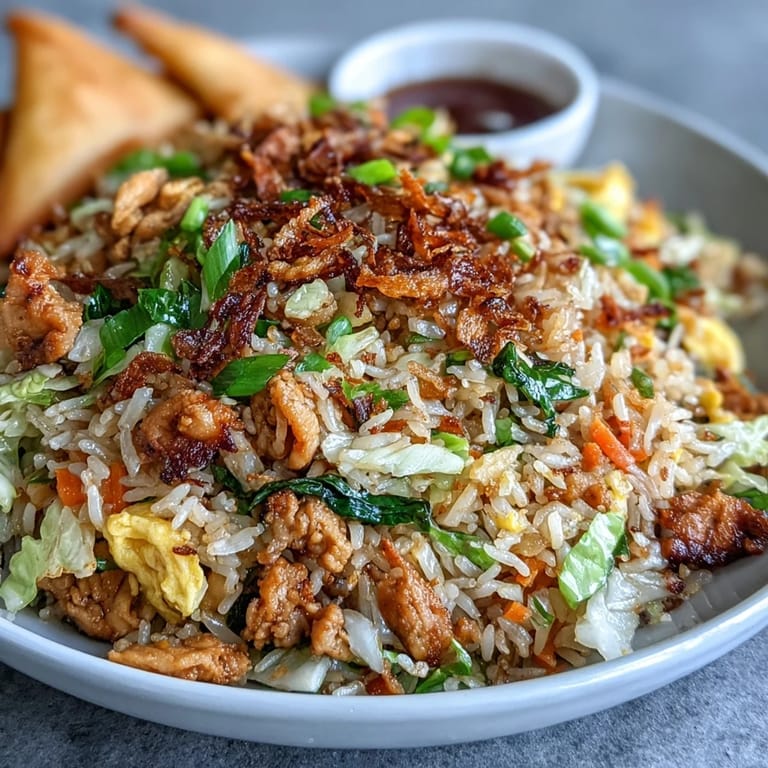
 Save to Pinterest
 My neighbor burst through the kitchen door one Tuesday evening, clutching a takeout container and declaring that egg roll bowls had just changed her life. She insisted I try hers, and within two bites, I understood the hype—all that crispy, savory goodness without the wrapper. That night, I couldn't stop thinking about how to make it my own, and by Friday, I'd married those flavors with fried rice and never looked back. Now this dish appears on my weeknight rotation whenever I need something that feels indulgent but comes together faster than delivery.
I made this for my sister's first night in her new apartment, armed with a wok and raw ambition. Her kitchen wasn't fully unpacked yet, but the smell of ginger and garlic hitting hot oil filled that space in a way that made it feel like home instantly. She took one bite and grinned—the kind of grin that says you've solved something important. That's when I realized this recipe does more than feed people; it anchors moments.
Ingredients
- Minced chicken, 500 g (1 lb): Chicken breaks into tiny, flavorful bits that absorb the sauces beautifully; buy it already minced to save time, or pulse thighs in a food processor for richer taste.
- Eggs, 2 large: These create pockets of silky richness throughout the rice and act as a subtle binder.
- Green cabbage, 2 cups thinly sliced: Cabbage stays crisp if you don't stir it constantly, giving you texture that rivals any fried rice worth its salt.
- Carrots, 1 cup julienned: Cut them thin so they cook in the same window as the cabbage, staying sweet and tender.
- Green onions, 1/2 cup sliced: Add these at the very end to keep their fresh bite alive.
- Garlic and ginger, 2 cloves and 1 tablespoon: These two are the perfume of the whole dish—don't skip them or rush them once they hit the pan.
- Jasmine rice, 3 cups cooked and chilled: Day-old rice is mandatory here because wet rice turns mushy; if you forget to chill it, spread it on a plate for 15 minutes while you prep other ingredients.
- Soy sauce, 3 tablespoons: Use tamari if gluten matters to you, and taste as you go because saltiness varies by brand.
- Oyster sauce, 1 tablespoon: This optional ingredient adds umami depth that makes people ask what your secret is.
- Sesame oil, 1 tablespoon: A little goes a long way; too much tastes like perfume, so measure it.
- Rice vinegar, 1 teaspoon: This bright note prevents the dish from tasting heavy.
- Black and white pepper, 1/2 teaspoon and 1/4 teaspoon: The white pepper adds a subtle warmth that's almost invisible but deeply missed if absent.
- Sugar, 1/2 teaspoon: Just a whisper to round out the savory flavors and echo egg roll sweetness.
- Crispy fried onions and toasted sesame seeds, 1/4 cup and 1 tablespoon: These are the final flourish that makes people notice and compliment your cooking.
- Neutral oil, 2 tablespoons: Canola or vegetable oil won't compete with the other flavors.
Tired of Takeout? 🥡
Get 10 meals you can make faster than delivery arrives. Seriously.
One email. No spam. Unsubscribe anytime.
Instructions
- Set your mise en place:
- Slice the cabbage, julienne the carrots, beat the eggs in a small bowl, mince the garlic, grate the ginger, and make sure your rice is chilled and any clumps are loosened. This 5-minute prep means the actual cooking flows without panic.
- Brown the chicken:
- Heat 1 tablespoon oil over medium-high heat until it shimmers, then add the minced chicken and let it sit for 30 seconds before stirring—this creates little crispy edges that taste incredible. Break it into small pieces as it cooks, about 5 minutes total until no pink remains.
- Bloom the aromatics:
- Add garlic and ginger, stir constantly for just 1 minute until the kitchen smells like a Chinese restaurant. This brief moment unlocks their flavor.
- Cook the vegetables:
- Toss in cabbage and carrots, stirring often for 3 to 4 minutes until they soften slightly but still have a snap to them. You want them cooked, not surrendered.
- Scramble the eggs:
- Push everything to one side of the pan, pour the remaining oil into the cleared space, then add the beaten eggs. Scramble gently and slowly, letting them set into soft curds before mixing everything together. The eggs should look silky, not rubbery.
- Add the rice and season:
- Break up the chilled rice with your spatula as you add it to the pan, then drizzle in soy sauce, oyster sauce if using, sesame oil, rice vinegar, peppers, and sugar. Stir constantly for 3 to 4 minutes, making sure the rice grains separate and heat through evenly. Taste it now and adjust salt or acid as needed.
- Finish with green onions:
- Add the sliced green onions and cook for 1 minute more just to warm them through. This keeps their color bright and flavor fresh.
- Plate and garnish:
- Spoon the fried rice into bowls and scatter crispy fried onions and toasted sesame seeds over the top while it's steaming hot. This final texture makes the dish feel complete.
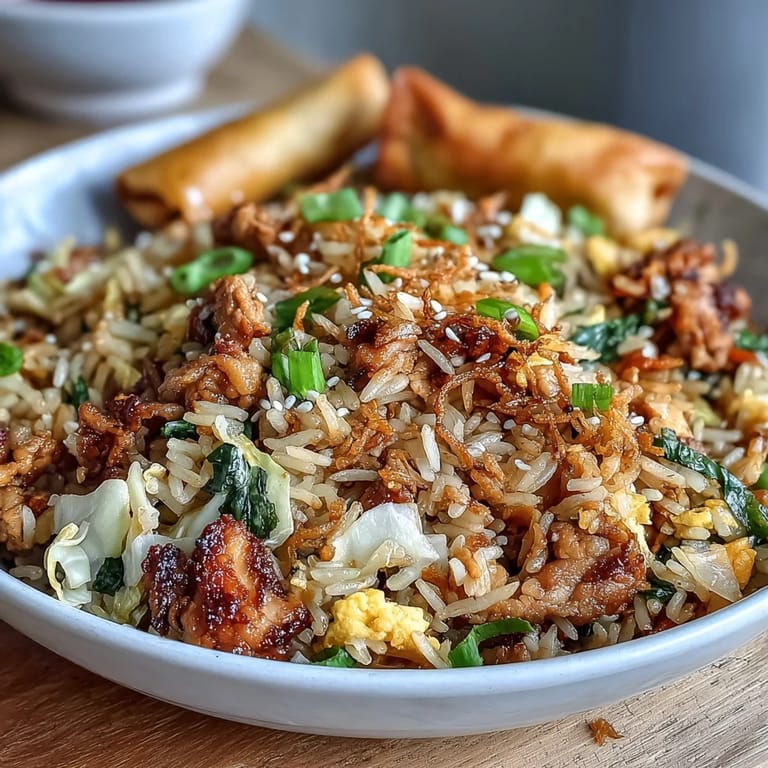 Save to Pinterest
 My son, who usually picks around anything with vegetables, cleared his plate without comment and asked for seconds. That quiet moment of approval meant more than any compliment because it meant I'd found a way to sneak vegetables into something that tasted like an indulgence. Food has a way of doing that—changing conversations, softening resistance, making people happy.
Why Cold Rice Matters So Much
The first time I tried this with fresh rice, it absorbed the sauces and turned into a clumpy, wet mess that broke my heart a little. The difference between that disaster and the fluffy, separated grains in this recipe comes down to one simple thing: moisture. Cold rice has already set and won't absorb liquid as aggressively, so each grain stays distinct and crispy at the edges. If you're in a real time crunch and only have warm rice, spread it on a clean baking sheet and pop it in the freezer for 10 minutes—it won't be perfect, but it'll work in a pinch.
Building Flavor Layers
This dish works because it builds flavor in stages rather than dumping everything in at once. The chicken gets seasoned by browning it first, the garlic and ginger announce themselves in that blooming moment, the vegetables add sweetness and crunch, and the eggs contribute richness and umami. By the time you add the liquid seasonings, your foundation is already complex and interesting. Taste as you go and don't be afraid to add a little more soy sauce or sesame oil if something feels flat—your palate is always right, even if the recipe is.
Endless Possibilities and Secret Tweaks
This recipe is actually a framework, not a law. I've made it with turkey, pork, and even tofu for vegetarian nights, and each version tastes like itself while still tasting like home. Sometimes I add water chestnuts for crunch, or cashews for richness, or a handful of frozen peas because they look beautiful. The egg roll flavor comes from that savory-sweet balance, so as long as you keep the soy, the ginger, and the brightness of the vinegar, you can build outward in whatever direction sounds good to you. Here are some swaps I've loved: substitute minced turkey for a leaner option, add crispy cashews or peanuts for extra texture, or stir in frozen peas and corn for color and sweetness.
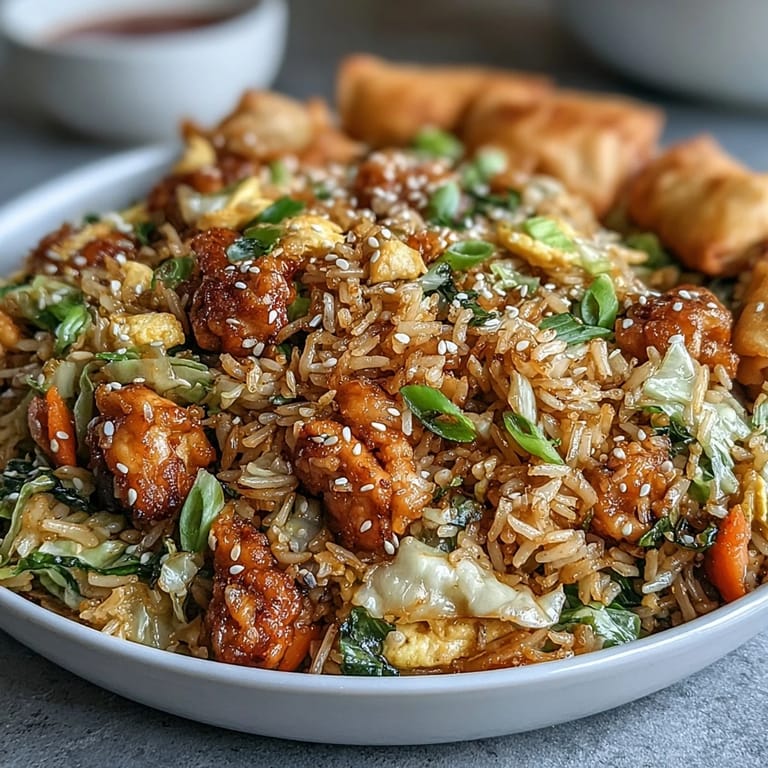 Save to Pinterest
 This is the kind of dish that proves you don't need fancy techniques or rare ingredients to cook something that tastes like restaurant food. It asks only for attention, good rice, and the willingness to taste and adjust as you go.
Recipe Q&A
- → What makes this different from regular fried rice?
This version incorporates classic egg roll flavors like cabbage, carrots, and that signature seasoning blend. The texture is heartier thanks to the minced chicken, creating more substance than traditional vegetable fried rice.
- → Can I use fresh rice instead of chilled?
Chilled, day-old rice works best as it's drier and prevents clumping. Fresh rice tends to become mushy. If you must use fresh rice, spread it on a baking sheet and freeze for 15 minutes before cooking.
- → What protein alternatives work well?
Ground turkey, pork, or even crumbled tofu make excellent substitutes. Each brings its own character while maintaining the dish's soul. Cook times remain similar across proteins.
- → How do I achieve restaurant-style texture?
Use high heat, a well-seasoned wok or large skillet, and avoid overcrowding the pan. Let ingredients sear slightly between stirring—this creates those coveted crispy edges and smoky notes.
- → Can this be made gluten-free?
Absolutely. Swap regular soy sauce for tamari and either skip the oyster sauce or use a certified gluten-free version. The flavors remain just as robust and satisfying.
- → What vegetables can I add or substitute?
Bean sprouts, water chestnuts, snap peas, or bell peppers work beautifully. The key is maintaining that crunch factor while keeping cooking times relatively short.