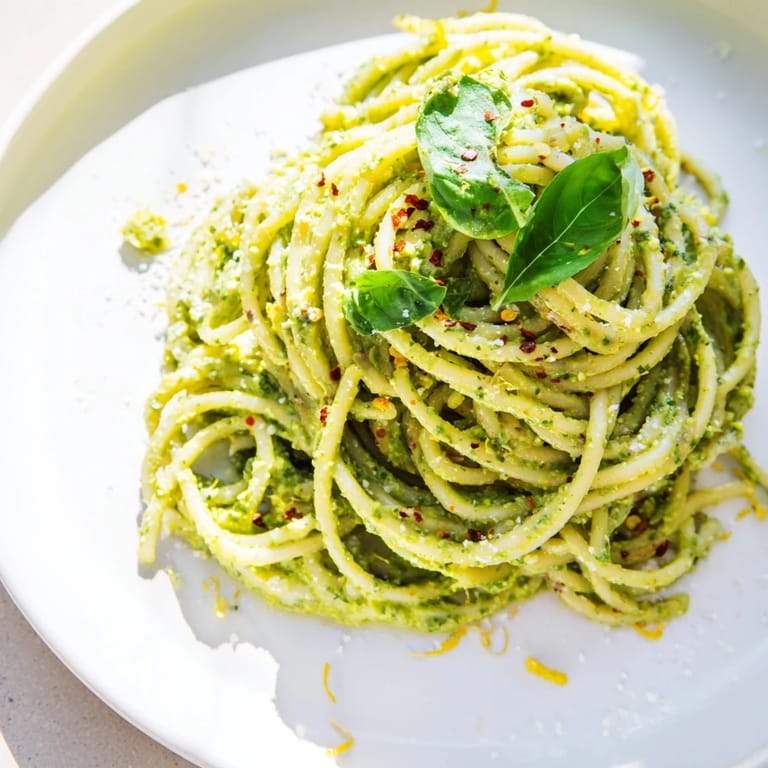
 Save to Pinterest
 One sweltering afternoon, I watched my neighbor scoop avocado straight into a pot of hot pasta and toss it like she'd invented the technique herself, and honestly, that reckless simplicity stuck with me. Years later, standing in my own kitchen with three overripe avocados and no dinner plan, I finally understood what she was doing—she wasn't making something complicated, she was making something that tasted like summer in a bowl. That first time I tried it myself, the sauce came together so seamlessly I almost didn't trust it, half expecting the avocado to separate or turn bitter. It didn't. Instead, it clung to the pasta like silk, bright with lemon and alive in a way that made me want to make it again that very week.
I made this for a potluck once, nervous that a green pasta would look unappetizing next to everyone else's casseroles and baked goods. My friend Maria took one bite and immediately made a plate to take home, and by the end of the night, the bowl was scraped clean while other dishes sat half-full. It became the thing people asked me to bring, which taught me that the simplest food is often the most memorable.
Ingredients
- Spaghetti or linguine, 350 g: Thinner pasta drinks in the sauce better than thick noodles, so skip the penne here even if you love it elsewhere.
- Ripe avocados, 2: They should yield to gentle pressure but not be mushy or brown inside; this is your moment to understand your avocados by touch.
- Garlic clove, 1: Fresh garlic matters more in raw sauces because nothing mellows it out, so use a proper clove, not powder.
- Fresh basil leaves, 20 g: Tear them by hand just before blending so you don't bruise the leaves or lose the brightness.
- Fresh lemon juice, 2 tbsp: Bottled juice tastes different—use fresh when you can because the acid here is doing real work.
- Extra-virgin olive oil, 60 ml: The quality matters; a grassy, peppery oil makes the whole sauce taste more like itself.
- Grated Parmesan cheese, 30 g: Freshly grated changes the texture of the sauce; pre-grated cheese doesn't melt in the same way.
- Chili flakes, 1/4 tsp: Optional, but they wake up avocado in a way that makes you wonder why more people don't do it.
- Salt and pepper, to taste: Taste as you go because these are your final adjustments.
Tired of Takeout? 🥡
Get 10 meals you can make faster than delivery arrives. Seriously.
One email. No spam. Unsubscribe anytime.
Instructions
- Boil the pasta:
- Get your water really salty, almost like seawater, and get it to a rolling boil so the pasta cooks evenly. Cook until it's tender but still has a little bite, then scoop out a mug of that starchy water before you drain it—that water is the secret to getting the sauce silky and smooth.
- Make the sauce:
- While the pasta is still cooking, throw your avocado, garlic, basil, lemon juice, olive oil, Parmesan, chili flakes, salt, and pepper into a food processor and blend until it's completely smooth and pale green. If it looks thick and chunky, splash in some of that pasta water you saved and blend again until it's sauce, not paste.
- Toss it together:
- Pour the hot pasta into the bowl with the sauce and toss gently so every strand gets coated, adding more pasta water a splash at a time until the sauce clings to the noodles like you want it to. Don't let it sit—pasta cools fast and the sauce sets, so keep tossing and serve immediately.
- Plate and finish:
- Divide into bowls and top with extra Parmesan, a few torn basil leaves, and a whisper of lemon zest if you have it. Serve right away while everything is still warm and the avocado tastes fresh.
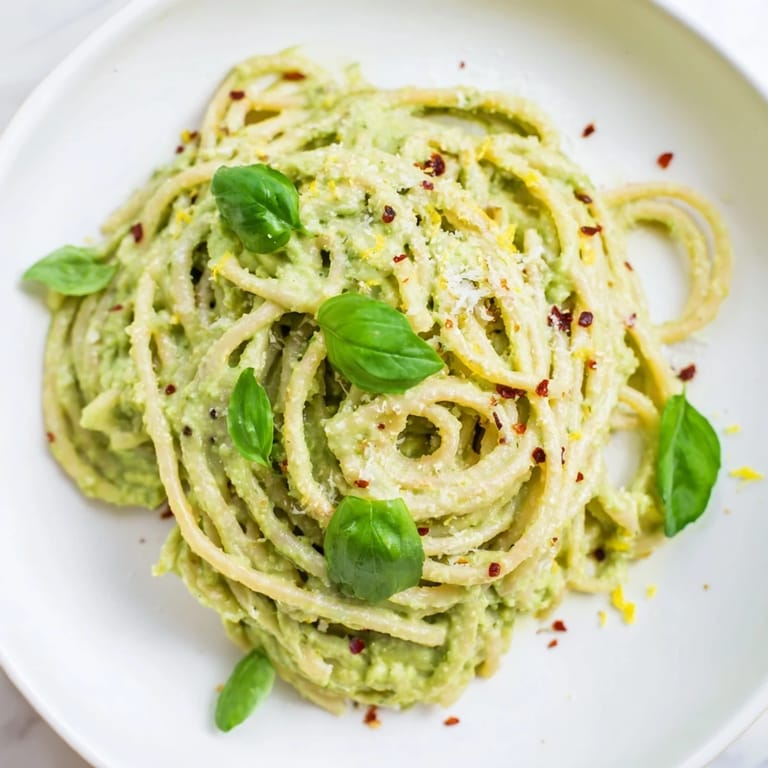 Save to Pinterest
 There was an evening when I made this for my partner after a long day, and watching him eat something so green and bright, something that came together while I was barely thinking about it, felt like I'd done something right. Food doesn't need to be complicated to matter.
Why Avocado Sauce Works
Avocado is naturally creamy without being heavy, and when you blend it into a paste and toss it with hot pasta, it becomes a sauce that clings and coats without needing cream or butter. The fat is already there, the richness is built in, and all you're really doing is adding seasoning and brightness. It's one of those moments in cooking where you realize the ingredient was doing the work all along, and all your fancy techniques were just getting in the way.
The Lemon Trick
Lemon juice does two things here that matter more than you'd think: it keeps the avocado from turning brown, and it cuts through the richness so the dish doesn't feel heavy or one-note. Without it, the sauce tastes creamy but muted; with it, suddenly everything wakes up. I learned this by accident once when I forgot the lemon and had to squeeze it over the top of already-plated pasta, and even then it saved the dish, though next time I'll know better.
Variations and Swaps
The beauty of this sauce is that it's a blank canvas once you understand how it works. Cherry tomatoes add a burst of acid and sweetness, sautéed mushrooms bring earthiness that echoes the basil, grilled chicken turns it into something more substantial if you're feeding people who need protein. You can make it vegan by skipping the Parmesan or using nutritional yeast if that matters to your table. Experiment, taste, adjust, and trust yourself to know what tastes good.
- Vegan version: Use nutritional yeast instead of Parmesan or omit the cheese altogether.
- If your avocados aren't quite ripe, let them sit on the counter overnight before you make this.
- Always taste the sauce before you add it to the pasta so you can fix the seasoning while you still have time.
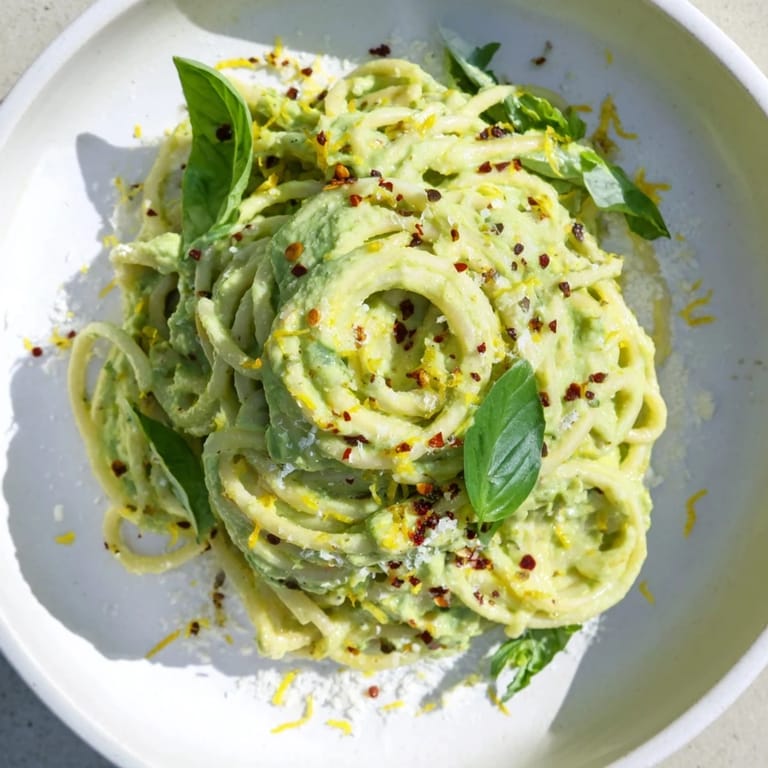 Save to Pinterest
 Make this when you want something bright and quick but don't want to feel like you skipped dinner. It's the kind of meal that reminds you why cooking matters.
Recipe Q&A
- → How do I achieve the perfect sauce consistency?
Blend the avocado mixture thoroughly and add reserved pasta water gradually until the sauce reaches a creamy yet pourable texture that coats the pasta evenly.
- → Can I substitute Parmesan for a vegan option?
Yes, nutritional yeast can replace Parmesan to maintain a cheesy flavor while keeping the dish vegan-friendly.
- → What pasta types work best with the avocado sauce?
Spaghetti or linguine hold the creamy sauce well, allowing the flavors to blend seamlessly in each bite.
- → Is it necessary to use fresh basil in the sauce?
Fresh basil adds aromatic brightness and complements the avocado’s creaminess, enhancing the overall flavor profile.
- → How can I add protein to this dish?
Incorporate sautéed mushrooms, grilled chicken, or cherry tomatoes to boost protein and add flavor variety.