 Save to Pinterest
 My neighbor brought this cake to a garden party last April, and I watched people come back for thirds—something about the way the cream cheese frosting caught the afternoon light made everyone slow down and actually taste it. I pestered her for the recipe that same evening, and when I finally made it myself, I understood why she guarded it so carefully. The kitchen smelled like warm cinnamon and earth, and something about grating fresh carrots by hand felt like spring was actually happening in my kitchen, not just on the calendar.
I made this the first time for my partner's birthday during a rainy week when neither of us had left the house much, and there was something quietly perfect about spending an afternoon layering and frosting in our little kitchen while rain tapped the windows. By the time it was done, the apartment smelled so good that we both just sat with it for a moment before even cutting a slice, which almost never happens.
Ingredients
- All-purpose flour (2 1/2 cups): This is your structural backbone, so don't skip the sifting step or you'll end up with dense layers that taste more like hockey pucks than cake.
- Baking powder and baking soda (2 tsp and 1 1/2 tsp): The combination matters because baking soda reacts with the acidic applesauce, creating lift without over-relying on just one leavening agent.
- Warm spices (cinnamon, nutmeg, ginger): These aren't just background flavor—they're what make this taste like spring instead of just tasting like orange frosting on sponge cake.
- Eggs at room temperature: Cold eggs won't incorporate properly into the batter, and you'll end up with a grainy, separated mixture that bakes unevenly.
- Both granulated and brown sugar (1 1/2 cups and 1/2 cup): The brown sugar adds moisture and depth while granulated keeps the cake from being too dense.
- Vegetable oil (1 cup): This keeps the cake tender and moist longer than butter would, which is why it doesn't dry out even after a day or two.
- Applesauce (1/2 cup): It adds moisture and a subtle sweetness while reducing how much oil you need—a kitchen hack that actually works and tastes good.
- Finely grated carrots (3 cups): The finer you grate them, the more they dissolve into the cake itself rather than creating little carrot chunks that feel somehow wrong in frosting.
- Walnuts (1 cup): Chop them by hand if you have time; the varied size creates better texture than a food processor would.
- Cream cheese (16 oz) and unsalted butter (1/2 cup): Both must be softened completely or you'll get a gritty, separated frosting that no amount of beating will fix.
- Powdered sugar (4 cups): Sift it even if you think it's already fine; lumps in frosting are surprisingly noticeable on a finished cake.
Tired of Takeout? 🥡
Get 10 meals you can make faster than delivery arrives. Seriously.
One email. No spam. Unsubscribe anytime.
Instructions
- Set up your pans and preheat:
- Get your oven to 350°F and line three 8-inch pans with parchment paper that you've poked a few times so it stays put. Having everything ready before you start mixing prevents that panicked scramble when the batter is ready but your pan isn't.
- Mix dry ingredients separately:
- Whisk flour, baking powder, baking soda, and all the warm spices together in a bowl—this distributes the leavening and spices evenly so you don't bite into a pocket of pure cinnamon. It feels like an extra step but it genuinely changes the texture.
- Cream the sugars and eggs:
- Beat the eggs with both sugars until the mixture is pale and noticeably thicker, which takes about 3-4 minutes with an electric mixer. This aerates the batter and creates the tender crumb that makes people ask if you used a mix.
- Add the wet ingredients gently:
- Pour in oil, applesauce, and vanilla while mixing, then stop as soon as everything is incorporated—overmixing at this stage toughens the cake. The batter should look smooth but not overworked.
- Fold in carrots and walnuts:
- Use a spatula and fold rather than beat, turning the batter over itself until the carrots and nuts are distributed throughout. This is where patience actually matters because aggressive mixing activates gluten and ruins the tender crumb.
- Divide and bake:
- Split the batter evenly among the three pans (a kitchen scale helps here if you're particular), then bake until a toothpick comes out clean with maybe a crumb or two clinging to it, about 30-35 minutes. Don't open the oven door before 25 minutes or the cakes might sink in the middle.
- Cool properly:
- Let the cakes sit in their pans for 10 minutes so they set enough to turn out, then flip onto a wire rack where air can circulate underneath. Cooling completely before frosting prevents the frosting from melting into a mess.
- Make the frosting smooth and fluffy:
- Beat softened cream cheese and butter together until you can't see any streaks, then gradually add sifted powdered sugar so it doesn't cloud up your kitchen. Keep beating for another minute after everything is combined to get it fluffy and spreadable.
- Level and layer:
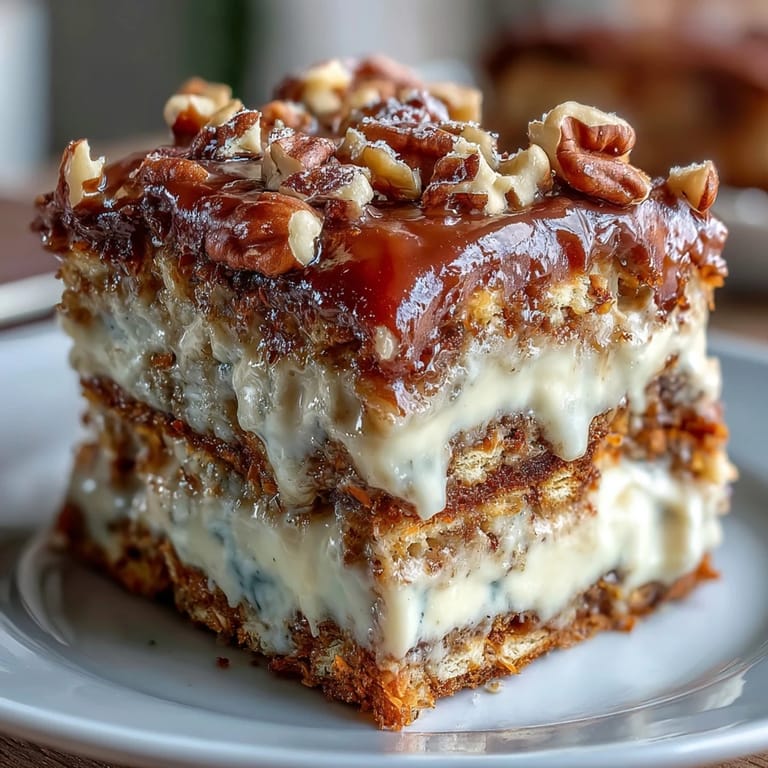
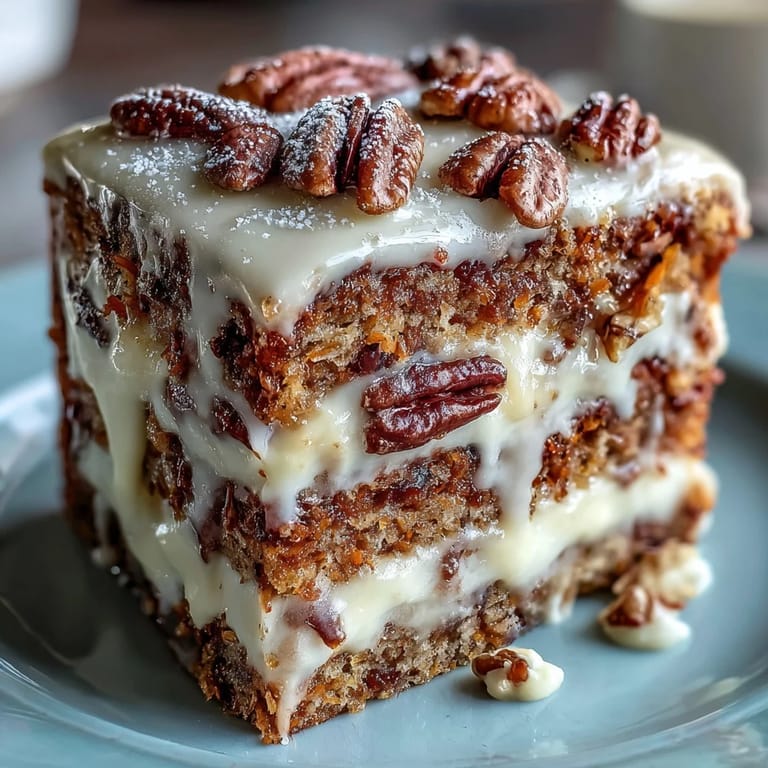
- If your cake layers domed on top, use a serrated knife to slice them level so they stack straight without sliding around. Place the first layer on your plate, add a generous spread of frosting, then repeat until all three layers are stacked.
- Frost the outside:
- Use an offset spatula or even a butter knife to spread frosting on the top and sides, working in sections and doing a crumb coat first if there are loose crumbs flying around. A warm offset spatula dipped in hot water smooths frosting beautifully if you care about presentation.
- Decorate and chill:
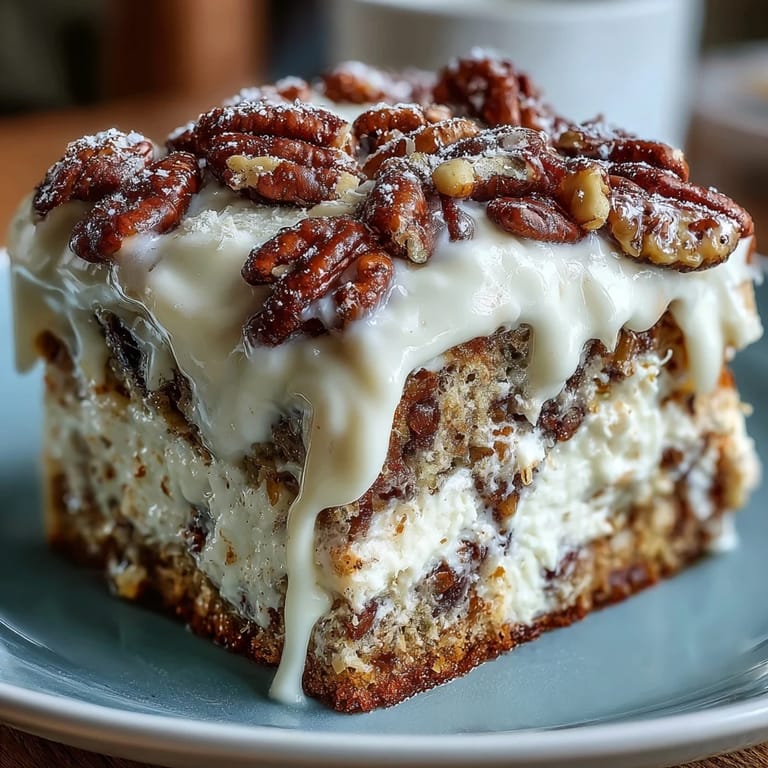
- Scatter extra walnuts on top and add edible flowers or carrot curls if you want it looking springy, then refrigerate for at least an hour so the frosting sets up. The cake actually improves if it sits overnight in the fridge before serving.
 Save to Pinterest
 I made this cake for a colleague's wedding shower, and watching her face when she tasted it was one of those small kitchen moments that stuck with me—this look of genuine surprise that something homemade could be that good. It taught me that food made with attention and slight personal touches becomes something different than just dessert.
The Math Behind the Moisture
The combination of applesauce and oil is deliberate, not accidental—applesauce is mostly water, so it adds moisture and binding without adding fat, while the oil ensures the cake stays tender even days later. When I tried making carrot cake with just butter, it was dry by the second day, but this version somehow stays soft and crumbly at the same time. The ratio of wet to dry ingredients is slightly higher than a typical cake, which is why you need three pans instead of two; if you tried to make this in just two layers, the cake would be gummy and take forever to bake through.
Why Fresh Carrots Matter More Than You'd Think
Canned or packaged shredded carrots have had most of their moisture removed for shelf stability, so they absorb liquid from the batter instead of contributing it—you end up with a drier cake that tastes more like cardboard decorated with cream cheese. Fresh carrots are about 88 percent water, which sounds like it might make the cake wet, but it actually keeps the crumb tender and alive. I learned this the hard way by using a bag of pre-shredded carrots from someone else's pantry and wondering why my cake turned out dense when I'd followed the recipe exactly.
Frosting Tricks and Timing
Cream cheese frosting is forgiving if you treat it right, but temperamental if you don't—it breaks if the ingredients are cold or if you overmix it, and it gets greasy if you leave it out at room temperature too long. The secret is making sure everything is genuinely soft before you start, which sometimes means letting cream cheese sit out for 30 minutes while you finish cooling the cakes. If you're frosting the cake layers while they're warm, the frosting melts into puddles and slides down the sides; if you wait until they're completely cool and even slightly chilled, it spreads like it's supposed to.
- A crumb coat (a thin first layer of frosting) locks down loose crumbs so your second, prettier coat looks intentional instead of speckled.
- An offset spatula dipped in hot water every few strokes smooths frosting beautifully and makes you look like you actually know what you're doing.
- The cake tastes even better the next day when all the flavors have settled and mingled overnight in the fridge.
 Save to Pinterest
 This cake has become my go-to when I want to celebrate without feeling like I'm showing off, because it's clearly homemade but tidy enough to look intentional. It's the kind of dessert that makes people slower down and actually talk about what they're eating.
Recipe Q&A
- → What spices are used in this carrot dessert?
Ground cinnamon, nutmeg, and ginger provide warm, aromatic flavors that complement the carrots and walnuts perfectly.
- → Can I prepare the layers ahead of time?
Yes, the layers can be baked a day in advance and refrigerated. Bring them to room temperature before assembling and serving.
- → How do I achieve a moist texture in the cake layers?
Incorporating applesauce, oil, and finely grated carrots helps maintain a moist and tender crumb throughout the layers.
- → What decorating options are recommended?
Chopped walnuts, edible flowers, or carrot curls add both visual appeal and textural contrast to the final presentation.
- → Are there common allergens present?
This dessert contains eggs, wheat (gluten), tree nuts (walnuts), and dairy products such as cream cheese and butter.