 Save to Pinterest
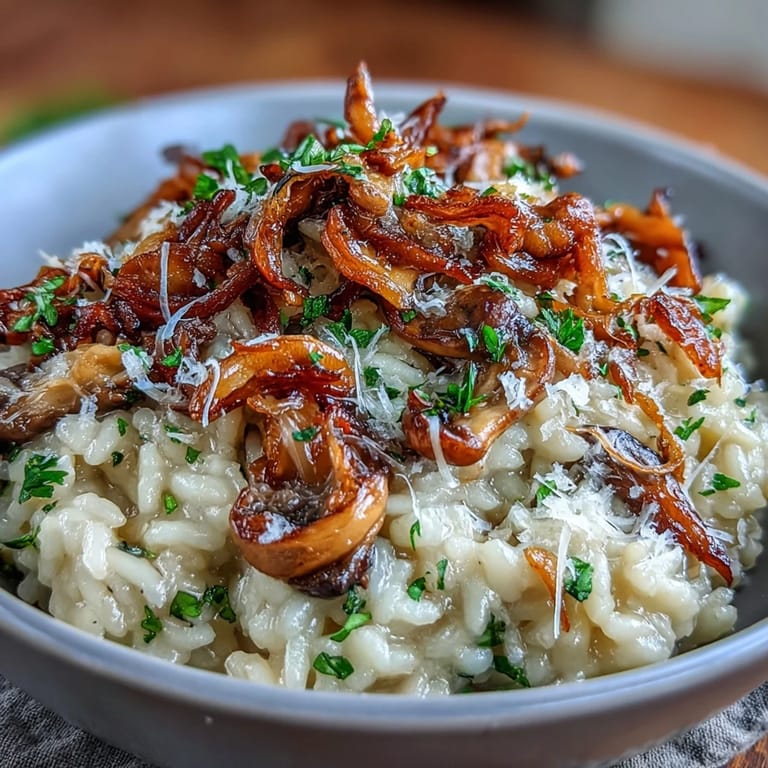
 There's something about the smell of onions turning golden that makes me pause whatever I'm doing. One rainy afternoon, I'd set out to make something quick, but fifty minutes later I was still standing at the stove, watching those thin slices deepen into caramel, and suddenly the whole dish clicked into place. That patient, slow sweetness paired with earthy mushrooms became this risotto that tastes far more impressive than it has any right to be.
I made this for my neighbor who'd just moved in, and she sat down with this puzzled, happy expression like she couldn't believe something so rich came from my kitchen. We ended up talking for two hours over bowls of it, and she's asked for the recipe every few months since.
Ingredients
- Yellow onions (2 large, thinly sliced): The longer you caramelize these, the deeper the flavor gets—I learned the hard way that rushing this step costs you everything.
- Cremini or button mushrooms (250 g / 9 oz, sliced): These add savory depth; cremini give a slightly earthier note if you can find them, but either works beautifully.
- Garlic (3 cloves, minced): Just enough to whisper in the background without overpowering the onions and mushrooms.
- Fresh parsley (2 tbsp chopped, plus more for garnish): This brightens everything up at the very end—don't skip it or omit it early.
- Arborio rice (300 g / 1½ cups): This short-grain rice releases starch as it cooks, which creates that signature creamy texture without cream.
- Grated Parmesan cheese (60 g / ½ cup): Adds a salty, nutty finish that ties everything together.
- Unsalted butter (40 g / 3 tbsp): Split between caramelizing and finishing—it's essential for richness.
- Heavy cream (60 ml / ¼ cup, optional): Makes it even silkier, but truly optional if you want to keep things lighter.
- Low-sodium vegetable broth (1 L / 4 cups, kept warm): Keeping it warm means the rice cooks evenly without shocking the grains with temperature changes.
- Dry white wine (120 ml / ½ cup): The acidity brightens the richness; don't use anything you wouldn't drink.
- Olive oil (2 tbsp): Use your better oil here since it flavors the final dish.
- Salt and black pepper: Taste as you go—you'll season in layers, not all at once.
Tired of Takeout? 🥡
Get 10 meals you can make faster than delivery arrives. Seriously.
One email. No spam. Unsubscribe anytime.
Instructions
- Start the caramelization:
- Heat 1 tablespoon each of olive oil and butter in your largest heavy pan over medium-low heat, then add those thin onion slices with a small pinch of salt. This low heat is crucial—rushing it makes them brown instead of caramelize. Stir every few minutes for 20 to 25 minutes until they're deep golden and almost melting into the pan.
- Cook the mushrooms:
- Transfer those caramelized onions to a bowl, add the remaining tablespoon of oil to the same pan, and crank the heat to medium. Slice your mushrooms and let them sit undisturbed for a minute so they brown properly, then stir and cook about 7 minutes total until any moisture has evaporated and they're golden. Add your minced garlic and cook just until fragrant, about 1 minute.
- Toast the rice:
- Stir in the Arborio rice and keep it moving for 2 minutes—you want each grain coated and slightly toasted but not browned. This step matters because it helps the rice hold its shape as it absorbs liquid.
- Add the wine:
- Pour in that white wine and stir gently until most of it's absorbed, about 2 minutes. You'll see the pan almost dry out before moving forward, and that's exactly what you want.
- Build the creaminess with broth:
- Now comes the patient part—add your warm broth one ladle at a time, stirring gently and waiting until each addition is mostly absorbed before adding the next. After about 18 to 20 minutes, the rice should be creamy and tender but still have a slight firmness when you bite it (that's al dente). You might not use all the broth, and that's fine.
- Finish and rest:
- Stir in those caramelized onions, the remaining butter, Parmesan, and cream if you're using it. Season with salt and pepper to taste, then take the pan off the heat and let it sit for 2 minutes—this lets the risotto settle into its creamiest self. Stir in the fresh parsley right before serving and top with extra Parmesan and a pinch more parsley.
 Save to Pinterest
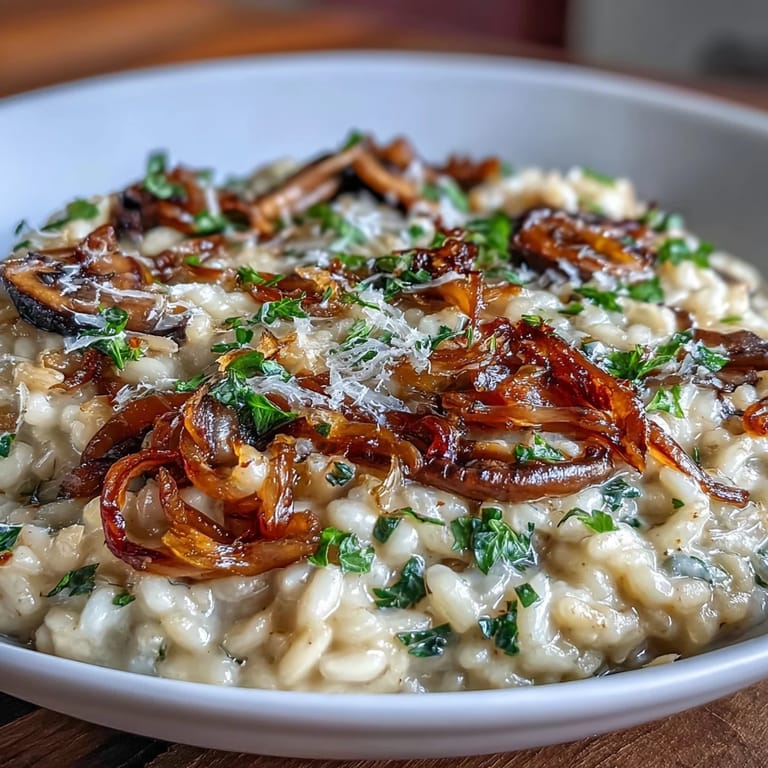
 The first time I nailed the texture—that perfect balance between creamy and still-has-tooth—I understood why risotto shows up on fancy restaurant menus. It's not about complexity; it's about patience and paying attention.
The Magic of Caramelized Onions
Those 20 minutes of caramelizing onions might feel long, but they're doing something essential—breaking down the onion's natural sugars into something deep, almost sweet, that doesn't taste like onion anymore. I used to skip this when I was in a hurry, and the risotto always felt flat and one-dimensional. Now I know that step is the foundation of everything else tasting right.
Why the Broth Matters
Using warm broth is one of those details that seems fussy until you understand why it works. Cold broth shocks the rice and causes uneven cooking, which means you end up with some grains mushy and others still crunchy. Keeping a pot of broth simmering on a back burner takes two minutes and changes everything about how smoothly the risotto comes together.
Making It Your Own
This is the beautiful thing about risotto—it's a template that welcomes additions without falling apart. I've stirred in baby spinach, added a handful of peas near the end, even drizzled truffle oil for special occasions. The onions and mushrooms stay constant, but you can adjust based on what you have or what sounds good to you.
- Stir in a handful of baby spinach or fresh peas during the final minute for color and nutrition.
- For a vegan version, swap the butter and Parmesan for plant-based alternatives and use vegetable broth throughout.
- A splash of truffle oil or a pinch of dried thyme adds sophistication without changing the core technique.
 Save to Pinterest
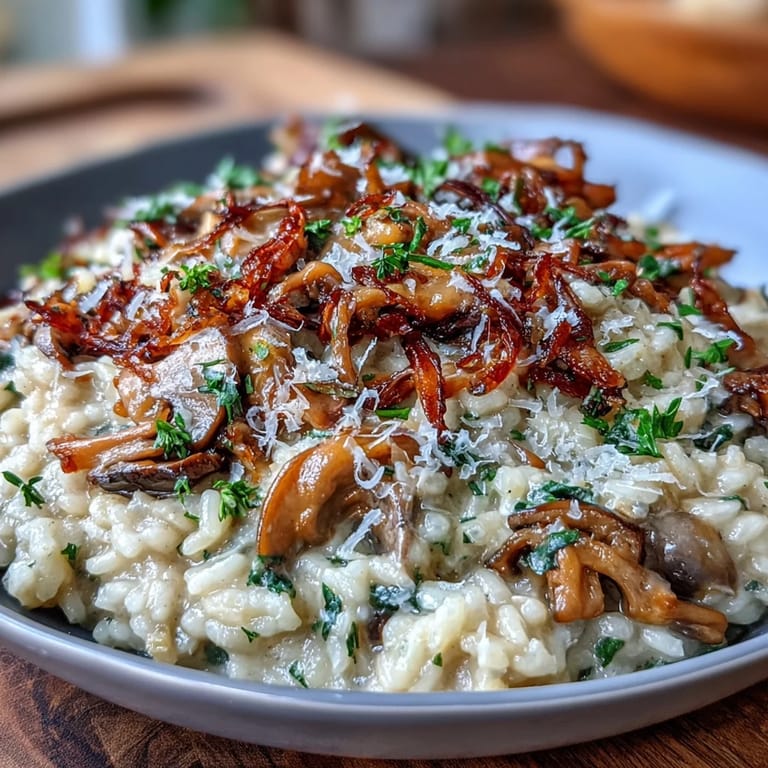
 This risotto has become my answer to the question, What should I make? when I want something that feels restaurant-quality but doesn't require any fuss or fancy ingredients. It's simple enough for a weeknight and impressive enough for people you want to feed well.
Recipe Q&A
- → How do I caramelize onions properly?
Cook sliced onions slowly over medium-low heat with a bit of oil or butter, stirring often until they turn golden brown and sweetly fragrant, about 20-25 minutes.
- → Can I use other mushrooms besides cremini?
Yes, button mushrooms or a mix of wild mushrooms work well, providing different earthiness and texture.
- → What wine pairs best with risotto?
Dry white wines like Pinot Grigio or Chardonnay complement the creamy texture and rich flavors perfectly.
- → Is it necessary to stir constantly while cooking?
Stirring gently and regularly helps release rice starches, creating the creamy consistency characteristic of risotto.
- → How can I make this dish vegan?
Use plant-based butter alternatives and omit or replace Parmesan with vegan cheese options for similar creaminess.
- → What kind of rice is best for this dish?
Arborio rice is ideal since its high starch content produces the creamy texture associated with risotto.