 Save to Pinterest
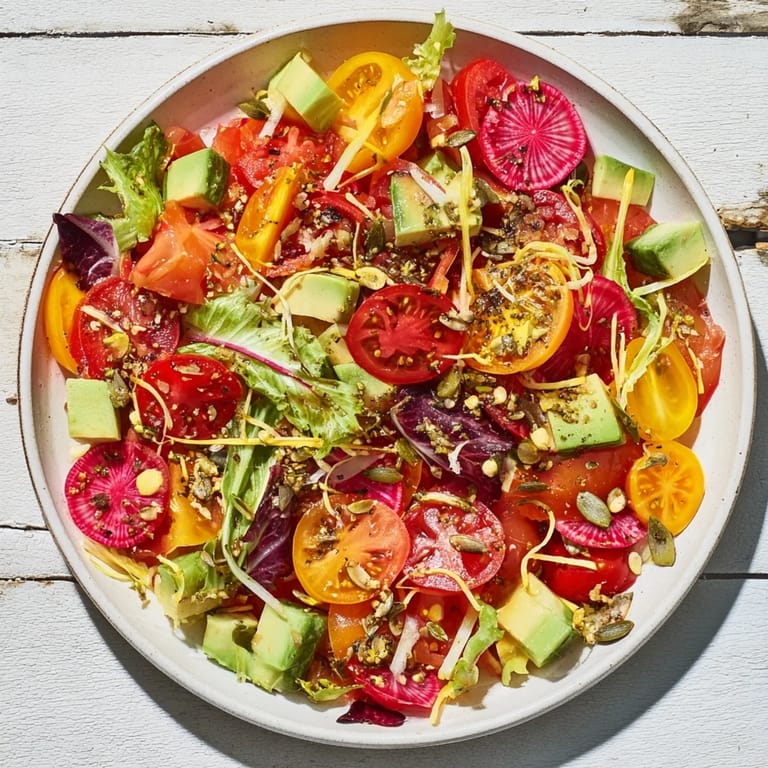
 I'll never forget the afternoon I wandered into a contemporary art gallery on a rainy Tuesday, standing mesmerized before a Jackson Pollock canvas—splashes of crimson, gold, and ultramarine dancing across white space with no apparent order, yet somehow perfectly balanced. That evening, I rushed home and raided my refrigerator, suddenly inspired to create something edible that captured that same wild, joyful energy. The Abstract Expressionist Splash was born from that moment, a salad that refuses to apologize for its chaos, where every color and texture celebrates its own boldness while somehow belonging together.
I made this for a dinner party last spring when my friend Elena brought her new partner over, and I watched them both hesitate before their first forkful—unsure if something this visually wild could actually taste good. The moment they tasted it, their skepticism melted into genuine delight. By the end of the meal, they were arguing over the last spoonful of that magenta-red watermelon mixed with creamy avocado, and I knew I'd created something memorable.
Ingredients
- Cherry tomatoes (red and yellow), 1 cup halved: These little flavor bombs are your color foundation—the reds and yellows create the first visual punch. Always taste one before you begin; a good tomato sets the entire tone.
- Golden beet, 1 small peeled and shaved: Raw beets stay crisp and offer an earthiness that grounds all the brightness. A vegetable peeler or mandoline makes this effortless, and that translucent quality is non-negotiable.
- Cucumber, 1 small sliced into ribbons: These ribbons add delicate texture and prevent the salad from feeling heavy. Use a vegetable peeler for that elegant drape.
- Red radishes, 1/2 cup thinly sliced: They provide a sharp, peppery bite that wakes up your palate—don't skip them or the salad becomes too sweet.
- Watermelon, 1 cup cut into irregular cubes: Yes, watermelon in salad. The sweetness and juiciness create surprising flavor partnerships, especially with the feta. Cut them irregular—perfection here means imperfection.
- Avocado, 1 ripe cubed: Creamy, rich, and the moment it hits your tongue, the whole salad becomes luxurious. Add this last to prevent browning.
- Mixed baby greens, 1 cup (arugula, baby spinach, frisée): The base that holds everything together, offering bitterness and volume without weighing things down.
- Fresh mint leaves, 2 tbsp torn: Mint adds an unexpected coolness and brightness—tear rather than chop to release oils without bruising.
- Toasted pumpkin seeds, 1/4 cup: They offer crunch and nuttiness. Toasted means they're already done; don't cook them further.
- Pomegranate seeds, 1/4 cup: These jewel-like arils add tartness, crunch, and that ruby-red moment that makes people gasp.
- Crumbled feta cheese, 1/4 cup: The tangy, salty counterpoint that ties unexpected ingredients into harmony.
- Extra-virgin olive oil, 3 tbsp: Quality matters here since it's not cooked. This is where you invest in something special.
- White balsamic vinegar, 1 tbsp: Milder and more delicate than dark balsamic, it adds acidity without dominating.
- Honey, 1 tsp: A tiny amount rounds out the dressing, softening the vinegar's edge.
- Dijon mustard, 1/2 tsp: An emulsifier that also brings subtle complexity and helps the dressing cling.
- Salt and freshly ground black pepper, to taste: Always taste and adjust at the end—this is your control.
Tired of Takeout? 🥡
Get 10 meals you can make faster than delivery arrives. Seriously.
One email. No spam. Unsubscribe anytime.
Instructions
- Gather your ingredients like an artist arranging a palette:
- Before you touch a knife, lay everything out where you can see it. Notice the colors. Notice how the golds play against the reds, how the purple radishes create drama. This moment of observation is part of the process.
- Prep each element in its own bowl:
- Halve those cherry tomatoes. Shave the beet paper-thin. Slice the cucumber into ribbons that catch the light. Shred those radishes. Cube the watermelon into irregular shapes—some bigger, some smaller. Cube the avocado. This isn't about uniformity; it's about variety. Each bowl is a color study.
- Create your canvas with greens and herbs:
- On your largest platter or shallow bowl, scatter the baby greens and torn mint in loose, organic clumps. Think of these as the primer on a canvas—they're not meant to be uniform or complete. Leave gaps. This is intentional.
- Splash the colors like a painter possessed:
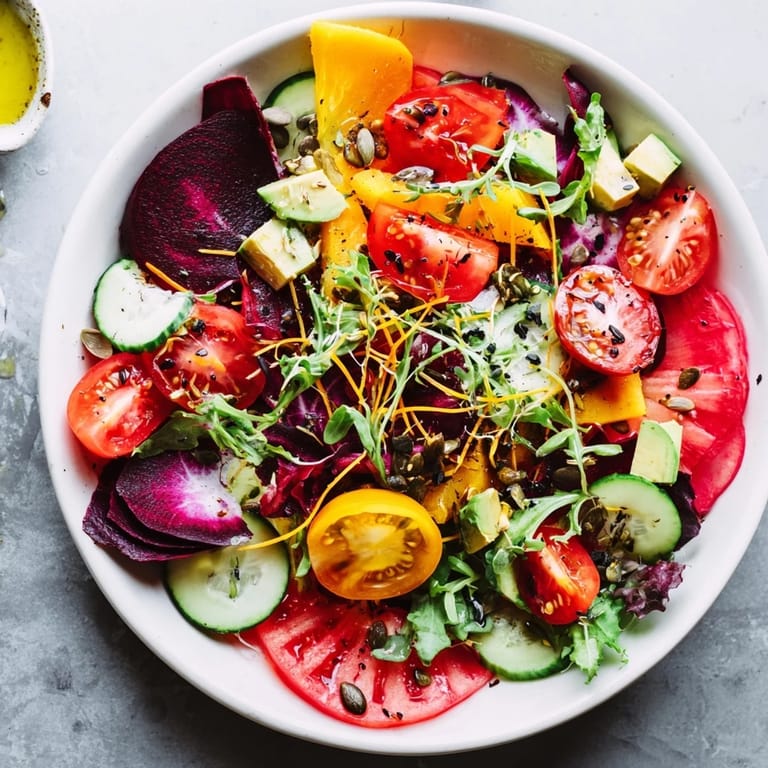
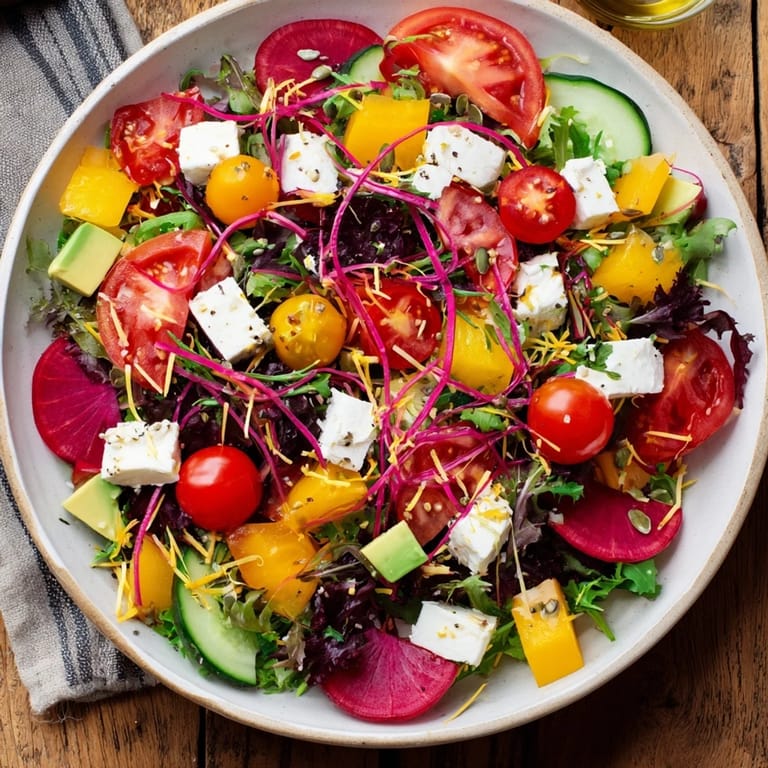
- Now comes the magic. Take a pinch of tomatoes and scatter them. Then some beet shavings. Then cucumber ribbons. Watch the colors intermingle and overlap. Add watermelon cubes. Add avocado. Sprinkle the pumpkin seeds and pomegranate seeds and feta in an intentionally irregular pattern. There's no right way here—only your way. The chaos is the point.
- Make the dressing with intention:
- In a small bowl, whisk the olive oil, white balsamic vinegar, honey, and Dijon mustard together until they emulsify into something glossy and unified. Taste it. Adjust. Add salt and pepper. This dressing is your brushstroke.
- Apply the dressing like you're finishing a masterpiece:
- Don't drizzle timidly. Be bold. Zigzag the dressing across the salad in visible splatters and brushstrokes, just like Pollock himself. Let it pool in some places, streak across others. This is where the chaos and the intentional meet.
- Present and invite the admiration:
- Serve immediately. Let people admire the wild arrangement for a moment—take in the colors, the textures, the artistic audacity. Then let them dig in and create their own combinations.
 Save to Pinterest
 What struck me most about serving this dish wasn't the compliments about how beautiful it looked—it was watching people give themselves permission to mix it up at the table, to create their own flavor combinations, to eat without worrying about plating perfection. Somehow, serving a salad that celebrated chaos gave everyone at the table permission to stop performing and just enjoy.
The Art of Building Without Rules
This salad taught me that cooking doesn't always require precision. Some of the most satisfying dishes come from a willingness to embrace imperfection and trust your instincts. When you stop worrying about symmetry and start thinking about color relationships and flavor contrast, something shifts in the kitchen. You become less of a technician following instructions and more of a creator making choices. This is where cooking becomes play.
Seasonal Variations and Color Play
The Abstract Expressionist Splash changes personality with the seasons. In summer, lean into watermelon, berries, and bright yellows. In autumn, roasted purple sweet potatoes, pomegranate, and deeper greens take over. In spring, add edible flowers—pansies, nasturtiums, calendula. The structure stays the same, but the palette shifts, keeping the dish fresh across the year. The point is to use whatever makes your market sing with color that particular week.
Making It Your Own
This recipe is genuinely just a starting point. Once you understand the balance—the greens as base, the vegetables as color and texture, the seeds and cheese for richness, the dressing as the final gesture—you can make infinite versions. Replace feta with vegan cheese for a dairy-free version. Add roasted chickpeas for protein. Swap vegetables based on what's fresh. The only rule is that it should look intentionally wild and taste like every element was chosen with care.
- Serve alongside a crisp Sauvignon Blanc or sparkling water with citrus for the perfect pairing.
- If making ahead, prep all vegetables separately and assemble no more than 15 minutes before serving.
- This salad serves four generously, but the beauty of its flexibility means it scales easily for larger gatherings.
 Save to Pinterest
 This salad is proof that the best meals don't require hours of work or complicated techniques—they require only attention, color, and the willingness to celebrate beautiful ingredients exactly as they are. Make it, share it, and watch people remember why they love eating.
Recipe Q&A
- → What gives this salad its unique texture?
The combination of crisp cucumber ribbons, juicy watermelon cubes, crunchy pumpkin and pomegranate seeds, and creamy feta creates a diverse texture profile.
- → How is the dressing prepared?
The dressing is an emulsified blend of extra-virgin olive oil, white balsamic vinegar, honey, Dijon mustard, salt, and pepper whisked together until smooth.
- → Can this dish be adapted for a vegan diet?
Yes, substituting feta cheese with a vegan alternative makes this dish dairy-free while maintaining its creamy element.
- → What herbs enhance the flavor of the salad?
Fresh mint leaves are torn and scattered among mixed baby greens like arugula and frisée to add a refreshing herbal touch.
- → How should the salad be served for best presentation?
Ingredients are artistically scattered on a large platter with ingredients overlapping, finishing with a zigzag drizzle of dressing to imitate brushstrokes.
- → Are there suggestions for additional toppings or pairings?
Edible flowers or roasted purple sweet potatoes can be added for extra color. It pairs well with crisp Sauvignon Blanc or citrus-infused sparkling water.